
Energy Self-Sufficiency, a Mandatory Foundation for Indonesia's Golden 2045
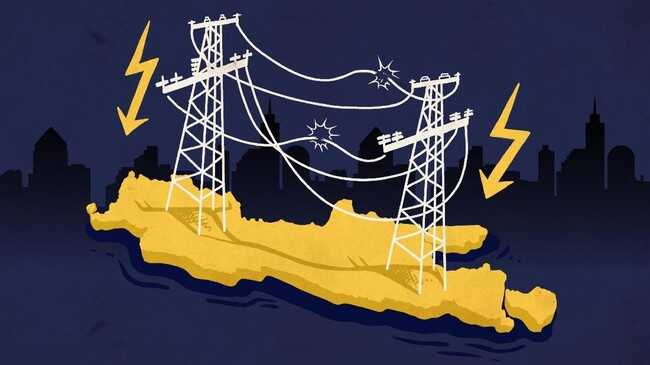
Indonesia harbours grand ambitions. In 2045, marking one century of independence, the nation aspires to stand alongside developed countries. The vision of Indonesia’s Golden 2045 is not merely a political slogan but an economic and social target demanding high growth, strong industrialisation, superior human resources, and solid national stability. Yet underlying all of this lies one foundation often dismissed as technical but which is fundamentally strategic: energy.
No industrial nation can be strong without energy resilience. There can be no economic transformation without reliable and affordable electricity supply. There can be no manufacturing competitiveness without competitive energy costs. Therefore, energy self-sufficiency is not merely a policy choice. It is a mandatory prerequisite towards Indonesia’s Golden 2045.
Hitherto, energy discussions have often fallen into two extremes. On one side, there is pressure to accelerate the clean energy transition without measuring industry and electricity system readiness. On the other, there is a tendency to maintain old patterns without meaningful renewal. What is needed instead is a more fundamental strategy: building energy self-sufficiency in the broadest sense, meaning the nation’s capacity to meet its energy needs independently, stably, and with sovereignty.
Energy self-sufficiency does not mean isolating oneself from international trade. Self-sufficiency means Indonesia possesses sufficient production capacity, reserves, infrastructure, and technological mastery to maintain national economic continuity without being shaken by global upheaval.
When oil prices spike due to geopolitical conflict, when supply chains are disrupted, when major powers prioritise their domestic needs, Indonesia stands firm because it has its own energy foundation.
Experience has taught this lesson. Dependence on crude oil imports and petroleum product imports renders the economy vulnerable to global price fluctuations and exchange rate pressures. Subsidy burdens swell when prices rise, whilst fiscal space narrows. In the long term, this pattern is unsustainable if Indonesia wishes to maintain consistent economic growth above six per cent.
Therefore, energy self-sufficiency must be understood comprehensively. First, self-sufficiency in primary energy supply. Indonesia possesses coal, gas, geothermal, solar, water, and bioenergy in large quantities. The challenge lies not in availability but in management and optimisation for domestic needs.
Second, self-sufficiency in infrastructure and technology. Many strategic components of our energy system remain dependent on imports, from generation technology to network equipment and control systems. Without domestic production capacity and technological mastery, self-sufficiency becomes merely a hollow concept. In situations of global crisis, technological dependence could transform into an expensive vulnerability.
Third, self-sufficiency in governance and strategic reserves. Strong nations not only produce energy but also maintain adequate reserves to withstand supply disruptions. Strengthening strategic energy reserves becomes crucial so Indonesia possesses a buffer when international upheaval occurs.
Energy self-sufficiency also directly relates to industrialisation. To escape the middle-income country trap, Indonesia must strengthen manufacturing and high-value-added industries. Yet industry requires vast amounts of energy at competitive and stable prices. Without affordable energy, national industry will struggle to compete with other nations.
Furthermore, today’s global economy demands energy that is not only sufficient and cheap but also clean. Many multinational corporations require low-carbon energy use in their supply chains. Investment in data centres, electric vehicles, and high-technology manufacturing increasingly considers a nation’s energy sources. In this context, energy self-sufficiency also means the capacity to provide clean energy that is both competitive and credible.
Indonesia possesses tremendous potential in renewable energy. Abundant solar potential, substantial geothermal resources, and bioenergy distributed across various regions can form the foundation of long-term autonomy. However, their development must be accompanied by an industrialisation approach. If all clean energy components remain imported, the nation merely shifts from dependence on imported fossil fuel energy to dependence on imported green technology.
Therefore, energy self-sufficiency must proceed alongside downstream processing and strengthening of the domestic industry. Major components of generation, storage systems, and network devices must begin to be produced domestically. Energy investment must become a driver of quality job creation and enhancement of national technological capacity. Thus, energy does not merely support growth but also serves as an engine of economic transformation.
The social dimension is equally important. Affordable and equitably distributed energy is a prerequisite for balanced development. Without adequate access to electricity and fuel, villages and disadvantaged regions will struggle to advance. Energy access inequality will deepen economic inequality. The state must ensure that energy self-sufficiency means sufficiency nationally and equitable distribution throughout all regions.
In geopolitical context, energy self-sufficiency strengthens Indonesia’s negotiating position. A nation independent in energy has greater scope in diplomacy and international cooperation. Nations cannot be easily pressured through energy instruments and can make decisions based on national interest, not supply dependence.
Towards 2045, Indonesia requires sustainable growth, fiscal stability, and social resilience. All of this rests upon a strong energy foundation. Energy self-sufficiency is not merely a sectoral agenda; it is a cross-sectoral national agenda.