
Energy Ministry Warns of Risk Indonesia's NDC Targets Will Not Be Met, Here's Why
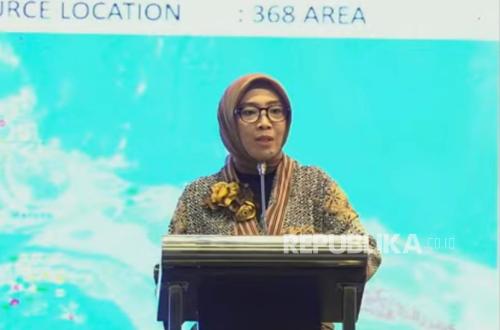
The Director General of New, Renewable Energy, and Energy Conservation at the Ministry of Energy and Mineral Resources, Eniya Listiani Dewi, has stressed that accelerating the energy transition is key for Indonesia to achieve its carbon emission reduction targets. Without concrete steps in the next five years, Indonesia’s Nationally Determined Contribution target risks becoming just a figure without real implementation.
She stated that the commitment towards net zero emission must be realised immediately through various strategies, especially in the energy sector, which is one of the largest contributors to emissions.
“Going forward, the net zero emission commitment must be completed soon. Because if we do not move within these five years, our NDC target will actually just become a number, so it will be meaningless in the future,” Eniya said during a Ministerial Dialogue held on the sidelines of Envirotech on Thursday.
In its latest NDC target, Indonesia is aiming for an emission reduction of 466 million tonnes of carbon dioxide. However, Eniya said the next NDC approach will no longer be based solely on a percentage reduction in emissions but will require concrete steps to change the national energy system.
“The FOLU (Forestry and Other Land Use) and energy sectors are the largest sectors. Our peak emission is in 2035, and for the energy sector it has shifted. The energy sector has become a very important sector for us to immediately reduce,” she said.
Eniya explained that the government has prepared a number of policies to encourage the energy transition, including through clean energy sector regulations. Indonesia, according to her, has significant capital because almost all renewable energy sources are available domestically.
“Indonesia actually has all types of renewable energy. Other countries do not necessarily have everything. We have geothermal, ocean energy, wind, solar power, bioenergy, bioethanol, and biodiesel,” she said.
Eniya stated that the utilisation of new and renewable energy is the main strategy for reducing emissions in the energy sector. The government is targeting the renewable energy sector to reduce emissions by around 82.47 million tonnes of CO2 by 2030.
Besides renewables, energy efficiency is considered the second important strategy. Eniya said energy efficiency can be implemented starting from the household level through the use of energy-efficient electrical appliances. She urged the public to choose electronic devices with high efficiency levels, such as devices with a five-star label.
“When buying a refrigerator, air conditioner, or fan, attention must be paid to this. There is a five-star label indicating that the appliance is efficient. Indeed, the initial price may be more expensive, but one to two years later it will be cheaper because the electricity consumption is low,” she said.
Eniya added that energy efficiency has the potential to contribute to an emission reduction of around 30 million tonnes of CO2. The use of LED lights as a replacement for conventional lamps is also part of the energy-saving efforts.
The next strategy is the construction of clean energy power plants, including the conversion of plants that still use coal to more advanced technologies resulting in lower emissions. The government is also promoting the use of gas as a transition energy source because it has lower carbon emissions compared to coal.
“The Ministry of Energy and Mineral Resources is making great efforts to secure gas supplies, because gas is a low-carbon energy source. This is one of our efforts to reduce emissions,” Eniya stated.
In addition, the government is promoting the use of low-carbon fuels, including the development of household gas networks, energy conversion, and electric stoves. Post-mining reclamation programmes will also be directed to support the energy transition.
According to Eniya, ex-mining land can be utilised for the construction of solar power plants. This is in line with the President’s directive regarding the development of solar power plant capacity of up to 100 gigawatts.
“Post-mining land can become one of the locations for providing solar power plants. So, land that has finished being used can be reused for clean energy,” she said.
Eniya also conveyed the development of Indonesia’s renewable energy mix, which continues to increase. In the first quarter of 2026, the renewable energy mix had reached 18.3 per cent, exceeding the lower limit of the government’s target.
“The set target is in the range of 17 to 21 per cent. Alhamdulillah, it has reached 18.3 per cent,” said Eniya.
However, to achieve the 2030 emission reduction target, the renewable energy mix needs to be continuously increased. The government is targeting a renewable energy mix of around 33 per cent so that the emission reduction target can be achieved.