
Energy Expert Suggests Limiting Subsidised Fuel to Address Energy Crisis
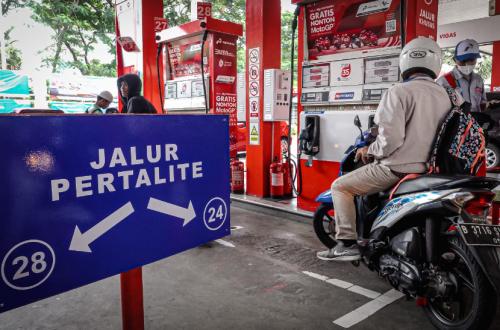
REPUBLIKA.CO.ID, JAKARTA – Universitas Gadjah Mada (UGM) energy economist Fahmy Radhi stated that the closure of the Strait of Hormuz due to the Iran vs US-Israel conflict has led to supply shortages and oil price surges reaching $110 per barrel, pointing towards a global energy emergency. Almost all countries, including Indonesia, are potentially affected by this global energy emergency. “Many countries have already established policies to minimise the impact of this global energy emergency. Although other countries have set policies to address the energy emergency, Indonesia remains nonchalant, yet to establish real policies and efforts,” Fahmy said when contacted by Republika in Jakarta on Tuesday (31/3/2026). Fahmy noted that the government has indeed floated energy-saving policies to tackle the energy emergency’s impact, including work from home (WFH), conversion of oil-fuelled vehicles to electric, and energy transition. He assessed that these three policies are ineffective in addressing the energy emergency, which is a short-term issue. “Meanwhile, the proposed policies are solutions to long-term problems,” Fahmy said. Fahmy mentioned one policy option to address this short-term issue, namely restricting subsidised BBM to ensure it reaches the right targets, with the amount estimated at Rp120 trillion per year. “During the Joko Widodo administration, this policy was only discussed but never implemented until now,” Fahmy added. He explained that one difficulty in implementing this policy is the mechanism for restricting subsidised BBM. Fahmy conveyed that Pertamina once trialled the use of MyPertamina but it failed. “Currently, barcodes are used to limit subsidised BBM purchases, but many private vehicles easily obtain barcodes,” Fahmy said. To enable the implementation of subsidised BBM restrictions, Fahmy suggested using a simple mechanism by determining the vehicles permitted to use subsidised BBM. He stated that these vehicles include motorcycles, passenger transport vehicles, and goods transport vehicles for essential needs. “Meanwhile, private cars must switch from subsidised BBM to non-subsidised BBM. If the subsidised BBM restriction succeeds, around Rp120 trillion in state budget funds can be saved, so the government does not need to raise subsidised BBM prices in the near future,” Fahmy said.