
Energy Efficiency Starts This Week, Mendiktisaintek Reveals Higher Education Guidelines
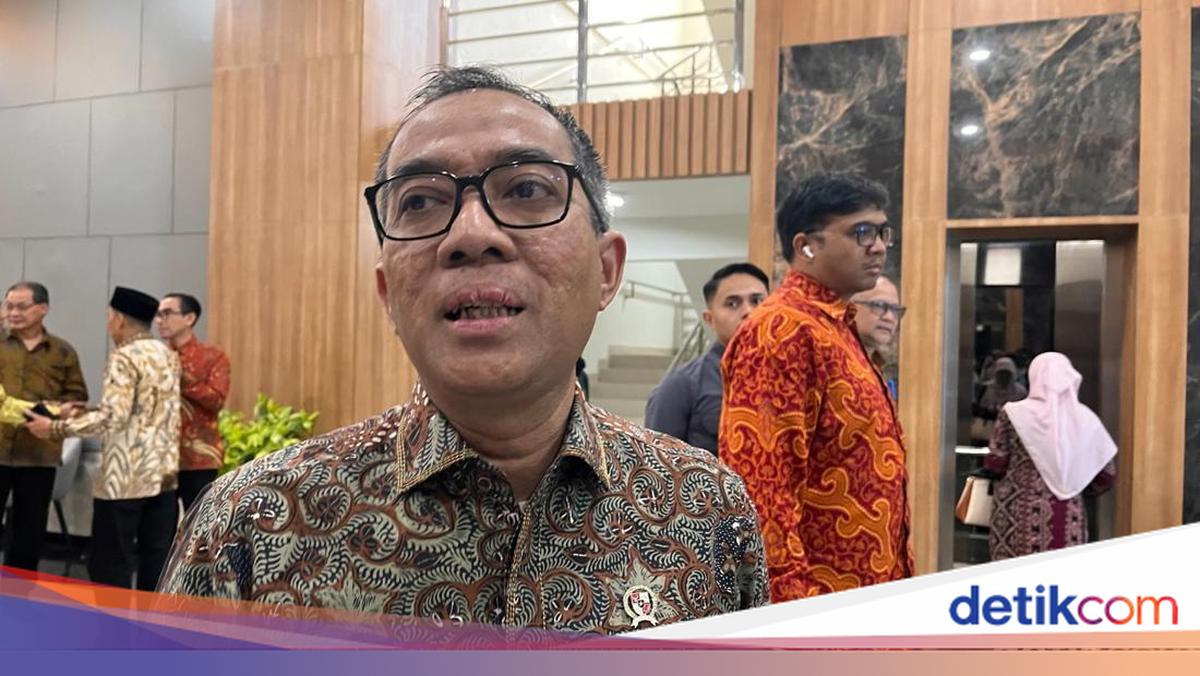
Mendiktisaintek Brian Yuliarto has revealed guidelines for university students and lecturers on campus amid energy efficiency measures due to the Middle East conflict. Brian stated that these guidelines take effect from this week, prioritising digitalisation.
“So we are asking universities to first foster a more efficient work culture, yes. The use of digital tools, so for registrations, applications, checking transcripts, and so on. Student mobility can be simpler because everything is digital. That’s the first step, making it far more efficient,” said Brian after a limited meeting at the Presidential Palace complex in Jakarta on Monday (6/4/2026).
Student assignments, according to Brian, are encouraged to be done digitally, and the printing of final theses is expected to be reduced. Lecturers are also arranged to work from home (WFH) for one day a week.
“We are also asking for assignments like that to be as digital as possible, so for example, final theses that previously needed five printed copies can be reduced. Then, for other aspects, it’s the scheduling of courses. We are following the directive on how lecturers do not need to come to campus every day. Working from home,” he said.
“We want to regulate it. Of course, we will provide guidance to universities on how lecturers can work not spread over five days. But perhaps it can be four days. One day can be working from home,” he added.
Brian emphasised that the focus on lectures can remain intact without reducing learning outcomes. Thus, the new higher education guidelines will not disrupt teaching quality.
“Starting this week,” he said.
These higher education guidelines for energy efficiency apply to students from semester four upwards. For first-year students, on-campus lectures are maintained to allow new students to experience the academic atmosphere.
“So, each study programme should review which courses can be conducted in hybrid mode or distance learning. But we ask that not for basic levels, level one, level two, so that the academic atmosphere is built first,” Brian stated.
“But once again, not for courses that require practicums, studios, and so on. So, courses that are more about knowledge, but we leave it to each higher education institution. The universities and programmes will see which ones can be done online,” he added.
Coordinating Minister for the Economy Airlangga Hartarto previously stated that for students from semester four upwards, they will adjust according to the circular from the Minister of Higher Education, Science, and Technology (Mendiktisaintek).
“Meanwhile, for higher education from semester four upwards, adjust to the circular from Mendiktisaintek,” said Airlangga in a press conference on Tuesday (31/3), quoted from the official YouTube of the Coordinating Ministry for the Economy.