
Energy Economist: Increase in Non-Subsidised Fuel Prices is the Right Step
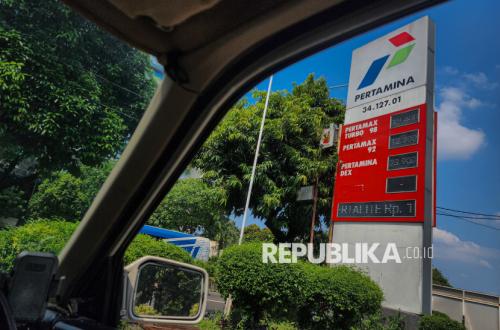
The government’s decision to increase the price of non-subsidised fuel oil (BBM) has been deemed an appropriate step. Fahmy Radhi, an energy economist from Gadjah Mada University (UGM), emphasised that the policy is in line with the economic pricing mechanism that has been in place. “In my view, that step is already very appropriate,” Fahmy told Republika on Saturday (18/4/2026). He explained that the adjustment of non-subsidised BBM prices should indeed be carried out because their initial setting has always referred to market mechanisms. Moreover, if the prices were not raised, the burden on the State Revenue and Expenditure Budget (APBN) would become even greater. “If it had not been raised yesterday (early April 2026), the APBN burden for paying compensation to Pertamina would have become even larger,” he said. According to him, the government not only has to bear subsidies for certain BBM but also compensation to Pertamina due to the difference between the selling price and the economic price. With the increase in non-subsidised BBM prices, that burden can be reduced. “By raising it, it will reduce the substitution burden that the APBN has to pay to Pertamina earlier. So, I think that step is already very appropriate,” he stated. Regarding the impact on inflation, Fahmy assessed that the increase in non-subsidised BBM prices will not exert significant pressure on the national economy. “If it’s an increase in non-subsidised BBM prices, it does not have a significant impact on inflation increases because the amount is not that large,” he said. He added that significant inflationary impacts would only be felt if the government raises prices of subsidised BBM such as Pertalite and Solar. “If Pertalite and Solar are raised, that will certainly ignite inflation. But if it’s an increase in non-subsidised BBM prices, it does not have a significant impact,” he said. Fahmy also acknowledged the potential for some consumers to shift to subsidised BBM due to price differences. However, he believes the scale of such shifting will be relatively limited. “As long as the price disparity between subsidised and non-subsidised BBM is quite large, that will trigger migration to Pertalite,” he said. Nevertheless, he assessed that the shifting will not be too large, especially for certain vehicles. “Motorcycles might not shift that much either. Meanwhile, for private cars, especially luxury cars, they cannot use Pertalite because their engines are designed to use Pertamax and above,” he said.