
Energy Crisis Forces Non-Nuclear Countries to Consider Nuclear Power Plants
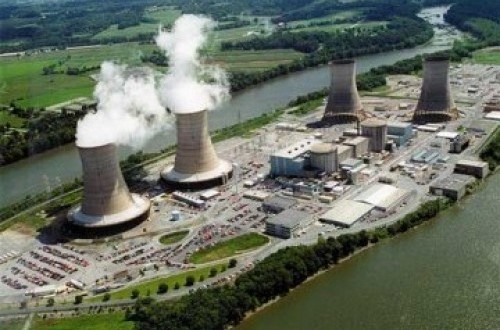
REPUBLIKA.CO.ID, NAIROBI – The energy crisis triggered by the war between the United States (US) and Israel with Iran is pushing several non-nuclear countries to consider that emission-free energy source. The war has cut energy supplies, particularly in Asia and Africa.
The blockade of the Strait of Hormuz, a route for one-fifth of global oil trade and one of the world’s main gas trade routes, has driven up energy prices. This is prompting countries in Asia and Africa that already have nuclear power plants (NPPs) to increase their production.
Meanwhile, non-nuclear countries are accelerating plans to build NPPs to secure energy supplies amid rising volatility in fossil fuel prices. However, experts warn that nuclear power is not a quick solution to the energy crisis.
Senior researcher at the Council on Foreign Relations (CFR), Joshua Kurlantzick, stated that it takes decades to build an NPP, especially for countries that have never had one. However, NPPs can be a long-term step to maintain energy supplies.
The US-Iran conflict is pushing South Korea to increase its NPP production. Meanwhile, Taiwan is considering reactivating its decommissioned NPPs.
African countries are also planning to build NPPs. Kenya, Rwanda, and South Africa are at the forefront of these plans.
Nuclear energy is produced by harnessing the energy released when an atomic nucleus (usually using the element uranium) splits into smaller parts. This atomic nucleus splitting process is called fission.
Unlike fossil fuels that release carbon dioxide when burned, nuclear energy produces no carbon emissions. This makes it one of the energy sources that does not worsen climate change.
Although clean in terms of air emissions, the nuclear process produces radioactive waste that can be highly dangerous to living beings and the environment over a very long period. This radioactive waste is the main reason many countries reject NPPs.
Senior advisor at the Bulletin of the Atomic Scientists, Rachel Bronson, said the US-Israel war with Iran is accelerating what she calls a “nuclear enlightenment”. Because the war makes many countries aware of the risks of the fossil fuel market.
Based on data from the International Atomic Energy Agency (IAEA), there are currently 31 countries using nuclear energy that provides around 10 percent of global electricity. About 40 other countries are considering or preparing to build NPPs.
Several countries in Asia, including Indonesia, are choosing to increase coal use or buy crude oil from Russia to address the energy crisis. However, countries that already have NPPs are choosing to increase their nuclear energy production.
South Korea is increasing production from NPPs and accelerating maintenance on five inactive reactors. Those five reactors are planned to be reactivated in May.
Taiwan and Japan are lifting the NPP bans implemented after the 2011 Fukushima NPP disaster. Taiwan plans to start reactivating two of their nuclear reactors.