
Energy Crisis Escalates, RI's Neighbours Rush to Cut Fuel Taxes
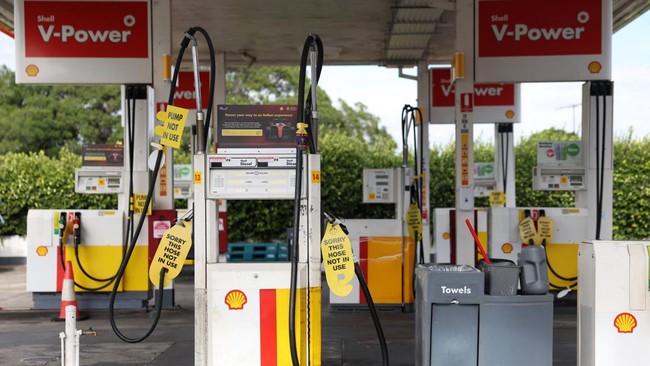
The Australian government has taken emergency steps to curb the surge in living costs due to the global rise in energy prices. On Monday (30/3/2026), Canberra announced cuts to fuel taxes and a temporary waiver of road charges for heavy vehicle users for three months.
In a press conference in Canberra, Prime Minister Anthony Albanese stated that the government would halve the excise on petrol and diesel. This policy is estimated to reduce fuel prices by 26.3 Australian cents per litre.
“We understand that the cost-of-living pressures on the public are very real because the impact of the war in other parts of the world is now being felt directly here,” Albanese said, as reported by Reuters.
In the same event, attended by Energy Minister Chris Bowen, Finance Minister Jim Chalmers said the total cost of the policy to the government would be around 2.55 billion Australian dollars.
This latest move is part of a series of energy security policies taken by Canberra since the war began on 28 February. The government had previously announced the release of domestic reserves of petrol and diesel, as well as temporary relaxation of fuel quality standards.
The global energy price surge was triggered by supply disruptions in oil following the US-Israel conflict with Iran. Before the conflict, around 20% of the world’s oil was transported through the Strait of Hormuz.
When this route was disrupted, supplies were hampered and oil prices surged sharply. The Brent benchmark oil price rose 59% throughout March, the largest monthly increase on record, and stood at US$115.66 per barrel when markets opened on Monday.
Price pressures are already evident at the retail level. A report from 29 March by the Australian Petroleum Institute showed that the average diesel price rose to more than 3 Australian dollars per litre last week, while petrol reached 2.5 Australian dollars per litre.
In addition to tax cuts, the government has confirmed the implementation of the national fuel security plan. All state governments have agreed to cooperate to ensure fuel distribution to the most needy regional areas.
Albanese explained that the plan has four levels of action, and Australia is currently at level two, ensuring national mobility continues. The highest level will focus on keeping critical services operational.
“While Australia’s fuel supply prospects remain secure in the short term, we must also be very clear to citizens that the longer this war lasts, the worse the impacts will be,” Albanese said.
The government noted that Australia’s current fuel stocks are at the highest level in the last 15 years, but still far below the International Energy Agency’s recommendation of a minimum 90-day reserve.
The latest data shows Australia has reserves of around 30 days for diesel, 30 days for jet fuel, and 39 days for petrol.
Additionally, the government has adopted amendments to the Export Finance and Insurance Corporation, allowing the country to guarantee fuel cargo purchases in the spot market through Export Finance Australia.
Bowen said spot cargoes are indeed available, but they are expensive and high-risk, especially for small industry players.
“The new fuel security powers will put Australia in a strong position, securing fuel supplies when costs may be too high for private suppliers to obtain commercially without government support,” Bowen said in a separate statement.
Previously, tax cut policies have also been taken by India and Vietnam.
Indian Finance Minister Nirmala Sitharaman said the government is cutting central excise duties on domestically used petrol and diesel. This policy is described as a direct response to the crisis in West Asia.
In addition, the government has set new export tariffs for diesel and aviation turbine fuel. Sitharaman announced an export cost of 21.5 rupees per litre for diesel and 29.5 rupees per litre for aviation turbine fuel.
Meanwhile, Vietnam has officially temporarily eliminated environmental taxes on petroleum fuels to curb the surge in petrol prices.
Vietnam’s Ministry of Trade in its official statement explained that the environmental protection tax rates for petrol, diesel, and aviation fuel will be cut to zero percent. This emergency policy takes effect from Friday until 15 April to dampen domestic economic turmoil.
“This is considered an urgent and effective solution to stabilise the oil market and ensure national energy security amid escalating conflict in the Strait of Hormuz, which has created the biggest energy barrier ever,” the Ministry of Trade of Vietnam wrote in the official statement.
Data released by the ministry shows that the policy will lower petrol prices by around 26% and reduce diesel prices by just over 15%. This sharp decline comes after fuel costs skyrocketed dramatically at the start of this week due to tense geopolitical uncertainty.