
Energy Crisis Due to War Deemed to Accelerate Transition to Renewables
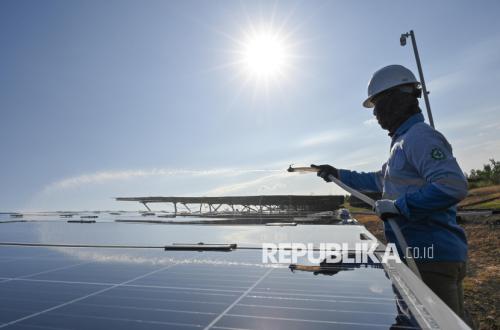
HANOI — The conflict in the Middle East, sparked by US and Israeli attacks on Iran, illustrates the fragility of the world’s dependence on fossil fuel energy supply routes. This crisis is seen as strengthening the urgency to accelerate the energy transition from fossil fuels to renewables.
The war has nearly completely halted oil exports through the Strait of Hormuz, a narrow route that serves as the main path for around one-fifth of the world’s oil and liquefied natural gas (LNG) supply. This disruption is shaking the global energy market, driving price surges and pressuring countries reliant on energy imports.
The greatest impact is felt in Asia, the primary destination for those oil exports. However, pressure is also mounting in Europe, which is seeking ways to curb energy demand, and in Africa, which is bracing for rising fuel costs and inflation.
Unlike previous energy crises, renewables are now increasingly competitive compared to fossil fuels. The International Renewable Energy Agency notes that more than 90% of renewable energy projects in 2024 have lower costs than fossil fuels.
Nevertheless, oil remains a crucial component in various industries, such as fertiliser and plastics production. Therefore, the impact of this crisis is widespread. Countries with a larger share of renewables are relatively more resilient to shocks, as they rely on domestic sources like solar and wind, rather than imported fuels.
“Crises like this occur repeatedly; this is a characteristic, not an anomaly, of a fossil fuel-based energy system,” said James Bowen from ReMap Research on Friday (20/3/2026).