
Energy Crisis Becomes More Apparent, Asian Countries Return to Coal
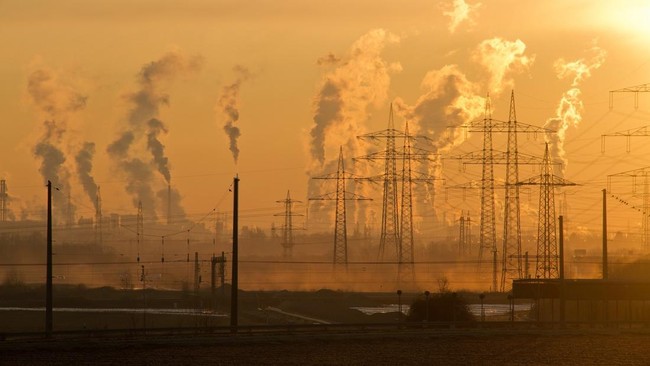
An increasing number of Asian countries are opting to rely once again on coal to ensure stable electricity supplies amid disruptions in gas supplies from the Middle East. This move is sparking new concerns from climate experts, who argue that the energy crisis could slow the transition to clean energy.
Governments across various Asian countries are boosting coal usage to address energy shortages triggered by the war between the United States (US) and Israel against Iran. Experts are warning of the environmental impacts of this decision while calling for accelerated investments in renewable energy.
In the region from East Asia to South Asia, governments are attempting to compensate for the decline in imported energy supplies, much of which originates from the Middle East.
South Korea, for instance, has postponed the closure of coal-fired power plants and lifted restrictions on electricity production from coal. Meanwhile, Thailand is increasing output at the country’s largest coal-fired power plant.
The Philippines has even declared a “national energy emergency” due to the war and plans to ramp up operations at steam power plants (PLTU).
In South Asia, India, which relies on coal for nearly 75% of its electricity generation, has instructed coal plants to operate at maximum capacity and avoid scheduled shutdowns. Bangladesh is also boosting coal-based electricity production and imports of coal in March.
The surge in coal usage is occurring as countries race to fill supply gaps, particularly in liquefied natural gas (LNG), which was previously promoted as a transitional fuel towards cleaner energy. Many Asian countries use LNG for power generation and industries such as fertiliser production, with demand projected to double over the next 25 years.
However, LNG supplies have been disrupted following the effective closure of the Strait of Hormuz. Attacks on major LNG export facilities in Qatar have further worsened the shortages and are expected to impact the energy industry for years.
Henning Gloystein from Eurasia Group stated that nearly 30 billion cubic metres of LNG have been lost from the global supply chain, with more than 80% of the shortfall occurring in the Indo-Pacific region. He added that the last LNG cargoes to pass through the strait before the escalation of the conflict will arrive in about a week.
“The global market has shifted in four weeks from a fairly healthy supply surplus to a very severe deficit, and that will not only cause price spikes but also real fuel shortages,” he said, as reported by The Guardian on Wednesday (1/4/2026).
He assessed that countries with coal reserves will utilise them as the quickest solution. “Countries that have coal reserves will use them because it’s the fastest and cheapest way to replace LNG,” he said, noting that India is also increasing renewable energy.
Gloystein warned that recovery of LNG supplies will take a long time. “This isn’t a short-term issue; people hope for some de-escalation or ceasefire next week and things return to normal,” he said.
“This will last for a while because the damage done will take years to repair,” he added.
Pauline Heinrichs, a climate expert from King’s College London, said this crisis should be a turning point. According to her, the current energy crisis underscores the importance of renewable energy.
“Renewables are not just a climate priority but ultimately for broader energy security in Asia. Economies with a large share of renewables are actually less vulnerable,” she stated.
Heinrichs warned against making coal usage permanent. “We need to learn that this is a moment to break the cycle of responding to short-term fuel shocks with investments in fossil fuels, because it’s never short-term—it’s always long-term infrastructure investment.”
Dinita Setyawati from the energy research institute Ember echoed the sentiment. “It’s not sustainable to rely on coal,” she said. “Domestic renewables are clearly the way to enhance energy security and resilience,” she added, as quoted by The Guardian.
In addition to increasing coal usage, Asian countries are also seeking ways to conserve energy.