
Energy Crisis and AI Drive Southeast Asia to Reconsider Nuclear Power
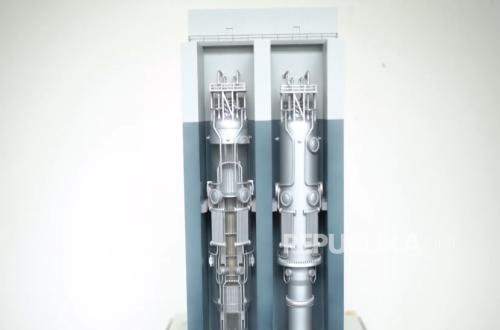
Nuclear energy is regaining serious attention in Southeast Asia as countries in the region prepare to meet a surge in electricity needs, particularly to support the growth of AI-based data centres.
Several countries are reviving previously delayed nuclear plans and setting ambitious targets. If realised, nearly half the countries in the region could have nuclear power plants operational in the 2030s. Even nations without concrete plans are showing interest.
To date, Southeast Asia has never generated electricity from nuclear energy, despite long-standing ambitions. However, this situation could change amid growing pressure to reduce climate-changing emissions while meeting rising energy demands.
Analysts say the conflict in Iran has highlighted Asia’s energy supply vulnerabilities, strengthening the urgency to seek alternatives to oil and gas. The spike in crude oil prices due to the conflict is also pushing countries to accelerate nuclear development efforts.
“The escalating conflict has sparked motivation for countries to speed up their nuclear programmes,” said Alvie Asuncion-Astronomo from the Philippine Nuclear Research Institute on Thursday (26/3/2026).
This week, Vietnam and Russia signed a cooperation agreement to build a nuclear power plant amid rising concerns over regional energy security. In South Asia, Bangladesh is also accelerating the operation of its new nuclear power plant, supported by Russia, to address energy shortages.
According to the International Energy Agency (IEA), Southeast Asia will contribute about a quarter of global energy demand growth by 2035. One of the main drivers is the proliferation of data centres, with more than 2,000 facilities scattered across Indonesia, Malaysia, Singapore, Thailand, Vietnam, and the Philippines, according to research institute Ember.
That number is expected to continue growing. This phenomenon is evident in Malaysia, which is positioning itself as Southeast Asia’s AI computing hub and has attracted investments from major technology companies such as Microsoft, Google, and Nvidia.
The resurgence of interest in nuclear energy in Southeast Asia also reflects a global trend. Nearly 40 countries, including the United States, Japan, South Korea, and China, have joined a global effort to triple nuclear energy capacity by 2050.
According to the World Nuclear Association, Southeast Asia is expected to contribute nearly a quarter of the total 157 gigawatts of capacity generated by new nuclear-using countries by mid-century.
“There is a new momentum that is more serious and continuously growing for nuclear energy development in Southeast Asia,” said King Lee from the association.
Five of the 11 ASEAN member countries—Indonesia, Malaysia, Thailand, Vietnam, and the Philippines—are now actively pursuing nuclear energy development.
Vietnam is building two nuclear power plants with support from Russian state company Rosatom. Prime Minister Pham Minh Chinh described the project as a national strategic initiative. Vietnam’s revisions to its atomic energy law also took effect in January.
Indonesia included nuclear energy in its new energy plan last year, targeting the construction of two small modular reactors by 2034. The government says Canada and Russia have submitted formal cooperation proposals.
Thailand is targeting an addition of 600 megawatts of nuclear capacity by 2037. The country’s electricity authority describes nuclear as a promising solution to provide sufficient, affordable, and clean electricity.
The Philippines has the longest involvement with nuclear in the region, having built a nuclear power plant in the 1970s that was never operated. Last year, the country established a new atomic energy regulatory authority and is targeting nuclear use by 2032.
“We do not expect nuclear electricity to be cheap in the early stages,” said Asuncion-Astronomo. However, in the long term, nuclear energy is seen as able to enhance reliability, security, and energy independence.
Other countries such as Cambodia, Singapore, and Brunei are also beginning to open opportunities. Singapore is studying nuclear potential, while Brunei has stated it is cautiously exploring options with the International Atomic Energy Agency (IAEA).
The surge in data centres is one of the main factors driving increased energy needs. These facilities are large windowless buildings filled with high-capacity computers. The IEA notes that one AI data centre can consume electricity equivalent to 100,000 households.
Malaysia is the most prominent example. The country has more than 500 operating data centres, about 300 under construction, and more than 1,000 others planned. The Malaysian government reactivated its nuclear programme last year and is targeting the first plant to operate by 2031.
“Many industries are developing in Malaysia, from data centres and semiconductors to mining. All of them require energy,” said Zayana Zaikariah from the Institute of Strategic & International Studies in Kuala Lumpur.
The United States is also supporting these efforts. Foreign Minister Marco Rubio signed a civil nuclear cooperation agreement with Malaysia last year. President Donald Trump has also pushed for increased nuclear capacity to meet data centre needs, targeting a fourfold increase over the next 25 years.
However, the risks of nuclear energy remain a concern. Worries about safety, waste, and supply continue to loom, especially after the 1986 Chernobyl disaster and the 2011 Fukushima incident.
Nevertheless, Japan, which halted all its reactors after the Fukushima disaster, is now beginning to restart its plants.
Bridget Woodman from Zero Carbon Analytics warns in k