
Energy Charity: Powering Mosques While Reducing Emissions
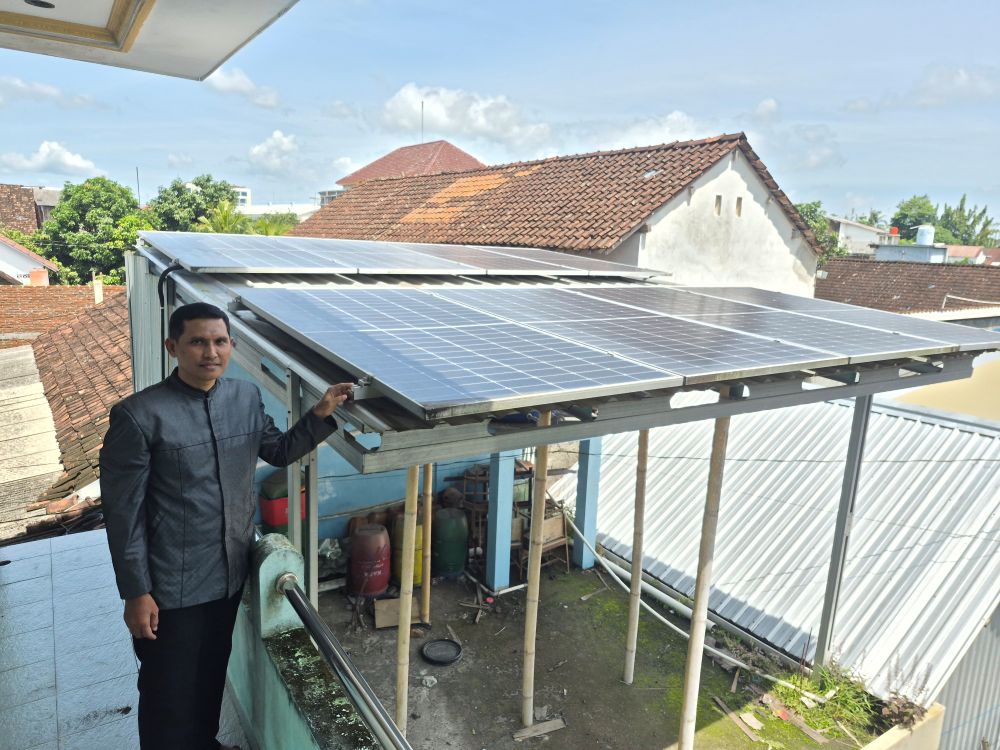
BANTUL — A two-storey building at Al Muharram Mosque in Bantul Regency stood noticeably brighter than its surroundings on Saturday evening (14 March), its lights glowing steadily as worshippers gathered for evening prayers during Ramadaan. With increased activity during the holy month, particularly in the final ten days, electricity consumption rose substantially, with lights remaining on until nearly midnight.
Yet the mosque’s electricity bill has not surged correspondingly, thanks to an innovative solution: solar power generation systems (PLTS) that supply all evening electricity needs. “Apart from the state electricity company PLN, we also use solar electricity, which has enabled us to reduce the mosque’s electricity expenditure by 85 percent,” explained Ananto Isworo, the mosque’s administrator, aged 48.
Solar power can sustain the facility from approximately 6:00 PM to 11:00 PM when fully charged. Between evening prayers at 6:00 PM and night prayers at 7:30 PM, the system provides sufficient energy, with remaining capacity available for dawn prayers until 6:00 AM. Daytime hours rely on conventional PLN supply. The mosque also powers five streetlights illuminating approximately 100 metres of surrounding road using its 4,300 kilowatt-hours of capacity from two batteries and eight solar panels.
Energy Charity Initiative
The solar installation began in 2023 through the Energy Charity programme (Sedekah Energi) initiated by Mosaic (Muslims for Shared Actions on Climate Impact). The project was funded by approximately 5,500 individual donors who raised 85 million rupiah, which covered installation, training, and operational costs.
The programme proved timely, as PLN supply had been unreliable, with power cuts occurring multiple times daily, disrupting worship activities. The solar panels ensured continuous mosque operations. “If Indonesia has 800,000 mosques and renewable energy adoption were implemented across them, the Muslim community’s contribution to clean energy usage would be tremendous,” Isworo noted.
Solar electricity complements the Al Muharram Mosque’s Eco Mosque vision, implemented since 2013, which encompasses seven initiatives: environmentally friendly building architecture, landscape greening, rainwater harvesting, mosque-based waste charity programmes, child-friendly facilities, disability accessibility, and renewable energy transition.
Nationwide Expansion
Beyond Al Muharram, Mosaic has initiated the Energy Charity programme at five additional mosques: Buya Syafii Maarif Mosque in West Sumatra, Al Ummah Al Islamiyah Mosque in East Lombok Regency, Istiqlal Mosque in Jakarta, Baiturrahman Grand Mosque in West Java, and Al Azhar Mosque in Cikarang/Bekasi.
Aldy Permana, Project Leader and Director of Mosaic, explained that the programme transcends mere infrastructure deployment. “Energy Charity aims to solarise Indonesia’s mosques whilst serving as an educational tool for thousands of worshippers daily. Mosques democratise previously elite technology into people’s technology,” he stated.
The initiative harnesses mosque networks as learning hubs addressing energy transition and climate change, whilst generating social and economic benefits for local communities. Support has come from over 5,500 individual donors alongside government backing from the Ministries of Religious Affairs and Energy and Mineral Resources. The programme has currently installed systems at six locations, each generating approximately 4,000–5,000 watts peak capacity.
Community Mobilisation
Reka Maharwati, Coordinator of Enter Nusantara, reported that Energy Charity has reached six mosques nationwide. More than 20,000 people have participated as donors, and 58 mosque administrators and community members have completed technical training in renewable energy management.
“We have documented annual carbon emission reductions of 3.4 tonnes CO2 per mosque. The six installed mosques collectively represent the equivalent of planting 2,040 trees,” Maharwati stated.
Communities and mosque officials have demonstrated remarkable enthusiasm for learning about climate crisis and engaging actively in technical implementation. “Beyond installation, people can independently maintain systems and resolve issues, fostering genuine autonomy,” she explained.
The Energy Charity model demonstrates how community-based renewable energy implementation can leverage multi-stakeholder collaboration. Accelerated energy transition requires scaling such grassroots initiatives through supportive policy environments and alternative financing mechanisms. “Energy Charity achieves equitable energy transition through bottom-up community action and cooperative funding approaches,” Maharwati concluded.