
Endeavours to Achieve Educational Justice
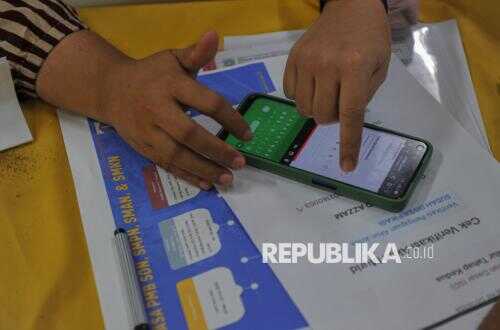
The Ministry of Education Regulation Number 3 of 2025 concerning the Student Admission System (SPMB) marks a highly significant shift in Indonesia’s educational policy direction. The replacement of the New Student Admission System (PPDB) with SPMB is not merely a change in nomenclature but rather reflects the state’s effort to restructure the mechanism for distributing learning opportunities more fairly, inclusively, and humanely.
This analysis examines SPMB through the lens of educational theory, educational management, psychology, sociology, Islamic educational thought, and practices from leading countries worldwide.
From the perspective of Modern Psychology, education is understood as a process of developing individual potential holistically (cognitive, affective, and social). Education is a life experience that shapes democratic society, not merely an administrative selection forum. From this perspective, new student admission policies do not stop at the question “who is admitted” but rather “how does the state ensure every child obtains meaningful learning opportunities”.
SPMB 2025 eliminates entrance academic tests for primary school. In various academic discussions, educators consistently encourage prospective teachers to analyse and critique such practices, because educational theory and development literature emphasise the concept of “readiness to school”—mental preparedness for the learning process rather than measured through basic literacy and numeracy (calistung). True school readiness is a child’s mental readiness to engage in learning. Expanding affirmative action pathways similarly reflects this spirit.
Through SPMB 2025, the state seeks to prevent early selection that risks perpetuating social inequality. Children are no longer positioned as objects of parental competition but as development subjects whose right to learning must be protected. However, constructivist theory emphasises that child development is profoundly influenced by the learning environment. Fair admission policies will prove meaningless without accompanying improvements in school quality equalisation. Without enhanced learning quality, SPMB risks merely transferring inequality from school entry to the classroom.
Justice Touching the Soul and Social Structure
Experiencing injustice during school years can impact self-concept and long-term learning motivation. Children who feel marginalised by the system early tend to develop identities as losers before competing. Affirmative action pathways in SPMB can serve as psychosocial correction for structural inequality, sending a symbolic message that the state recognises socio-economic limitations as factors requiring compensation rather than dismissal. From this perspective, affirmation is not privilege but an instrument of distributive justice.
However, psychology also warns of labelling effects. If affirmative action is not managed sensitively, students may feel branded as “charity recipients” rather than individuals with potential. Therefore, admission policies must be accompanied by learning policies that foster dignity, not merely participation numbers.
From an educational management perspective, SPMB strengthens principles of transparency, accountability, and data-driven governance. Setting quotas, capacity allocation, and national data system integration reflect efforts to build modern educational governance. Yet management theory also teaches that policy quality is determined not by design but by implementation capacity.
In regions with weak digital infrastructure and low bureaucratic quality, data-driven policies risk becoming administrative procedures without substance. If not carefully monitored, inter-regional disparities may widen further. SPMB also increases local government responsibility for ensuring all children are accommodated by schools, aligning with decentralisation principles but demanding strong educational leadership sensitive to local social contexts.
Educational sociology distinguishes between equality of access and equality of outcome. Providing school access does not automatically produce social justice if school quality remains unequal. Domicile-based policies in SPMB may reduce physical distance between home and school. However, in economically segregated societies, geography-based policies may reproduce social stratification, with elite schools remaining populated by elite groups while poor areas’ schools serve poorer communities. For SPMB to become an instrument of substantive justice, it must be accompanied by educational resource redistribution policies including qualified teachers, learning facilities, and equitable academic support.
Knowledge as Public Trust, the World as Mirror
Classical Islamic educational tradition views knowledge as public trust, not exclusive commodity. Al-Ghazali emphasises education as a process of moral and intellectual refinement, whilst Ibn Khaldun warns that tolerated social inequality destroys civilisation. Modern thinkers like Fazlur Rahman and Nurcholish Madjid stress the need for structural ijtihad in education.
Policy must respond to contemporary reality without losing principles of justice and humanity. From this perspective, SPMB can be read as policy ijtihad to uphold the principle of al-’adl (justice) in distributing learning opportunities. Education does not end at access but at forming dignified human beings. SPMB policy should prioritise learning quality and character development, not merely quotas.