
End of Disaster Transition Period in Sumatra, Government Begins Reconstruction on 1 April
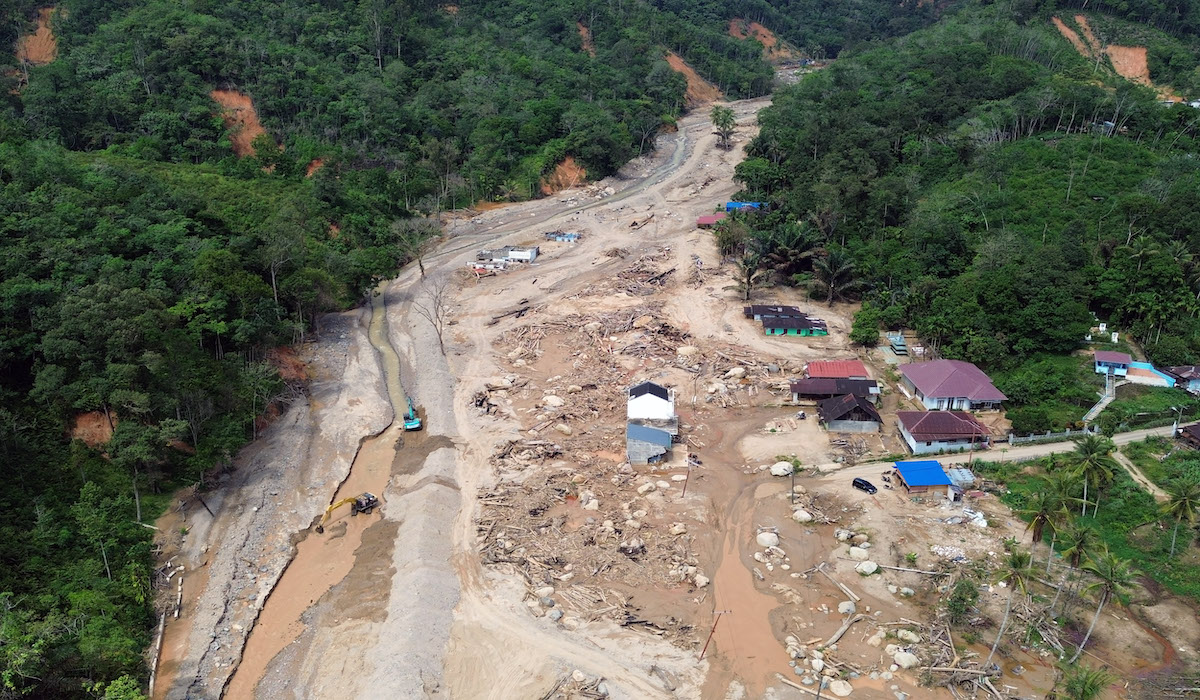
The status of the transitional period in three provinces in Sumatra will end on 30 March 2026. The Head of the National Disaster Management Agency, Suharyanto, stated that from 1 April 2026, the rehabilitation and reconstruction phase will be established.
“All provinces in the three Sumatran provinces have entered the transition phase to recovery, which will end on 30 March 2026, so from 1 April 2026, it will enter rehabilitation and reconstruction,” said Suharyanto in Jakarta on Wednesday (25/3).
Nevertheless, the government has accelerated the construction of permanent housing (huntap) for disaster victims in Sumatra, even though the emergency response phase has not fully ended. This step was taken due to the urgent needs of the affected community.
Suharyanto said that pressure from the community was a factor in accelerating the huntap construction.
“Because the community is very eager to have huntap built, that’s why even though it’s still in the transition phase, we are already building huntap,” he said.
From a budgetary perspective, BNPB has currently only received support from the Ministry of Finance for stimulus assistance for lightly and moderately damaged houses. Meanwhile, for huntap construction, the needs data is still being compiled and will be validated by the Central Statistics Agency.
BNPB records that the need for huntap construction reaches around 36,000 units, which will be carried out together with the Ministry of Housing and Settlement Areas (PKP). In its implementation, BNPB offers two construction schemes to the community.
First, residents can build houses independently with funding assistance of Rp60 million provided in stages. This scheme is accompanied by technical guidance so that the building still meets feasibility and resilience standards.
“If the community wants to build themselves with an index value of Rp60 million, it will be given in stages, BNPB will provide technical guidance, so that the house built is a decent house that can withstand or be used by survivors with a better life,” he explained.
In addition, there is a scheme for centralised construction by the government. The funding value in this scheme differs, especially for residents relocated from their original location to a new site.
Suharyanto emphasised that the difference in value considers the social and psychological aspects of residents who have to move from their old environment.
“There is a difference in index between those built by BNPB and those built by the Ministry of PKP, or foundations, the value is different. Because of course for the community moved from their environment and village to centralised relocation at one point, mentally it’s different,” he said.
He also gave an example of a similar pattern in the post-earthquake disaster handling in Cianjur, where the cost of building relocated houses tends to be higher compared to self-help assistance.