
Emerging Phenomenon Makes Job Search in Indonesia More Challenging
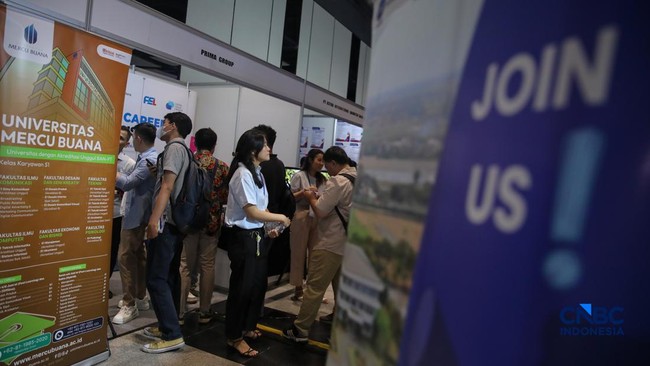
Industrial performance continues to grow in early 2026, yet this has not been sufficient to boost employment. Businesses are instead holding off on hiring, amid market uncertainty and lingering cost pressures.
Data from Bank Indonesia shows manufacturing activity remains in expansion zone. The Purchasing Managers’ Index (PMI) stood at 52.03% in Q1 2026, up from 51.86% in the previous quarter. However, the labour index remains in contraction territory at 48.76%, a trend persisting since Q2 2025.
Signs of slowdown are also evident in the Business Activity Survey (SKDU). The Weighted Net Balance (SBT) for business activity was 10.11% in Q1 2026, down from 10.61% previously. In the manufacturing sector, despite rising business activity, labour usage remains in contraction with an SBT of -0.47%.
Shinta Widjaja Kamdani, Chairman of the Indonesian Employers Association (Apindo), explained that this reflects production growth not fully indicative of strong, sustained demand. She noted that current industrial activity is largely driven by seasonal factors.
“First, it is important to understand that BI’s Q1 2026 SKDU release reflects post-factum business performance with seasonal characteristics, influenced by various consumption moments such as year-end spending carried forward, Chinese New Year, Ramadan, and Eid celebrations,” Shinta told CNBC Indonesia, quoted on Sunday (31 May 2026).
She stressed that this seasonal pattern leads companies to increase production for short-term demand spikes rather than long-term expansion. Thus, additional labour needs are not a priority.
“Why does this expansion not boost employment? The answer is the seasonal factors mentioned. Typically, businesses do not create new jobs solely for seasonal production needs, which correct themselves once the momentum ends,” she said.
Shinta said businesses are currently using medium-term market conditions as their main reference for business decisions, including labour. Over the past year, market conditions have been insufficiently conducive, both domestically and globally.
“It is important to note that last year’s market performance has created significant pressure on overall market performance, both domestic and foreign,” she added.
Amid this, businesses face rising costs across energy, logistics, and financing. This has made companies increasingly cautious about expansion, including opening new jobs.
“Given last year’s unpropitious market conditions and a less optimistic outlook for 2026 performance, coupled with rising business costs and inflation concerns, businesses are generally holding back on job expansion,” Shinta said.
She noted that current business strategies focus more on efficiency and optimising existing capacity rather than expanding the workforce.
“Businesses are now focusing on cost efficiency and intensifying the use of existing resources,” she added.
Beyond demand and cost factors, the structure of formal sector employment is also a consideration. The burden, including costs associated with layoffs, makes companies more selective in hiring.
“Especially given that Indonesia’s formal sector labour costs are relatively high,” she added.
On the other hand, business confidence indicators for expansion also show caution. Shinta explained that the Weighted Net Balance (SBT) in the Business Activity Survey (SKDU) essentially reflects businesses’ appetite for expansion, including financing.
“This context applies to BI’s Q1 2026 SBT assessment. Remember, SBT is an indicator of businesses’ appetite or confidence in expanding business credit,” she clarified.
Considering weak market conditions, high cost pressures, and relatively expensive financing costs, businesses view current expansion as not necessarily sustainable.
In this situation, Apindo believes more concrete policy interventions are needed to encourage business expansion. Stabilising the macroeconomy, controlling inflation, and improving the business climate are seen as key factors.
“The interventions we need from the government include stabilising the national macroeconomic conditions to better support business expansion,” Shinta said.
Furthermore, regulatory simplification and reducing business burdens such as energy, logistics, and financing costs are crucial for enhancing business resilience. The government is also expected to expand access to affordable financing, particularly for labour-intensive sectors with high job-creation potential.
Additionally, government spending should be directed towards productive sectors, and strengthen industrial connectivity and modernisation. Amid global pressures, trade diversification is also seen as a key strategy to maintain supply stability and bolster exports.