
Emergency Voluntary Eight Meeting: Can Oil Prices Stabilise?
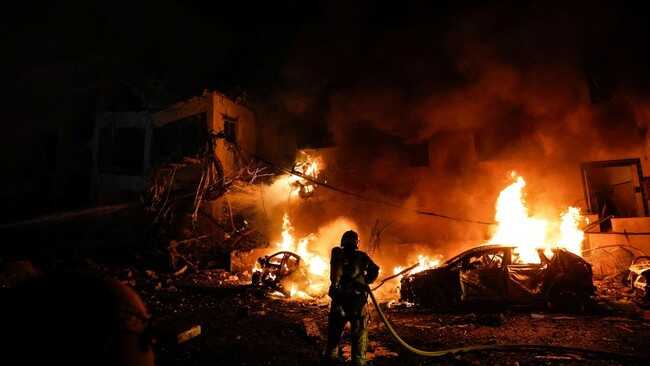
Jakarta — Escalation of military conflict in the Middle East, triggered by recent American and Israeli attacks on Iran, has radically altered the equilibrium of the global energy market.
Amid heightened supply uncertainty, the alliance of oil-producing nations within the “Voluntary Eight” (V8) faction of OPEC+ held a virtual meeting on Sunday, 1 March 2026, to determine the direction of their production quota policy.
The current geopolitical situation has triggered extreme volatility in commodity markets. Global benchmark crude oil, Brent, surged significantly by more than 3% to breach the USD 73 per barrel level at the close of trading on Friday. This represents a sharp acceleration compared to the start of the year, when prices stood at only USD 61 per barrel. However, this price rally is not solely the result of the weekend conflict escalation, but rather an accumulation of geopolitical risk premiums and supply tightening that has been building since the start of the first quarter.
Series of Disruptions and the Illusion of Spare Capacity
Long before the US-Israel-Iran escalation erupted, the global energy market had faced pressure from multiple directions. These included extreme cold weather in the United States in January, drone attacks disrupting Russian upstream infrastructure, and power cuts that crippled the strategic Tengiz oil field in Kazakhstan.
These fundamental conditions initially created expectations that OPEC+ would increase production quotas by 137,000 barrels per day (bpd) from April onwards. However, the realisation of additional supplies in the field is projected to be far below that figure. Based on Kpler data, the 137,000 bpd quota increase is likely to yield only 80,000 to 90,000 bpd in actual supply additions.
This confirms that current global spare capacity is severely limited and concentrated primarily in Saudi Arabia. Meanwhile, Russia has recorded a trend of structural production decline over the past two months, limiting OPEC+’s ability to respond quickly to supply shocks.
Systemic Risk: The Strait of Hormuz Vulnerability
In the short term, market response will depend heavily on the extent to which military escalation continues. If attacks remain limited, prices will be contained at the USD 80 per barrel resistance level. However, the most critical systemic risk is the potential Iranian blockade of the Strait of Hormuz due to prolonged tensions, which currently remains a threat.
This maritime route is the artery of global energy distribution, with approximately 20 million barrels of crude oil—equivalent to 20% of total global supply—passing through daily. Should this strait be closed, virtually no structural mitigation options exist.
Data from the US Energy Information Administration (EIA) notes that the land pipeline bypass networks of Saudi Arabia and the United Arab Emirates have a maximum capacity of only 2.6 million bpd. This figure is entirely insufficient to cover the deficit of tens of millions of barrels per day, risking oil prices breaching the USD 100 per barrel level.
OPEC+ Strategic Calculations and Competitor Threats
Despite the market standing on the brink of a supply crisis, OPEC+ is projected to take an extremely conservative approach. Homayoun Falakshahi from Kpler argues that injecting large supplies at this time is premature before the real impact of US attacks on energy logistics flows can be clearly quantified.
Furthermore, the current price level represents a strategic zone for the cartel. Prices around USD 70 per barrel represent the ideal point—high enough to maintain the financial health of V8 member margins, yet below the super-profit threshold that would entice major competitors such as US shale oil producers, Canada, Brazil, and Guyana to increase capital expenditure.
Should prices spiral out of control above USD 80-90 per barrel, OPEC+ risks losing market share in the medium term due to increased supply from non-OPEC nations.