
Emergency Climate Change Mitigation in the Face of Godzilla El Niño
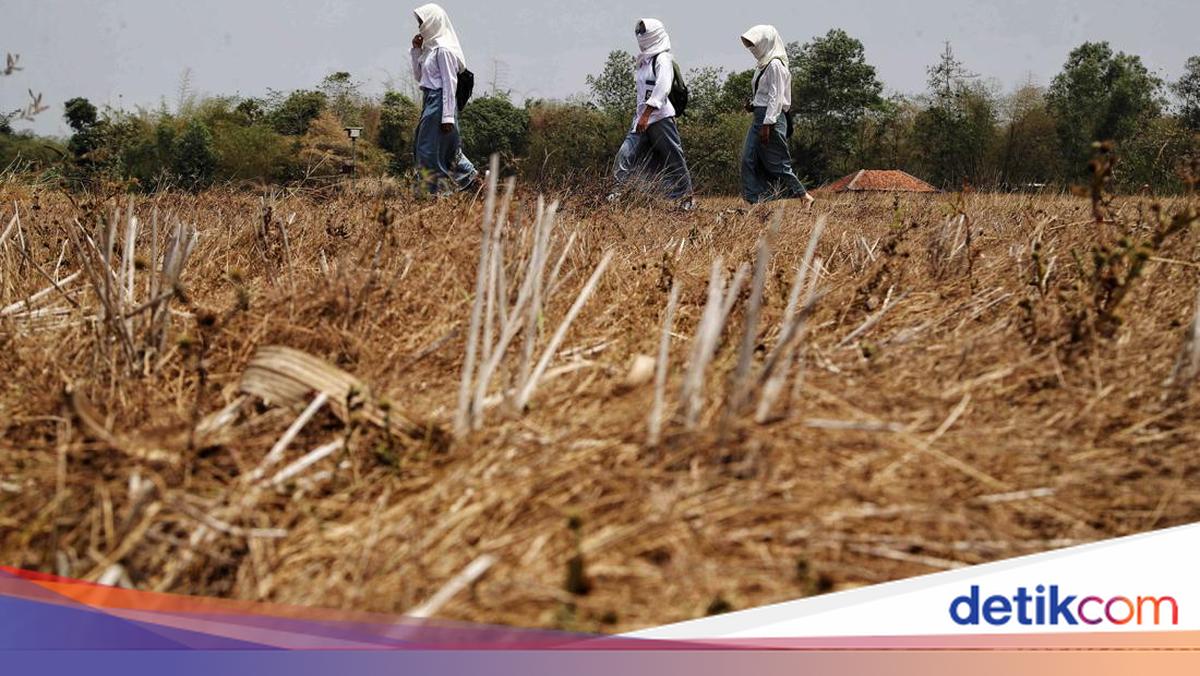
The Meteorology, Climatology, and Geophysics Agency (BMKG) has informed the public that Indonesia will soon experience the climate change phenomenon known as ‘Godzilla El Niño’. According to the BMKG, what distinguishes El Niño from Godzilla El Niño is its intensity.
As an interdisciplinary researcher in social and ecological sciences, I interpret this phenomenon as an ‘emergency’. Why? Because even prolonged El Niño events have already made it difficult for farmers, fishermen, cultivators, and others whose livelihoods depend on natural resources to adapt.
Thus, Godzilla El Niño certainly presents a more complex challenge that will add vulnerability to at-risk groups and those whose livelihoods depend on nature.
According to the Climate Action Tracker, Indonesia is at a critical level because its instruments, policies, and funding for climate change mitigation and adaptation are in the ‘insufficient’ category. This is reinforced by the Climate Change Performance Index, which ranks Indonesia 43rd with inadequate climate mitigation performance. Therefore, the BMKG’s warning about the symptoms of Godzilla El Niño needs to serve as an alarm to drive climate change mitigation policies.
Urgent climate change mitigation requires narratives and explanations through visual or audiovisual means about the ‘Godzilla El Niño’ phenomenon that are easier for all parties to understand. Of course, the context based on scientific disciplines that can explain the climate phenomenon needs to be developed together with social sciences.
Without interdisciplinary collaboration, explanations or narratives will not benefit society. Because these explanations and narratives are forms of education, socialisation, and information for the public. Climate phenomena are a domain of scientific knowledge that is important to narrate in order to facilitate understanding and encourage efficient and effective social actions.
However, to date, this narration has not been inclusively accessed through visual and audiovisual media. Videotrons and billboards can serve as media for this climate information, making the use of videotrons and billboards a public right and a public channel to obtain information that informs decision-making for daily life actions.
The ‘Godzilla El Niño’ phenomenon is an emergency phenomenon that should be communicated to the public in a more inclusive and informative manner. The state has an obligation to protect its citizens, especially vulnerable groups, in the face of climate change. The UN Human Rights Council has emphasised that climate protection is an implementation of human rights. Therefore, the state needs to provide concrete protection starting with climate change mitigation actions.
The intensity of drought and its impacts are two important aspects to highlight. Weather conditions or dry temperatures also need explanations regarding their conditions, levels, and things that need to be anticipated. For example, in my research on farmers facing climate change, farmers described differences in dry seasons over the past 10 years compared to the last 5 years.
These differences are shown by longer periods and stronger dry intensity, affecting water availability, the emergence of pests and diseases in crops due to water absorption levels in plants and their humidity conditions. Furthermore, with the impending Godzilla El Niño drought conditions, farmers need illustrations of its drought intensity, how it affects crops, water availability, and in emergency conditions, how to keep plants tolerant to drought.
Not only for crops, but for farmers as the main actors in agriculture, they need information on how to face Godzilla El Niño to maintain their health and guidance on times or conditions to avoid if extreme weather occurs, so that farmers can protect themselves and anticipate for their crops.
In addition to farmers, other actors at direct risk from exposure to drought conditions are groups of workers who spend a lot of time working in the field, such as construction workers, couriers, transportation workers, sanitation workers, small traders, and others. These groups need to be given ease and fulfilled their rights in accessing accessible information so they can obtain protection and sufficient information to take mitigative actions against potential crises.
For these groups, information is needed on Godzilla El Niño conditions and their impacts on health, as well as anticipation of potential diseases caused. Thus, they can anticipate to avoid impacts on their health, which would affect their economic conditions.
The Godzilla El Niño phenomenon is one of the climate variability phenomena. Indonesia has experience dealing with climate variability over the past 10 years. What happened in 2025 was tropical cyclones and extreme rainy seasons. Therefore, some of these climate variability events need to be documented inclusively and accessibly as lessons to enable future adaptation and evaluation of mitigation that should become a priority.
If mitigation does not receive attention from the state, citizens will not be able to adapt to climate change. Especially vulnerable and poor groups will not be able to adapt. Of course, choices for survival become important, but not just surviving in minimal conditions.
We need survival efforts that support sustainable living and dignified life. If mitigation does not become a policy priority, then we will only be