
Elon Musk Wants to Wrap the Sun? Here's the Fact
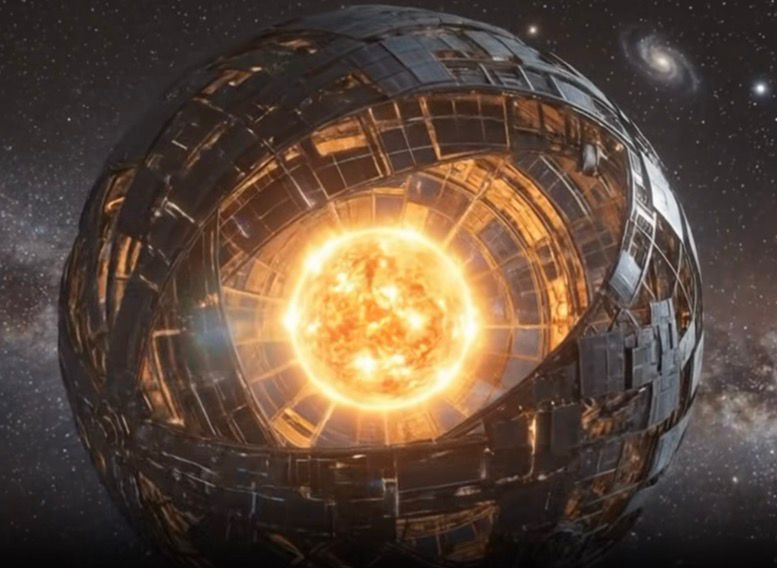
Social media is once again abuzz with a viral narrative about the idea of “wrapping the Sun”. Various short videos and images depict a massive structure encircling our solar system’s central star, with Elon Musk’s name frequently cited as the figure behind the concept.
What is depicted in these posts actually aligns with a long-standing concept in science and science fiction known as the Dyson Sphere, namely a vast network of structures or satellites orbiting a star to capture all the energy it emits.
Theoretically, achieving this is associated with a Type II civilisation on the Kardashev Scale, a level at which a civilisation can efficiently utilise the total energy from its parent star.
Although intriguing to imagine, the scale of such construction far exceeds current human technical capabilities. The massive material requirements and highly complex orbital coordination keep the Dyson Sphere in the realm of long-term theory and futuristic imagination.
Although this discussion is often linked to Elon Musk’s name, it must be emphasised that to date, there are no official plans, technical documents, or announcements from SpaceX or Tesla regarding large-scale stellar engineering projects. The viral posts circulating are largely based on netizen speculation and the blending of science fiction concepts with Musk’s known eccentric persona.
However, Elon Musk has recently voiced his opinion on manipulating solar energy via the X platform. Musk’s focus is not on building a “shell” around the Sun, but rather on a method called Solar Radiation Management (SRM) to cool the Earth.
“A large constellation of solar-powered AI satellites would be able to prevent global warming by making small adjustments to how much solar energy reaches Earth,” Musk wrote on 3 November 2025.
This statement comes amid the international community’s failure to meet emission reduction targets, leading bold technological strategies to gain attention. When asked how SRM technology could ensure precise and fair adjustments, including seasonal aspects, Musk replied, “It only takes small adjustments to prevent global warming or global cooling in this case. Earth has been a snowball multiple times in the past.”
Although Musk has the largest satellite infrastructure through Starlink, experts warn that space-based SRM strategies are highly unrealistic and dangerous. To make a significant temperature difference, the number of satellites required would be enormous, with estimated costs reaching trillions of dollars.
Furthermore, experts are concerned about unintended consequences for day-night cycles, biodiversity, and potential geopolitical tensions if control over the world’s sunlight falls into the hands of one entity.
Although Musk has not shared official plans for SpaceX to develop SRM satellites, his involvement in this discussion is certain to ignite prolonged debates on how far humanity should intervene in the planet’s climate through geoengineering.