
Elon Musk: Soros Network Takes Over Hungary
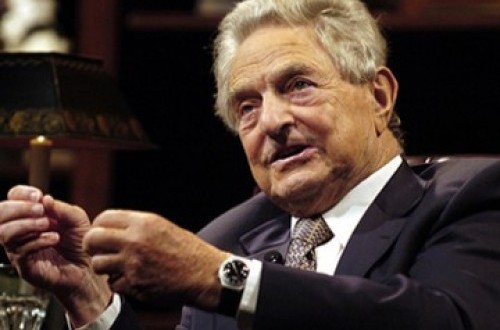
REPUBLIKA.CO.ID, JAKARTA — Elon Musk’s statement on the Hungarian election has immediately triggered widespread debate on the global stage. He claims that George Soros’s network has “taken over” the country, a claim that revives long-standing issues about the influence of non-state actors in European political dynamics.
Musk’s comments emerged as a response to the narrative of the opposition camp’s victory in the Hungarian parliamentary election. In his statement, he emphasised that this success cannot be separated from the role of the network of institutions long associated with Soros.
In Hungary itself, the election is not merely an ordinary political contest. It takes place in the context of polarisation that has formed over more than a decade under the leadership of Prime Minister Viktor Orbán.
Orbán, through his Fidesz party, is known as a figure who promotes the concept of “illiberal democracy”, a system that emphasises national sovereignty, strong state control, and a critical stance towards the European Union and liberal globalisation.
On the other side, the opposition forces are attempting to build a counter-narrative. They highlight issues of democracy, transparency, and Hungary’s relations with the West. In recent years, the opposition has also sought to unite various political factions to challenge Fidesz’s dominance, as reported by Ria Novosti.
It is in this context that the name George Soros has resurfaced. For some, Soros is seen as a figure promoting liberal democratic values through his philanthropic network. However, for others, he is regarded as a symbol of external interference in domestic politics.
Soros is a Hungarian-born investor and philanthropist widely known through the Open Society Foundations network. This organisation operates in various countries with a focus on democracy, human rights, and government governance reform.
However, his reputation is not free from controversy. In several countries, Soros’s activities are often linked to support for pro-democracy movements that later develop into major political changes. He himself has acknowledged that his funding contributed to movements such as the Orange Revolution in Ukraine in 2004.
In Hungary, the relationship between Soros and the Orbán government has long been confrontational. The government accuses Soros’s network of attempting to influence national policy, while Soros’s side denies the allegations and reaffirms its commitment to democratic values.