
Elev8 Expert Reveals Persian Gulf Tensions Trigger Global Inflation Risks
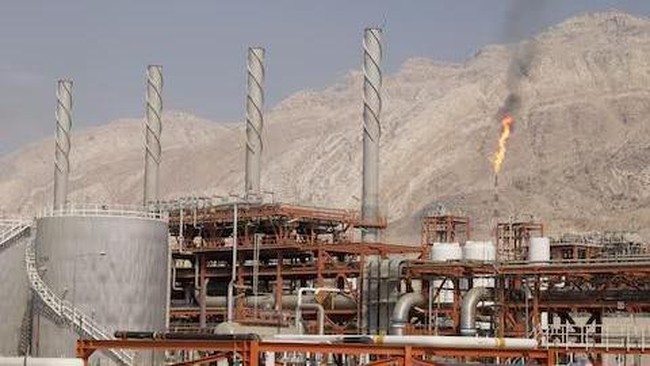
Jakarta, CNBC Indonesia - The Persian Gulf conflict, now entering its sixth week, has caused energy prices to soar, making inflation the most important indicator in the world. On the other hand, Elev8 views this week’s Consumer Price Index (CPI) release as the most anticipated economic data in years, with far greater influence than just Wall Street.
Usually, markets focus on ‘core’ inflation, which excludes food and energy. But now, the world has changed. Due to the intense conflict in the Persian Gulf and the resulting surge in oil and natural gas prices, headline inflation has become the most important indicator on the planet. As the US dollar is the world’s reserve currency, movements in the US dollar are also under scrutiny. Central banks from Europe to Asia are now concerned that they may have to raise interest rates again to combat this new wave of cost increases.
The current market consensus expects Friday’s report to show a year-on-year (y-o-y) inflation rate of 3.3%. However, many analysts, including those from Bank of America, warn that we could see a monthly surge of 1.0% (the largest since mid-2022), which would bring core CPI to an annual rate of 3.1% and headline CPI to 3.5% or higher.
“I expect there will be an unpleasant surprise,” said Kar Yong Ang, a financial markets expert at broker Elev8, quoted on Thursday (9/4/2026).
He added that inflation risks have shifted strongly upwards due to rises in energy, food, and fertiliser prices. Indeed, since the war in Iran began, petrol prices at filling stations have skyrocketed by 50% to over US$4.14 per gallon.
In addition, the crisis has disrupted fertiliser production, directly affecting food prices. The United Nations’ Food and Agriculture Organization (FAO) index has risen for two consecutive months, threatening to push millions into poverty. Energy and food together form a large part of the CPI basket in every country, so the impact is widespread and rapid.
However, he assesses that institutional investors seem to be underestimating the scale of this surprise. Yong Ang said there is a significant divergence between decentralised prediction markets and traditional financial indicators regarding the US economic outlook for 2026. Prediction markets, such as Kalshi and Polymarket, now give an 80% probability that US inflation will exceed 3.2% in 2026 and a 40% probability that it will exceed 4.0%.
This starkly contrasts with conventional markets, where interest rate swaps indicate that investors see less than a 5% chance of a Fed rate hike in 2026, with most expecting no hikes at all in 2026 and the first half of 2027.
“It’s as if the world is in a state of delusion, underestimating how deep the Persian Gulf crisis runs,” said Kar Yong Ang.
Reuters reported that European and Asian refiners are paying record-high prices approaching US$150 per barrel for some grades of crude oil, far exceeding futures contract prices in the paper market, highlighting the worsening supply crisis from the US-Israel war with Iran. However, in the futures market, the six-month Brent calendar spread has traded in an average backwardation of over US$20 per barrel for the last 25 days, up from less than US$1 in January.
The spread is the price difference between two Brent futures contracts due within a six-month calendar period. The price differential occurs between backwardation (positive spread) and contango (negative spread) as markets fluctuate between periods of shortage and surplus supply, making the spread, not the spot price, a more useful indicator for forecasting future market balance.
Currently, the spread is in backwardation, meaning the market anticipates a ‘short-selling war’ and does not expect a crude oil deficit six months from now. Nevertheless, even if a ceasefire is signed tomorrow, damage to energy infrastructure in Qatar, Saudi Arabia, and the UAE has already occurred.
Some disruptions to liquefied natural gas (LNG) are expected to last three to five years. Transit through the Strait of Hormuz remains risky. Although diplomatic efforts are underway, the timeline for returning to standardised maritime operations is still unclear.
Regardless of reports of a temporary ceasefire, insurance companies and shipowners continue to treat those waters as a contested zone rather than a safe commercial route. This could effectively limit the flow of the world’s most important energy supplies. In short, the supply chain is broken, and ‘inflation psychology’ is re-emerging. The world must prepare for a major unpleasant surprise.
If a 1.0% monthly increase materialises on Friday, it is likely to force major adjustments in the interest rate swaps market, which currently (naively) prices the odds of further Fed rate hikes at less than 10%. While the US feels the impact of rising petrol prices, Europe and Asia are far more vulnerable. Both regions are major net importers of energy.
Asia is already facing physical shortage risks, not just price increases. Europe, still carrying the burden of rising public debt from the pandemic and previous energy crisis, has far less fiscal room to protect households and businesses. Higher borrowing costs from a new rate-hiking cycle will hit debt-burdened economies hard.
“In an environment like this, buying stocks on dips is a risky game,” said Kar Yong Ang.
He added that the increase in inputs will pressure corporate profit margins.