
Elev8 Conducts Trading Experiment in the Stratosphere, Testing Global System Resilience
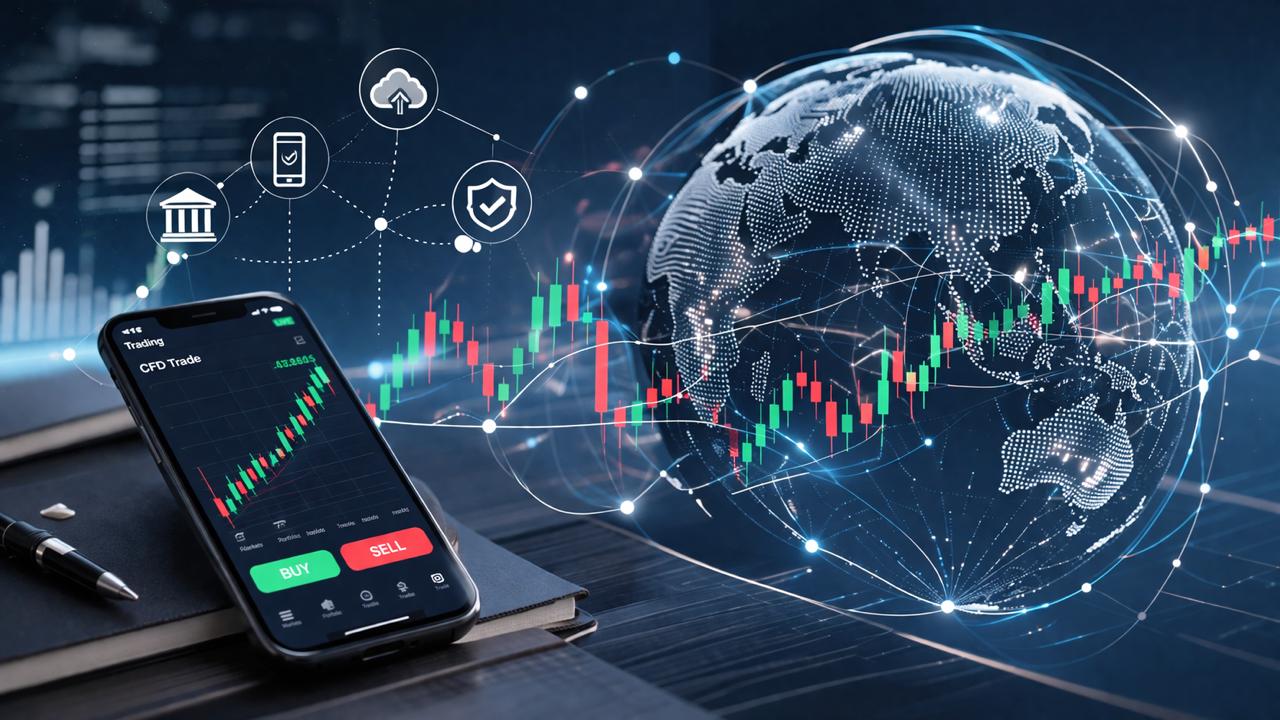
Developments in financial technology (fintech) continue to drive financial services beyond conventional boundaries. Amid rising expectations for speed and flexibility in digital transactions, a recent experiment demonstrates that trading activities are no longer bound by physical space, even approaching the edge of outer space.
In a recent trial, broker Elev8 executed a trading transaction using a smartphone device flown to an altitude of around 30 kilometres above sea level, entering the stratosphere. At that moment, one transaction (trade) was successfully carried out in real-time and recorded as one of the direct trading executions at such an extreme altitude.
The experiment lasted approximately 2.5 hours using a hydrogen-filled stratospheric balloon. The carried device reached an altitude above 99.5% of Earth’s ozone layer, facing extreme environmental conditions with temperatures up to minus 65 degrees Celsius. Nevertheless, the system remained capable of performing its primary function: opening a trading position, processing the order through the server, and generating a unique execution ID just like any regular transaction.
This phenomenon reflects a broader trend in the fintech industry. As the adoption of digital financial services increases, with more than half of the global population projected to use banking apps by 2026, expectations for instant and geographically unrestricted transactions are growing stronger. In this context, the stratosphere experiment serves as a symbol of that evolution.
However, behind the technological aspect, a fundamental question arises: how are such transactions regulated legally?
In principle, trading activities are not determined by the user’s physical location when executing the transaction. When a user opens an account with a broker, they are bound by the user agreement that forms the legal basis for all trading activities. Every order placed, whether from an office, abroad, or from tens of kilometres in the sky, is still processed through the broker’s server infrastructure and subject to the jurisdiction where the broker is licensed and regulated.
By comparison, financial activities at sea generally follow the jurisdiction of the ship’s flag state. However, in the context of digital trading, that approach is not entirely relevant. The trader’s geographical location is not the primary variable in the legal framework, as the transaction essentially occurs within the broker’s centralised server system.
Thus, the transaction conducted in the stratosphere remains within the same regulatory framework as one on the ground. That extreme location is merely an access point to the system, not a determinant of legal jurisdiction.
This experiment also opens up broader discussions on the future of financial transactions. In a further illustration, similar questions could arise if trading activities were conducted off-Earth, such as on a space station or another planet. In such scenarios, legal aspects would likely refer to international agreements and vehicle registrations, rather than territorial boundaries as on Earth.
Ultimately, this trial affirms one thing: in the modern fintech ecosystem, geographical boundaries are increasingly losing their relevance. Mobile financial services follow the digital systems and infrastructure that support them, no longer the physical location of the user.
The stratosphere experiment may sound unusual, but it reflects the industry’s increasingly clear direction: towards financial services that are truly global, borderless, and capable of operating in nearly all conditions.