
Elephant Found Dead Entangled in Electric Wire in Aceh
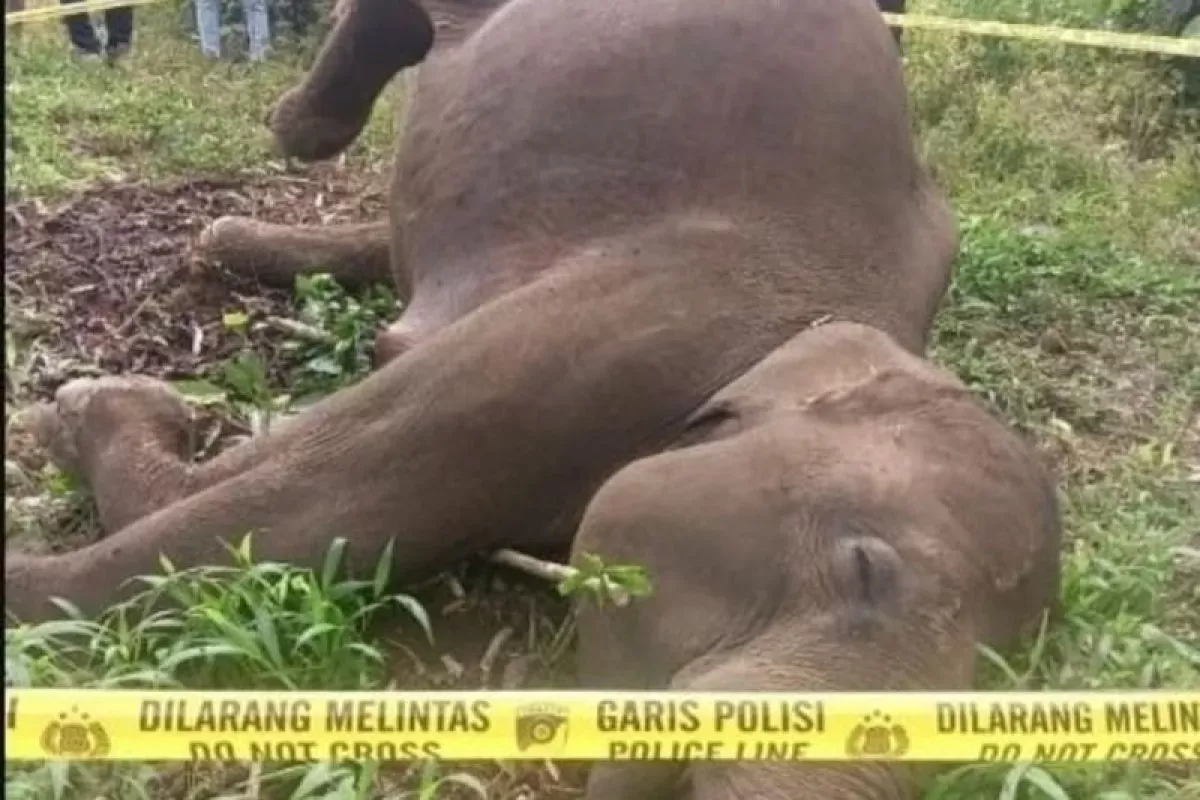
A Critically Endangered Sumatran Elephant Dies in Aceh, Exposing the Deadly Consequences of Habitat Loss, Illegal Electric Fences, and an Urgent Crisis of Coexistence
On 21 February 2026, a grim discovery in Karang Ampar village, Ketol District, Aceh Tengah Regency, sent shockwaves through conservation circles in Aceh. The lifeless body of a critically endangered Sumatran elephant — a female estimated to be about 20 years old — was found grotesquely entangled in a high-voltage electric wire. Investigators believe the fatal incident occurred the previous night, 20 February 2026.
Officials from Balai Konservasi Sumber Daya Alam Aceh, working alongside local authorities and WWF Indonesia, moved swiftly to secure the scene and launch an investigation. Yet beyond the forensic details lies a far more disturbing truth: this death was not an accident, but the foreseeable outcome of a deepening ecological conflict between expanding human activity and shrinking wildlife habitat.
The Deadly Entanglement: A Recurring Tragedy
The elephant’s trunk remained tightly wrapped around the live wire — a haunting testament to a violent final struggle. This was no isolated mishap. It is emblematic of a widespread and dangerous practice: the indiscriminate use of high-voltage electric fencing to shield agricultural land, particularly palm oil plantations, from wildlife.
Dolly Priatna, Executive Director of the Belantara Foundation, has warned that such electrified barriers have long been misused — once for hunting, now as crude deterrents that kill indiscriminately. Many are erected illegally, with little oversight and even less regard for ecological consequences.
Authorities, including BKSDA Aceh head Ujang Wisnu Barata, have stressed that these wires endanger not only protected species but also humans. The stakes are therefore both environmental and public-safety related. Each incident chips away at biodiversity while exposing the fragility of law enforcement in frontier landscapes where development outruns regulation.
A Species on the Brink: The Sumatran Elephant’s Fight for Survival
The Sumatran elephant (Elephas maximus sumatranus) is classified as Critically Endangered on the IUCN Red List, reflecting a catastrophic population collapse of more than 80 percent over the past three generations.
Today, only an estimated 2,400–2,800 individuals survive globally, with roughly 500–600 remaining in Aceh alone. Every death therefore carries disproportionate weight — not merely the loss of an individual animal, but the erosion of a species’ genetic future.
The drivers of decline are painfully clear:
– Large-scale deforestation
– Agricultural expansion, especially palm oil
– Infrastructure development
– Fragmentation of migration corridors
– Escalating human–elephant conflict
As forests shrink, elephants are pushed into farmland and settlements, where survival strategies collide with human economic interests. The result is a cycle of retaliation, fear, and preventable fatalities — overwhelmingly suffered by the elephants.
The Human Factor: Responsibility, Regulation, and the Path Forward
Indonesian law affords strict protection to Sumatran elephants, making their killing a criminal offense. Yet the persistence of lethal fencing exposes glaring enforcement gaps and a shortage of practical alternatives for farmers living at the conflict frontier.
The response to this incident — police lines, necropsy, and formal investigation — signals institutional seriousness. But crisis management after the fact cannot substitute for prevention.
Conservation experts increasingly advocate humane, evidence-based deterrents, including:
– Chili-based fencing that irritates but does not harm
– Beehive barriers exploiting elephants’ aversion to bees
– Early-warning systems and virtual fencing technologies
– Community patrols and compensation schemes
Equally crucial is strategic land-use planning that preserves migration routes and integrates wildlife considerations into development policy. Without such planning, conflict is not accidental — it is engineered by landscape design.
The economic calculus is also misunderstood. Installing safe deterrents or compensating crop losses carries real costs, but they are dwarfed by the ecological and economic value of living elephants. Ecotourism revenue, ecosystem services, and biodiversity stability far exceed short-term gains from lethal protection measures.
Legal penalties reinforce this imbalance. Fines for harming protected species can reach hundreds of millions to billions of Indonesian Rupiah. A penalty of IDR 1,000,000,000, for instance, equals roughly SGD 77,000 — a steep price for actions often taken in haste or ignorance.
Beyond Aceh: A Global Imperative for Conservation
The tragedy in Aceh Tengah reverberates far beyond Indonesia’s borders. It mirrors a global biodiversity emergency in which rapid development collides with irreplaceable ecosystems.
Across Southeast Asia — one of the planet’s richest biological regions — economic growth frequently proceeds at the expense of forests and wildlife. Climate change amplifies these pressures, intensifying habitat loss and altering migration patterns.
International visitors, investors, and consumers are not passive observers. Their choices — from tourism practices to supply-chain demands — shape incentives on the ground. Ethical travel, sustainable sourcing, and support for conservation initiatives can influence policy, funding, and corporate behavior.
Protecting species like the Sumatran elephant is therefore not solely Indonesia’s burden. It is a shared global responsibility requiring finance, technology transfer, and political will.
A Warning We Cannot Afford to Ignore
The death of this elephant — silent, solitary, and preventable — is more than a local tragedy. It is a stark indictment of how modern development continues to marginalize the natural world. Without decisive action, such incidents will not remain exceptional; they will become ro