
Electrification in the Mining Sector Drives Component Industrialisation
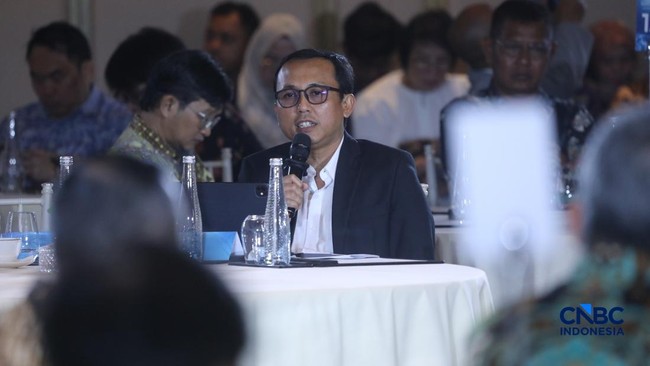
Jakarta, CNBC Indonesia - The government is encouraging electrification in the mining sector to extend beyond mere technology adoption and to simultaneously strengthen the domestic industry. Director of the Agricultural Machinery and Equipment Industry (IPAMP) at the Ministry of Industry, Solehan, emphasised that the mining sector holds a strategic position in the national economy, including in driving industrialisation.
“In that context, the government positions itself as a regulator and facilitator to support the gradual and sustainable acceleration of electrification,” he said during the EV Transition in Mining Industry Outlook 2026, organised by CNBC Indonesia on Wednesday (29/4/2026).
The development of an electric vehicle ecosystem in the mining sector must be comprehensive. This includes not only the use of equipment but also component production and the industrial ecosystem.
This effort forms part of the government’s broader strategy to increase the added value of natural resources. Consequently, mining outputs will not only be exported in raw form but processed into high-value products.
“The policy focus is not solely on replacing heavy equipment based on internal combustion engines (ICE) with electric versions, but also on building the ecosystem itself to support operational efficiency, emission reduction, and increased competitiveness of the domestic mining sector,” said Solehan.
Indonesia itself has significant advantages in resources, particularly nickel, which is the main material for electric vehicle batteries. This potential is seen as a crucial asset for entering the global supply chain.
Solehan assessed that this opportunity must be seized so that Indonesia does not lag behind in the global electric vehicle industry development. Moreover, global demand for batteries continues to rise.
“Well, this means Indonesia is starting to have a strong opportunity in developing the supply chain for those components, including batteries. Here we have nickel, so then NMC – Nickel Manganese Cobalt – that needs to be downstreamed,” said Solehan.
Furthermore, developing the battery and electric heavy equipment component industries can drive domestic manufacturing growth. This also has the potential to create new job opportunities.
Strengthening the industry from upstream to downstream is necessary for Indonesia to compete in the global market. With an integrated ecosystem, mining electrification can deliver broader economic impacts.
“This indeed becomes an important asset so that electrification in the mining sector does not just become a technology user or adopter, but also drives the growth of the domestic manufacturing industry itself,” said Solehan.