
Electric Vehicles Become the New Engine Driving the National Automotive Industry
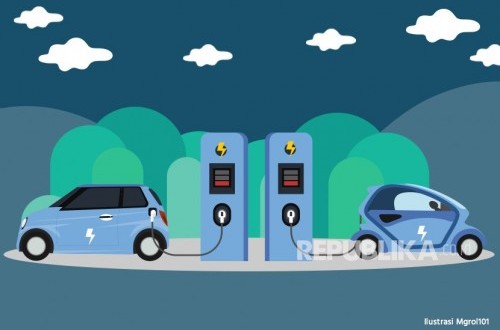
Electric vehicles (EVs) are becoming the new growth engine for the national automotive sector, following high sales in this segment since last year, continuing into 2026. EVs are sought after for their energy efficiency and environmental friendliness.
EV sales are expected to explode further after the price of non-subsidised fuel (BBM) rises. This is compounded by the narrowing price gap between EVs and internal combustion engine (ICE) vehicles.
Other factors include the increasing range of EVs, which can reach 600 kilometres (km) on a full battery charge. This can reduce range anxiety typically experienced by EV users.
This issue emerged in a discussion titled ‘Surge in Global Oil Prices, Momentum to Boost Electric Vehicle Adoption’ organised by the Industry Journalists Forum (Forwin) in Jakarta on Wednesday (22/4/2026).
Speakers included the Director General of Metal, Machinery, Transportation Equipment, and Electronics Industry (ILMATE) of the Ministry of Industry (Kemenperin), Setia Diarta; General Secretary of the Indonesian Automotive Industry Association (Gaikindo), Kukuh Kumara; Head of PR & Government at BYD Indonesia, Luther T Panjaitan; and CEO of Degree Synergy International, Andrea Suhendra.
EVs Rise, ICE Falls
The EV boom in Indonesia is evident in the declining contribution of ICE vehicles to the total market. According to data from the Indonesian Automotive Industry Association (Gaikindo), the ICE share dropped from 99.6% in 2021 to 78.2% in 2025.
Conversely, the battery electric vehicle (BEV) share skyrocketed from 0.1% to 12.9% by the end of 2025. By March 2026, the BEV share rose again to 15.6%, while ICE fell to 75%.
During this period, BEV sales surged 96% to 33,146 units from 16,926 units, surpassing the industry’s 1.7% growth. Meanwhile, ICE vehicle sales plummeted from 174,776 units to 156,684 units.
By the end of 2026, the BEV share is projected to soar to around 19-20%. This forecast already accounts for changes in regional tax policies on the automotive sector.
It is known that starting 1 April 2026, based on Ministry of Home Affairs Regulation No. 11 of 2026, electric vehicles are no longer automatically tax-exempt. Vehicle ownership tax (PKB) and motor vehicle transfer fee (BBNKB) are now imposed on EVs. EV incentive policies are now handed over to regional governments (pemda).
Regional governments are advised to impose progressive tax rates on EVs to maintain sales momentum. Specifically, BEVs priced above Rp 500 million could face high tariffs, while those below Rp 300 million should have low rates.
The government could also provide greater opportunities for plug-in hybrid electric vehicles (PHEVs). This type of vehicle can serve as a solid bridge in the transition from ICE to EV vehicles. PHEVs’ pure electric mode can be used for urban travel, similar to BEVs. These vehicles can also be used for long distances, as they have an internal combustion engine.
This means PHEVs are suitable for Indonesia to address infrastructure disparities between Java and outer islands. PHEV owners do not need to worry about the availability of public electric vehicle charging stations (SPKLU), as the vehicle can still be driven when the battery is depleted.
On that basis, PHEVs deserve additional incentives. Currently, PHEVs only receive luxury goods tax relief.
Meanwhile, EV business players are calling for policy consistency from the government to ensure sustainable adoption. It is worth noting that EVs are needed to reduce carbon dioxide emissions as well as fuel consumption, which ultimately can lighten the state’s fiscal burden.
From the regulator’s side, the Ministry of Industry (Kemenperin) is strengthening regulations to support achieving net zero emission (NZE) targets, including policies for developing low-carbon vehicles, the domestic component level (TKDN) roadmap for battery-based electric vehicles (KLBB), and industry incentive arrangements.