
Electric Vehicle Growth Accelerates, Safety Factors During Rainy Season Require Attention
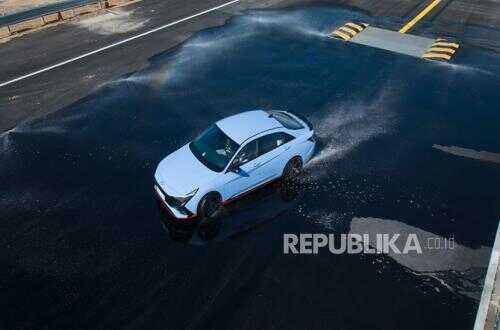
Indonesia’s electric vehicle market continues to demonstrate positive growth trends. In 2025, the national electric vehicle market increased by approximately 49 per cent, surpassing the ASEAN average. However, amid this growth, road safety has become an important consideration, particularly as the rainy season continues across several regions.
Unlike conventional vehicles, electric cars are heavier due to battery packs and feature instantaneous acceleration response thanks to immediate torque availability upon pedal depression. These characteristics require electric vehicles to maintain optimal grip and stability, especially when travelling on wet roads or in flood-prone areas.
The Indonesian Meteorological, Climatological, and Geophysical Agency (BMKG) reports that rainfall remains likely until early March, though overall precipitation is expected to decline. Heavy localised rainfall can cause slippery road surfaces, water accumulation, and road damage, all increasing accident risks.
Edo Rusyanto, Coordinator of the Road Safety Action Network (Jarak Aman), emphasised that weather conditions, particularly rain, represent a significant safety variable. He revealed that Korlantas Polri data for 2025 recorded 3,715 accident cases occurring during rainy conditions or approximately 2.4 per cent of total incidents. In cloudy or overcast conditions, 2,878 cases were recorded, representing approximately 1.86 per cent. On average, approximately 10 accident cases occur daily during rainy weather.
“This demonstrates that wet road conditions and limited visibility do indeed increase risk. Drivers require extra caution, including ensuring their vehicles are in prime condition,” said Edo.
Harso Kurniawan, General Secretary of Jarak Aman, added that tyre condition is a key factor in reducing aquaplaning risk, a condition where tyres lose contact with the road surface due to water layers.
“To reduce aquaplaning risk, tyres must not be bald so water drainage channels remain intact. Good tyre condition also improves braking capability. Additionally, it is important to maintain safe distance and adjust speed during the rainy season,” said Harso.
Addressing this need, through PT Hankook Tire Sales Indonesia (HTSI), Hankook Tire has introduced a specialised tyre line for electric vehicles, Hankook iON, designed to accommodate electric vehicle characteristics whilst supporting safety and comfort.
Bartek (Byunghak) Choi, President Director of Hankook Tire Sales Indonesia, explained that increased electric vehicle adoption drives demand for supporting components suited to these vehicles’ dynamics.
“Through the Hankook iON line, we offer various tyre options specifically designed for electric vehicles to support comfort, efficiency, and driving safety,” said Bartek.
Hankook iON features technologies including i Perfect Grip for enhanced wet road traction, i Sound Absorber for noise reduction, i Super Mileage for extended durability, and i Extreme Lightness, which helps electric vehicle efficiency.
As electric vehicle adoption accelerates and weather conditions remain variable, attention to safety components such as tyres becomes increasingly relevant. Advancement in vehicle technology must progress alongside road safety readiness to ensure mobility remains safe across various road conditions.