
Electric Vehicle Charging Stations Operating on East Java-Bali Route for Homecoming Travellers
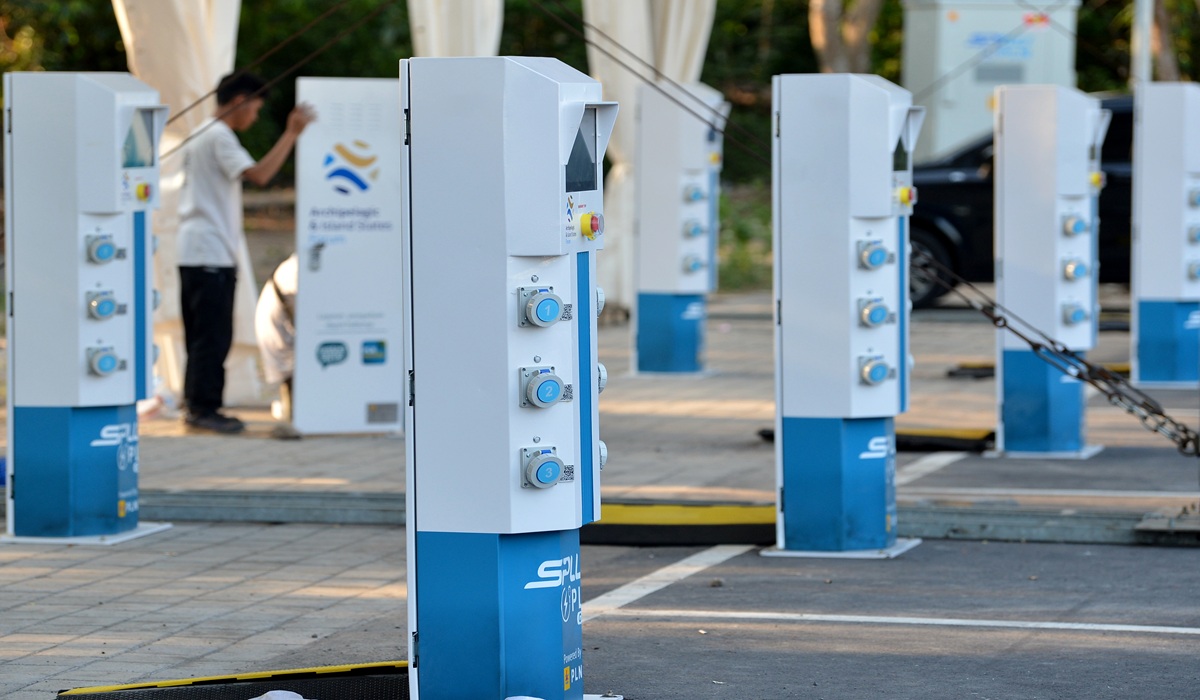
Public Electric Vehicle Charging Stations (SPKLU) on the East Java-Bali route are being prepared ahead of the 2026 Lebaran exodus. Adi Priyanto, Director of Retail and Commerce at PLN, stated that the SPKLU Anjungan Betutu Gilimanuk facility is located near Gilimanuk Harbour, serving as a primary charging point for electric vehicle users arriving in Bali after crossing from Java.
In addition to charging facilities, the location is equipped with a standby post and rest areas for electric vehicle-using travellers. “Beyond providing SPKLU, we also offer rest areas for travellers who may be tired from their journey. They can rest whilst their vehicles charge,” said an officer at the site.
The charging facilities at this location are comprehensive. A 180 kW charger with two nozzles allows two electric vehicles to charge simultaneously. Additionally, a 22 kW charger for specific electric vehicles and facilities for two-wheeled electric vehicles, enabling motorcycles to charge, are available.
According to Adi Priyanto, such infrastructure readiness reflects PLN’s commitment to providing excellent service to the public. “PLN not only provides SPKLU, but also ensures the reliability of the electrical system from generation to distribution so customers feel safe and comfortable,” he said.
The inspection then continued to the SPKLU Rest Area Soka, a key point on the West Bali route to Denpasar. This location is a favourite stop for electric vehicle users due to its coastal tourism area location and spacious car park.
At this site, Adi Priyanto and the General Manager of PLN UID Bali verified the readiness of the available charging equipment. SPKLU Soka is equipped with a 100 kW charging machine ready to serve electric vehicles on the route. From the inspection, the electrical system capacity at this location remains highly adequate. “Currently, electrical capacity usage is only around 75 per cent, so it is still sufficient to serve electric vehicles charging,” explained the PLN team.
The General Manager of PLN UID Bali added that electric vehicle charging activity at this location has continued to increase in recent months. “Over the past three months, dozens of electric vehicle charging transactions have been recorded at SPKLU Soka, and the numbers have increased significantly compared to the previous year,” he said.
Besides charging facilities, the area also provides restaurants, places of worship, and beach views, which attract both electric vehicle users and tourists.
The infrastructure inspection concluded at SPKLU Center Hayam Wuruk Denpasar, one of Bali’s largest electric vehicle charging hubs. This location is known as one of the busiest SPKLU in Bali due to its various supporting facilities for electric vehicle users. Upon arrival, several electric vehicles were observed charging.
Adi Priyanto assessed that SPKLU readiness on the Surabaya–Bali corridor demonstrates PLN’s commitment to supporting electric vehicle mobility in Indonesia. “I see that field teams’ readiness is very good, from personnel readiness, 24-hour shift arrangements, to charging equipment reliability,” he said.
Beyond ensuring charging equipment readiness, PLN also examines safety aspects at each SPKLU, including grounding systems, electrical capacity, and safety equipment. “Every SPKLU is equipped with adequate security systems, including specialised lithium battery fire extinguishers,” he added.
Ultra-fast charging facilities are also available at this location, enabling electric vehicles to charge more quickly. Additional facilities such as cafeterias and rest areas make this SPKLU one of Bali’s favourite locations for electric vehicle users.