
Electric Drag Bike Built by SMK Muhammadiyah 3 Yogyakarta Students Reaches 134.5 km/h
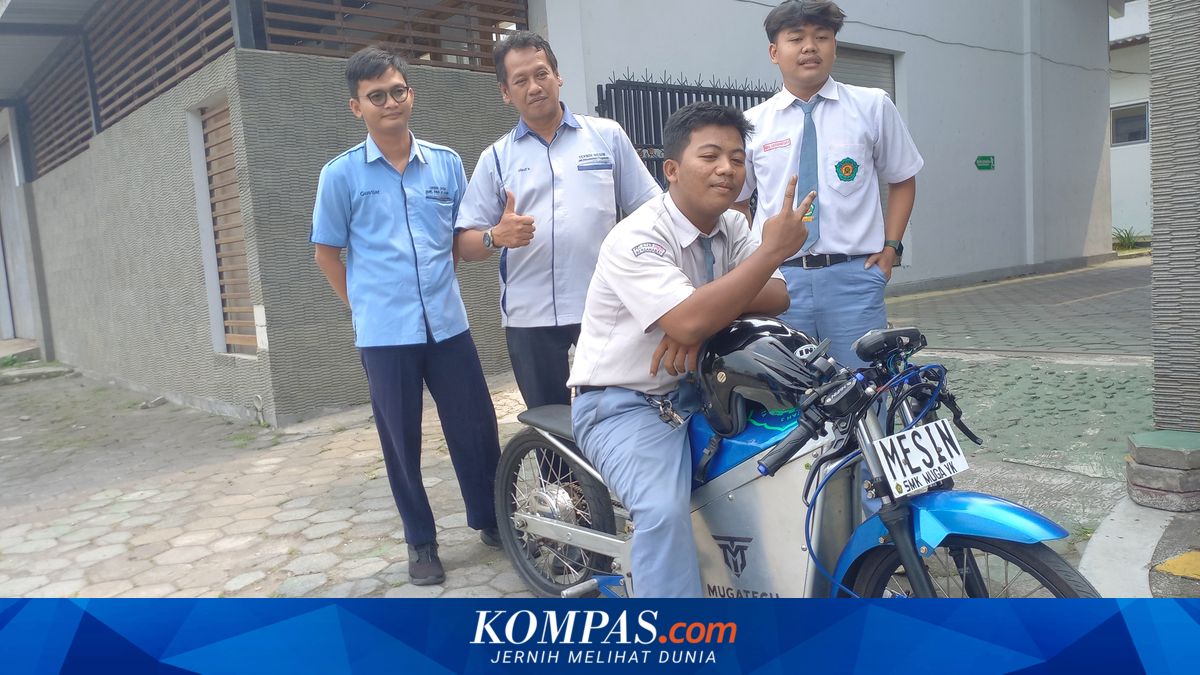
YOGYAKARTA - Students from SMK Muhammadiyah 3 Yogyakarta have captured attention with an electric drag bike they built that can reach 134.5 km/h.
The electric motorbike, named Mugatech, was developed as a student practical project at the school and serves as a platform for high-performance electric vehicle innovation that is still being refined.
Hindro Harimawan, Head of the Mechanical Engineering Department at SMK Muhammadiyah 3 Yogyakarta, said the idea for the electric motorbike stemmed from a desire to create fuel-free vehicle innovation.
“Electric motors are about innovation. We wanted to make transportation tools commonly used by the public without using fossil fuels. With oil reserves dwindling and prices rising, we aimed to build a motorbike that can match the speed of conventional fuel-powered ones,” he said on 28 May 2026.
“We presented the idea to the students, who responded positively, especially since they are passionate about motorcycles – modifying, repairing, and customising them. Their enthusiasm led us to proceed with the project,” he added.
Hindro explained that the drag race concept was chosen because it is more challenging than everyday electric motorcycles, which are already common.
“Since everyday electric motorcycles are already widespread – even electric bicycles exist – creating such a vehicle would be unremarkable. We wanted something with high speed to make it exciting,” he said.
The school allocated approximately Rp 30 million for the project, with the majority spent on electrical components such as batteries, electric motors, and controllers.
“The cost is around Rp 30 million. The expensive parts are the electrical components, like batteries, the electric motor, and the controller,” he said.
“It came from the school budget. Each department was offered funding opportunities. Last year, no department had submitted a proposal, so we applied and thankfully were approved by the principal, allowing us to proceed,” he added.
During development, students went through multiple testing and revision stages. Hindro noted the project followed a trial-and-error approach.
“This is a trial-and-error process. We built the frame first, then assembled the motor. After completion, we found the motor was too long and lacked aesthetics, so it had to be cut and welded again. It wasn’t a one-off process; there was a lot of research involved,” he said.
Overall, the electric motorbike took around six months to complete and involved students from different year groups.