
Electric Cars Slowly Break Free from Niche Vehicle Status
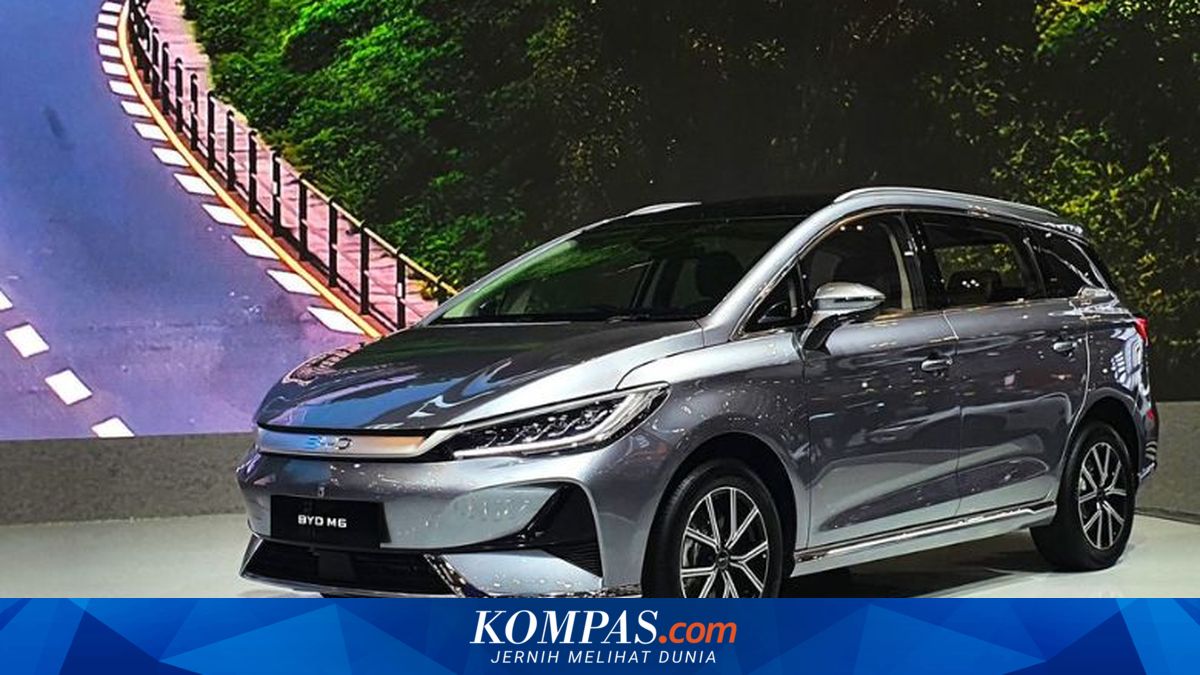
JAKARTA, KOMPAS.com - The Indonesian electric vehicle market has shown an interesting pattern in the early months of 2026. While electric vehicles, or EVs, were previously regarded as niche products for a limited audience, battery-powered models are now routinely appearing on the national best-seller list.
This is evident from wholesale data for January to April 2026. Names such as BYD Atto 1, BYD M6, Jaecoo J5, and Denza D9 entered the list of vehicles with the highest distribution to dealers. Some models even managed to break into the national top 10, competing directly with popular conventional cars.
The trend continued in February when BYD Atto 1 re-entered the four largest sellers with a distribution of 3,700 units. In March and April, attention shifted to the Jaecoo J5 and BYD M6, which strengthened their positions in the electrified vehicle market.
Interestingly, a large proportion of the electrified models entering the top-selling list come from relatively new Chinese brands on the Indonesian market. This phenomenon demonstrates that the electrification transition is also reshaping the competitive landscape of the domestic automotive industry.
However, before waves of new brands dominated the domestic EV market, Wuling Motors had already opened the path with the Wuling Air EV and Wuling BinguoEV.
Notably, the early growth phase of EVs in Indonesia was supported largely by compact, city-friendly models. These two models helped broaden acceptance of electric vehicles domestically, especially among consumers seeking practical cars for urban mobility.
If the early phase of the national EV market was dominated by compact city cars for urban use, consumers are now turning to larger electric vehicles. This change has been visible since the appearance of BYD M6 in 2024.
When first launched in Indonesia, the electric MPV recorded sales of 6,124 units and became the country’s best-selling electric vehicle throughout 2024. At that time, the EV market in Indonesia was still largely supported by smaller models such as Wuling BinguoEV and Wuling Air EV.
Entering 2025, BYD M6 sales rose again to 10,862 units. The trend shows that some consumers are starting to view electric vehicles not merely as city commuter cars but also as family vehicles.
Moving into 2026, BYD M6 has continued to sustain momentum. In April, the model recorded 2,472 units distributed and entered the national top 10. This demonstrates that the function of EVs is gradually expanding beyond a second car.
Electrification is also visible in the premium segment. Denza D9, for instance, recorded sales of 7,474 units in 2025 and entered the list of the nation’s best-selling electric vehicles. The trend continued in 2026. In April, Denza D9 also joined the list of the 20 best-selling national cars with a distribution of 1,032 units. This shows that the Indonesian electric vehicle market is taking shape across classes, from city cars to luxury MPVs.
Although the electrification trend is spreading to various segments, the contribution of electric vehicles to the national automotive market remains relatively small.
The market still continues to be dominated by conventional internal-combustion engine vehicles, particularly in the pickup and MPV segments. The Toyota Kijang Innova, Daihatsu Gran Max, Suzuki Carry, and Toyota Avanza remain the backbone of automotive sales in Indonesia.