
Electoral Commission Strengthens Women's Role in Electoral Processes
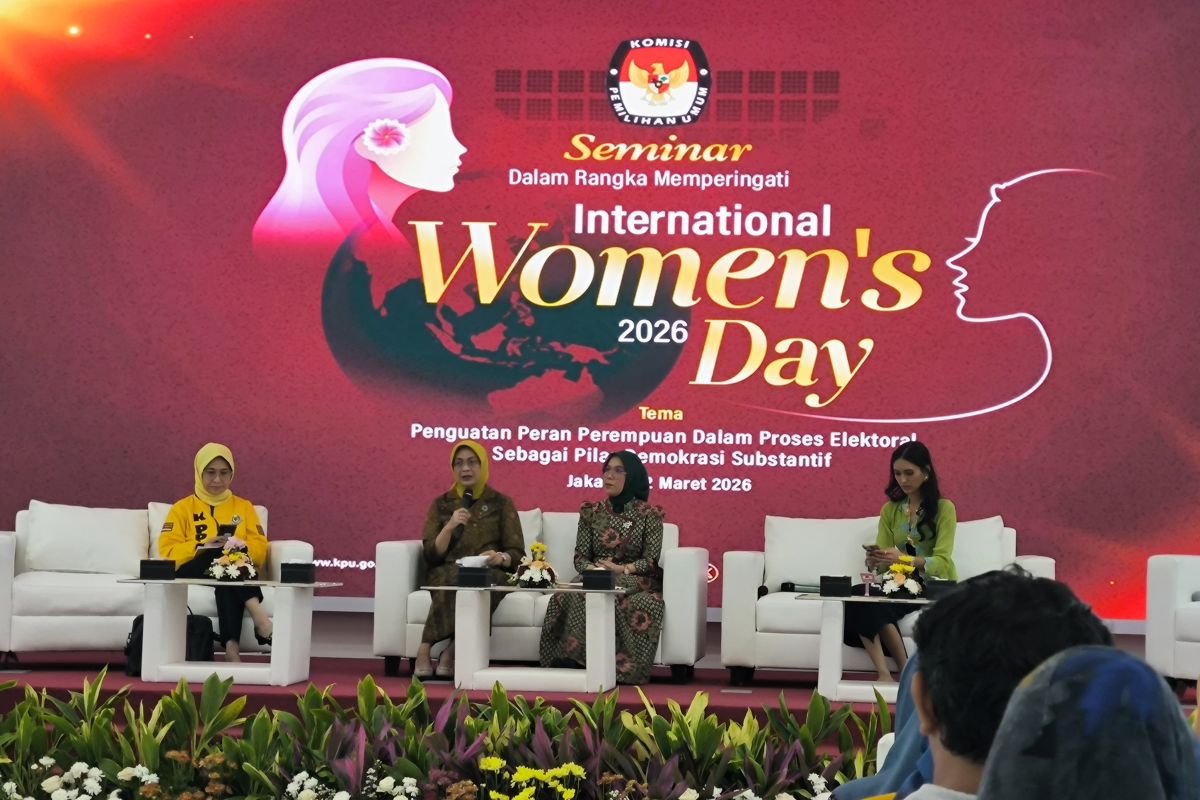
Jakarta – Indonesia’s Electoral Commission (KPU) is seeking to strengthen women’s role in electoral processes through various strategies, ranging from enhanced voter education to cross-institutional collaboration to encourage women’s political participation.
KPU member Iffa Rosita stated that women hold a strategic position in democracy because female voters comprise approximately half of Indonesia’s total electorate.
“Women are genuine actors. Consider that 50 per cent of our voters are women, so they are not merely political actors but actual decision-making subjects,” Iffa said during a seminar marking International Women’s Day with the theme “Strengthening Women’s Role in Electoral Processes as a Pillar of Substantive Democracy” in Jakarta on Thursday.
She explained that the KPU is preparing several measures to strengthen women’s participation in democratic processes, whether as voters, election participants, monitors, observers, or election administrators.
According to her, one strategy to be implemented is expanding cooperation with various parties, including ministries and institutions focused on women’s empowerment.
Beyond institutional collaboration, the KPU is also working to enhance voter education through various channels, including social media and outreach activities reaching the broader public.
She stated the KPU is also considering capacity-building programmes such as women’s leadership training to encourage women’s involvement in politics and democracy.
Iffa believes strengthening women’s role in electoral processes can contribute to the quality of political representation whilst fostering more inclusive and responsive public policy.
“If we wish to increase women’s representation, it must start from women, by women, and will return to women,” she said.
However, she acknowledged several challenges remain in increasing women’s representation, particularly at the candidate nomination stage in political parties.
According to her, in legislative nomination practices, women are often placed in less strategically favourable positions, reducing their chances of election.
Therefore, she contended, strengthening women’s role in politics requires collaborative effort among various actors, including political parties, government, parliament, and election administrators.
She emphasised that efforts to increase women’s political participation cannot be undertaken by a single institution alone but require broader collaboration.
“We must join hands across government, political parties, parliament, and electoral institutions to sit together,” she said.
Iffa also encouraged women to be more active in voicing ideas and participating in activities supporting increased women’s representation in politics.
She affirmed that women possess equal capability to men in fulfilling roles in the public sphere, including in politics and democracy.
“If asked about obstacles, I have none. What men can do, women can also do,” she said.