
Election Law Revision Must Not Be a Banquet for Elites; Voters Must Be Involved
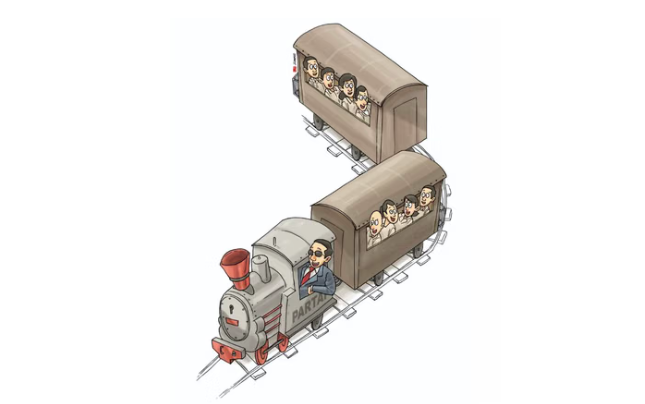
PSHK researchers from the Indonesian Centre for Legal Studies and Policy (PSHK), Muhammad Nur Ramadhan, have argued that the Revision of the Election Law (RUU Pemilu) should not become a battleground solely for political elites and parties, but must be discussed as a public issue involving voters and meaningful participation. “This Election Law Bill is not the property of a handful of elites. The DPR and the government must present it as a public issue, because there is the most important instrument within it, namely the voters,” Ramadhan said during a discussion in Jakarta on Thursday (5/3).
He noted that to date the official discussions of the RUU Pemilu at the parliamentary level have not been clearly visible. PSHK recorded that the draft has never explicitly been named in plenary meetings, so the public does not know who is the principal drafter of the discussion, whether the Legislation Body (Baleg) or the DPR’s Commission II.
“We also do not know what foundational documents will be used for discussing this Bill. What is the academic manuscript, what do the draft articles look like? It is not open. The discussions remain in the shadows and are held within an elite circle,” he said.
Ramadhan argued that this situation is ironic given that the Election Law Bill will directly affect citizens’ political rights. He emphasised that the plan for regulating the revision should be presented openly to the public, especially to voters as the main subjects in elections.
“Meaningful public participation is not just a formal invitation to a hearing, but truly involving in the drafting and discussion of the substance,” he asserted.
He also reminded that the Election Law revision is directly related to the schedule for selecting election organisers for the next period, which is planned to take place in September 2026. If you count backwards, there are only about four to five months left for discussion.
“Five months is a very short time to revise the law comprehensively, especially if one wants it based on evidence and evaluations from the previous elections,” he said.
Additionally, Ramadhan highlighted the fast-tracking of legislation that has become common. However, he argued that this approach is not appropriate for the Election Law revision, which encompasses many crucial aspects.
“The Election Law revision is complex. There are many Constitutional Court rulings ordering normative improvements. It cannot be discussed hastily without in-depth discussion and public participation,” he said.
He also warned of the risk that if the law is enacted too close to the stage of selecting election organisers, there could be legal and practical difficulties. While the enacted rules take effect by law, in practice the organisers need time to understand and adjust.
“Question remains, are the organisers ready to understand the substance of the revision if enacted near the stage? This could be a serious weakness in administering the next elections,” he said.
PSHK also questioned why the DPR invited several experts to a forum related to the RUU Pemilu. Ramadhan assessed that it is not clear whether the forum is intended to strengthen the draft under discussion or merely respond to issues in the public space.
“If there is a draft being discussed, it should be opened and strengthened with expert input. Do not let expert invitations merely be symbolic responses without a clear direction for discussion,” he concluded. (Dev/P-3)
Since the end of last year, civil society has prepared a draft codification of the Election Law as a reference for the DPR and government. Lawmakers must remain subject to constitutional norms affirmed by the Constitutional Court (MK).
The faction threshold sets the minimum number of seats for a political party to form its own faction.
The tug‑of‑war of interests means the discussion of the bill’s articles in the Election Law is rich with political negotiation.
On the occasion of Golkar’s founding anniversary recently, Prabowo Subianto again voiced his views on the regional heads election system (pilkada).
Eddy also stressed that the government faces a dilemma with diametrically opposed views.