
Election Law Reform Yet to be Discussed, Puskapol UI Warns of 'Autocratic Legalism'
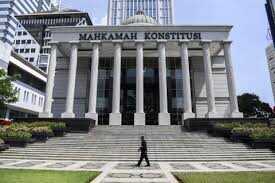
Revisions to the Election Law are regarded as urgent to improve the quality of democracy and to align with multiple rulings by the Constitutional Court (MK). However, to date the DPR has shown no concrete steps to commence open and comprehensive discussions.
Hurriyah, Director of the Centre for Political Studies at Universitas Indonesia (Puskapol UI), says that the lack of clarity in discussing the Election Law is not merely a technical issue or a matter of legislative priority, but a political choice consciously made by the DPR. “In my view this is not simply a matter of technicalities or time calculations. This is a political choice consciously taken by the DPR,” Hurriyah said at a Jakarta discussion on Thursday (5 March).
Normatively, she emphasised that the revision is necessary for two main reasons. First, many MK rulings require adjusting norms within the electoral law. Second, there are various evaluative notes from the KPU, Bawaslu, academics, and civil society concerning the conduct of the 2024 elections.
“If we speak from the public logic, this revision is urgent to improve the quality of democracy. Various international indices even assess that the quality of democracy in Indonesia has deteriorated,” she said.
Hurriyah noted a sharp divergence between public logic and the logic of politicians. For civil society and academics, electoral reform is an instrument to strengthen democracy, political representation, and fair competition. But for some political elites, changes to the electoral rules are often calculated based on electoral advantage.
“The public question is how the electoral system can improve democracy. But the question for politicians is which rules most benefit our electoral position. We stand at two different poles,” she said.
Regarding the prospects for completing the revision by October, Hurriyah is pessimistic that substantive discussion can be carried out in a short time. She warned of the rapid trend toward fast track legislation, which has become widespread recently, even to the point of what she calls “autocratic legalism.”
“Procedurally it might finish quickly. But the question is, will there be genuine public deliberation? Let RDPU not become a mere wrapper to legitimise that the public has been heard,” she asserted.
Hurriyah stressed that electoral reform should not be reduced to a purely technical debate, such as the parliamentary threshold or the voting system. She reminded that four principles should underpin the Election Law revision: first, constitutionalism — ensuring new rules align with the 1945 Constitution and MK rulings; second, opening space for fair competition, including addressing the issue of political payments and the nomination process within parties; third, strengthening representation so that the link between representatives and constituents is not severed; and fourth, guaranteeing accountability, especially in the transparency of campaign financing.
“Let the DPR not bemoan the high level of money politics, but be unwilling to regulate campaign finance transparency or to abolish political payments. That would be contradictory,” she said.
She emphasised that speeding up the discussion of the Election Law revision is important, but it must be accompanied by an open and deliberative process.
“Speed is important, but more important is ensuring that this revision genuinely strengthens democracy, not merely becoming an instrument of power strategies,” she concluded. (H-2)
The Association of Legal Journalists (Iwakum) welcomed the Constitutional Court’s ruling that partially granted the constitutional challenge to Article 21 of the Law on the Eradication of Corruption (UU Tipikor).
The Election Law was challenged, seeking to prohibit the President and/or Vice President who is currently in office from standing as presidential and/or vice-presidential candidates.
Without the people’s choice, party cadres would not be able to be elected as members of the DPR. Yet once elected, political parties have full control through the recall mechanism.
According to Mahfud, in recent times the DPR has tended to appoint Constitutional Court judges internally without an open selection process.
State Secretary Prasetyo Hadi confirmed that the oath-taking ceremony for Adies Kadir as a Constitutional Court judge will be held in the near future.