
Eko Suwanto Says BoP and ART Do Not Reflect the Constitutional Mandate; What Does That Mean?
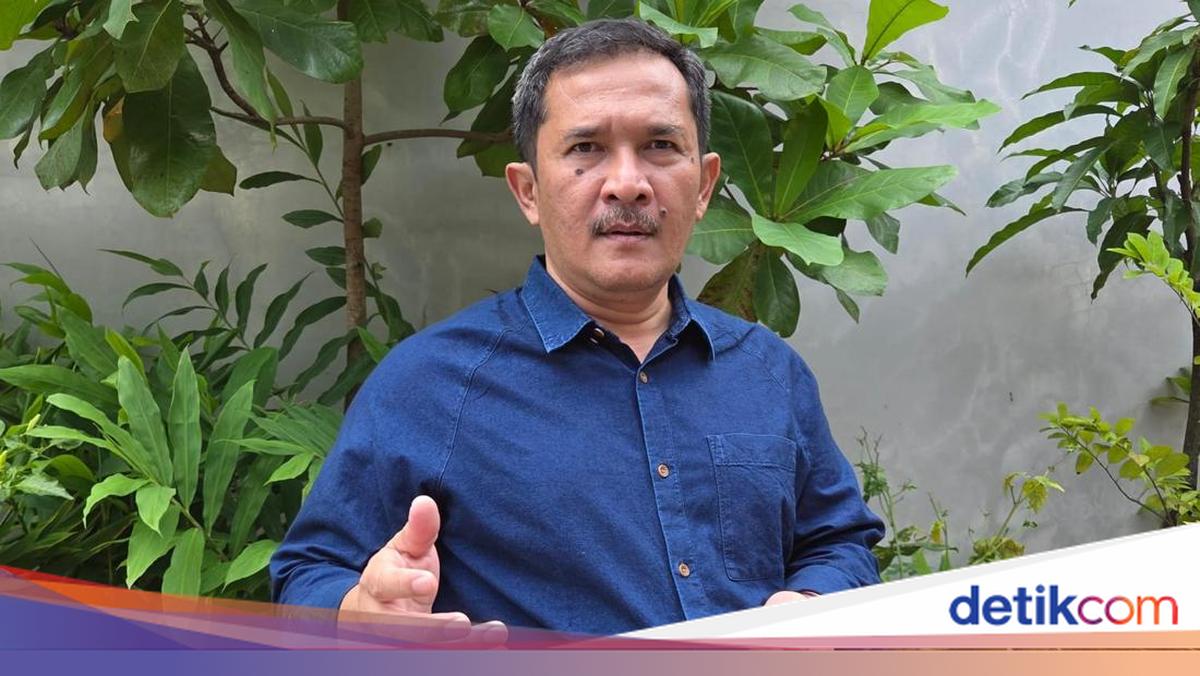
Chair of Commission A of the DIY Regional House of Representatives from the PDI-P faction, Eko Suwanto, assessed that the Balance of Payments (BoP) policy and Agreement Reciprocal Trading (ART) do not reflect the constitutional mandate. He argued that the policies should be re-examined using the constitutional value benchmarks in the 1945 Constitution.
This was stated by Eko at the DIY DPRD Journalist Discussion Forum, which featured Universitas Gadjah Mada academics namely Dafri Agus Salim from FISIPOL UGM and Rimawan Pradiptyo from FEB UGM, on Friday (6 March).
Eko emphasised that safeguarding the unity of the Republic of Indonesia is a historical mandate that must be maintained since early independence. Therefore, every public official who carries out the people’s mandate must adhere firmly to the oath of office to obey the Constitution of the Republic of Indonesia, Pancasila, and the 1945 Constitution.
‘All public officials recite the oath when they begin their term. Therefore, the opening provisions of the 1945 Constitution, which state that independence is the right of all nations must be upheld, and there must be no support for attacks on the sovereignty of other states because colonialism must be eradicated,’ Eko said in his statement, Saturday (7 March 2026).
He subsequently highlighted the implementation of BoP and ART which are assessed as needing testing with constitutional benchmarks. According to him, one must question whether the policy truly protects all the nation and the blood of Indonesia.
According to Eko, when imports are opened wide for foreign investment without strong protections for national interests, Indonesia’s economic sovereignty is at stake at international negotiation tables that risk harming the people.
‘We must be reminded that if imports are continuously prioritised, local labour will not be absorbed, which clearly contradicts the spirit of advancing the welfare of the people as mandated by the Preamble to the 1945 Constitution,’ he explained.
Eko also touched on the aspect of educating the nation’s life, which is deemed threatened by international trade commitments that do not favour domestic needs. Eko highlighted the ART commitment said to reach Rp 17 trillion, while education budgets such as the Regional Operational Assistance for Schools (BOSDA) in DIY have in fact fallen.
‘The imbalance in allocation demonstrates a shift in government priorities away from improving the quality of human resources to meet global market demands,’ he said.
Furthermore, he noted that the economic policy’s impact is felt down to the grassroots level through reductions in village funds said to average 74 percent.
‘Let us reflect and ponder whether the current economic policy truly realises world order or instead widens the gap and neglects the economic sovereignty of villages which form the foundation of the nation’s strength,’ he added.
Eko also quotes Rimawan Pradiptyo’s perspective on Bung Karno’s Tri Sakti. According to him, the solution to the issue is to return to Pancasila and the Constitution.
He then reminded the historical roots of Jogja as the last fortress of the Republic when the capital was moved to that city in 1946. The mandate of 5 September 1945 from Sri Sultan Hamengkubuwono IX and Paku Alam VIII is cited as evidence of Jogja’s ideological commitment to NKRI.
‘The spirit of sacrifice of the forebears must serve as a reminder to the central government not to compromise the nation’s sovereignty for the sake of foreign trade, but to remain consistent in implementing world order grounded on independence and eternal peace,’ he concluded.
(alg/ahr)