
Eight Updates on US-Israel Versus Iran Conflict: Iran Escalates, Strait of Hormuz in Crisis
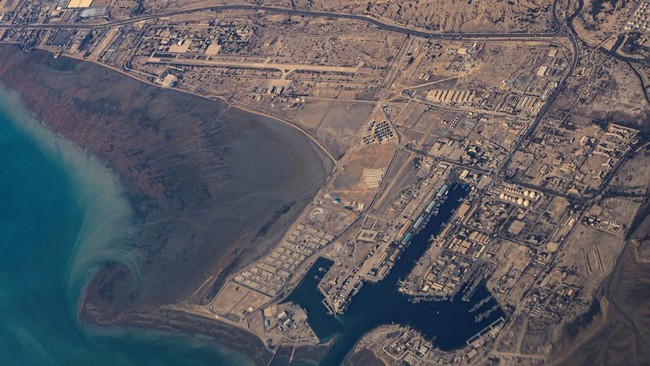
The conflict in the Middle East has expanded significantly after Iran intensified attacks against civilian infrastructure and transport networks in the Gulf region on Wednesday, 11 March 2026.
These attacks included targeting commercial vessels and Dubai International Airport, amid a new wave of airstrikes launched by the United States and Israel against the Islamic Republic.
Senior Iranian officials adopted a defiant stance, warning that the conflict could escalate into a prolonged war with the potential to cause global economic chaos as energy supplies from the region are disrupted.
Stalemate Emerging
After 12 days of fighting, the war now shows signs of stalemate. Violence has erupted across multiple Middle Eastern regions.
Israel continues launching airstrikes against targets described as Hezbollah bases in Lebanon, whilst Iran alongside the group has fired missiles and rockets towards Israeli territory.
The UN refugee agency reported at least 759,000 people internally displaced in Lebanon, whilst more than 92,000 have crossed into neighbouring Syria.
In the Gulf region, tensions have also escalated. Kuwait stated its air defence systems shot down eight Iranian drones, whilst Saudi Arabia reported intercepting five drones heading towards Shaybah oil fields.
Mass Funerals in Iran
In Tehran and several other Iranian cities, thousands took to the streets for the funerals of senior Iranian commanders killed in US and Israeli airstrikes since the war began.
Mourners carried coffins whilst waving flags and holding photographs of Iran’s slain Supreme Leader, who was killed in the initial strikes, along with his son and successor, Mojtaba Khamenei.
For the first time, Iranian officials acknowledged that the country’s new leader was also wounded in the airstrikes that killed his father, mother, wife, and one of his sons. The 56-year-old man has not appeared in public or issued direct messages since the war began.
“I heard that he sustained injuries to his foot, arm and hand… I think he is in hospital because of his wounds,” said Iran’s Ambassador to Cyprus, Alireza Salarian, to The Guardian.
US and Israel Continue Operations
Despite mounting international pressure to halt military operations, decision-makers in Washington and Tel Aviv appear intent on continuing the military campaign.
Israeli Defence Minister Israel Katz stated operations would continue.
“Without time limits, for as long as necessary, until we achieve all our objectives and win this campaign,” he said.
US President Donald Trump conveyed mixed messages in recent days. He characterised the war as a short-term operation that could end quickly. However, in a speech in Washington on Monday, he also stated, “we have not won enough yet”.
“You never like to say too early that you have won. We have won. In the first hour everything was finished,” he said at a rally in Hebron, Kentucky.
Trump also claimed US military forces had destroyed 58 Iranian naval vessels, but stressed military operations would not be halted.
“We do not want to leave too early, do we? We must finish this job… We do not want to return every two years.”
Global Energy Supply
The conflict has triggered significant worldwide concern as rising oil prices threaten economic shocks and public anger in many countries.
Trump referenced G7 leaders’ decision, claiming it had “extraordinary impact”.
“I think we are having an extraordinary impact, truly extraordinary, on the world,” he said after being given the floor by French President Emmanuel Macron at the G7 leaders’ meeting.
This statement followed the International Energy Agency’s recommendation for the release of 400 million barrels of oil, which would represent the largest action in the agency’s history to curb energy price increases.
Strait of Hormuz Paralysed
However, there remains no indication that vessels can safely transit the Strait of Hormuz, the vital passage normally used for approximately 20% of global oil supplies.
Three merchant vessels in the Gulf were reported struck by mysterious projectiles on Wednesday, bringing the total number of ships reported attacked since the war began to 14 units.
A Thai-flagged cargo vessel had to be evacuated after an explosion sparked a fire. A Japanese-flagged container ship and a Marshall Islands-flagged cargo vessel also sustained damage.
Hundreds of vessels now remain stuck near the narrow strait off Iran’s southern coast due to fears of becoming attack targets, creating the largest energy supply disruption since the 1970s oil crisis.
Iran’s Islamic Revolutionary Guard Corps emphasised that Tehran would not permit oil exports through the passage.
They stated Iran would not allow “a single litre of oil” to transit the vital route until bombing by the US and Israel ceased.
Iran has also continued attacking oil fields and refineries in Gulf countries to pressure the US and Israel into stopping their strikes.
“Prepare to see oil at US$200 per barrel, because oil prices depend on the regional security that you have destabilised,” said Iranian military command spokesperson Ebrahim Zolfaqari.
UN Security Council Dispute
On Wednesday, the UN Security Council passed a resolution demanding an immediate halt to attacks on Gulf nations.
“Today’s action represents a blatant misuse of the Security Council’s mandate for the political agenda of certain members,” the statement read.
Retaliatory Strikes and Casualties
Iranian military officials stated they had struck several important targets in Israel, including military intelligence headquarters, a naval base in Haifa, and radar systems. They also said they had targeted US military bases.