
Eight Global Companies Reaping Vast Profits from Iran War; Selling Weapons and Satellites
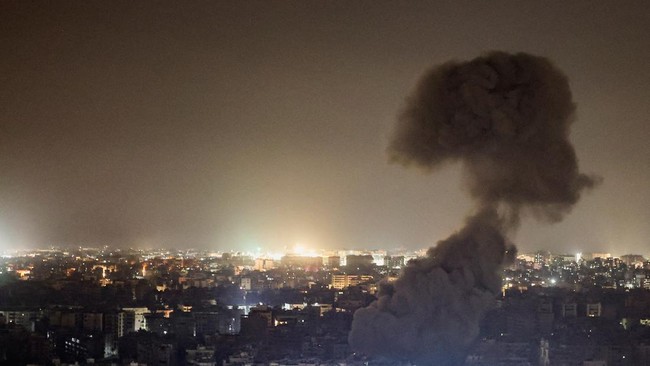
Jakarta – Major military escalation involving the United States, Israel, and Iran since 28 February 2026 has significantly altered global capital market dynamics. The conflict has not only triggered volatility in principal commodity prices but also reconstructed financial cash flow projections across various multinational corporate entities.
Through fundamental analysis of supply chains and financial mechanics, a number of global issuers hold positions with asymmetric risk-reward profiles. These companies possess potential operational margin expansion from surging demand or supply disruption, whilst their physical assets and operational bases remain relatively isolated from primary conflict zones.
1. Lockheed Martin (LMT)
Lockheed Martin exemplifies basic supply-and-demand mechanics during wartime. Each time air defence systems strike down enemy drones or projectiles, a interceptor missile worth millions of pounds is expended. Lockheed Martin is the principal manufacturer of such missiles, including PAC-3 systems. Its greatest advantage lies in cost-plus contract models, whereby the US government covers all of Lockheed Martin’s production costs plus guaranteed profit margins.
The more missiles fired in the Middle East, the longer their emergency order backlog grows, without the company needing to worry about raw material inflation risk losses.
2. RTX Corporation (RTX)
Like vehicles, US Navy warships require “fuel” to operate—in this case, Tomahawk cruise missiles and Standard Missiles. These vessels fire their payloads nearly daily to neutralise threats in the Persian Gulf. When their launch tubes empty, the Pentagon has no choice but to approach RTX (formerly Raytheon) to replenish.
This creates an extraordinarily rapid replacement cycle. RTX secures revenue guarantees for years ahead simply by restocking depleted allied weapons arsenals.
3. Kratos Defense (KTOS)
A mathematical calculation troubles the Pentagon: shooting down an enemy drone worth tens of thousands of pounds using an advanced missile worth millions represents a path towards fiscal bankruptcy. Kratos emerges as a budget saviour, producing tactically inexpensive combat drones specifically engineered to be “sacrificed” in combat.
As the US military and allies must constrain ballooning war costs, Kratos floods with massive contracts, winning through volume solutions at discounted prices.
4. Palantir Technologies (PLTR)
Twenty-first-century warfare operates on data. Satellites, radar, and field reports generate millions of raw data points per second. Palantir provides artificial intelligence software consolidating all data into a single screen, informing military commanders of precise target locations.
Palantir operates with near-zero marginal cost. When the US military expands Palantir systems to dozens of new bases, Palantir need not construct steel factories or assembly lines; they simply enable server access. Hundreds of millions enter as new revenue whilst operational costs barely increase.
5. BlackSky Technology (BKSY)
When an oil refinery sustains reported attack damage, global markets panic without certainty of severity—the fog of war. BlackSky operates a satellite constellation photographing any Earth location within hours. Hedge fund managers and insurance institutions willingly pay substantial premium data subscription fees for satellite imagery before stock markets open.
BlackSky essentially sells reassurance information to frightened markets.
6. ExxonMobil (XOM)
Threats of Strait of Hormuz closure cause global crude oil prices to spike sharply exceeding $100 per barrel. However, not all oil producers sleep comfortably. Those with Middle Eastern facilities live under missile shadows. ExxonMobil differs; their giant oil wells sit offshore Guyana and across US territory—tens of thousands of kilometres from conflict zones.
They sell oil at elevated “wartime” prices whilst operational costs remain cheap “peacetime” figures. This differential becomes massive net profit.
7. Frontline plc (FRO)
With Middle Eastern waters carrying attack risks, Frontline’s giant tankers (VLCCs) must navigate safety routes circumnavigating Africa, consuming weeks longer. Consequently, globally available ships become extremely scarce. Under basic economics, sharply fallen supply meeting stable demand inflates prices.
Frontline gains absolute negotiating power raising freight rates to desperate clients seeking cargo space by hundreds of per cent.
8. Saudi Aramco (2222.SR)
Should the Strait of Hormuz genuinely seize, nearly all Persian Gulf exporters collapse with trapped vessels. However, Saudi Aramco possesses an escape route, operating the East-West Pipeline—a giant network piercing the Arabian desert directly toward the Red Sea. Whilst neighbours cannot sell at all, Aramco continuously flows millions of barrels through this alternative route.
They not only enjoy soaring oil prices but seize competitors’ market share overnight.
9. Beazley plc (BEZ)
Cargo ships venturing through conflict zones require war risk insurance. As corridors grow increasingly dangerous, insurance premiums escalate dramatically, benefiting specialised maritime insurers like Beazley with expanded underwriting margins and higher premium income flows.