
Eid Without Going Home: Jakarta That Comes Back to Us
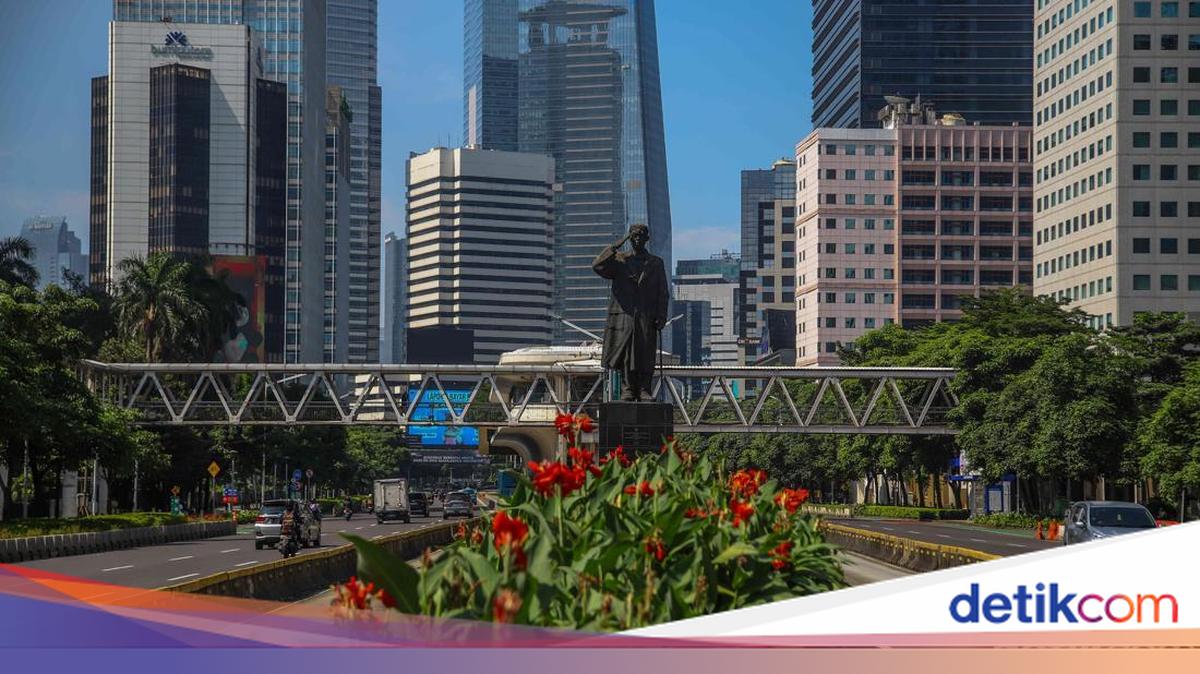
There is something different about this year’s Eid al-Fitr in Jakarta. It is not just the echoes of takbir filling the city sky once more, but rather the way the city chooses to celebrate. At Bundaran HI, the city seems to say once again: all of us are celebrated. The Colossal Beduk Festival, fountain attractions, art installations, and music performances were held over two nights (19 and 20 March). This is not without reason. When some Muslims celebrate Eid al-Fitr on 20 March and others on 21 March, Jakarta chooses to adapt, being present for everyone. A decision that appears technical, but is actually political—in the simplest sense: the state is present to accommodate differences. And this is not an isolated event. In recent months, Jakarta has been rearranging its cultural calendar. The Ogoh-Ogoh Festival ahead of Nyepi, the Chinese New Year Festival in February, to Christmas Carol in December—all celebrated with equal space. The city is learning to be a home for many identities, without seeming awkward. Inclusivity does not stop at slogans, but in real actions. At this point, Jakarta is not just chasing global city status. It is trying to become a mature city. However, the most intriguing experiment comes from one programme that sounds unusual: Mudik to Jakarta. For a long time, mudik has rarely been questioned. It is accepted as normal, even a social obligation. Yet, behind its romanticism, there is a burden we consider normal: soaring ticket prices, exhausting journeys, long traffic jams, to accident risks. We call it tradition. But not everything that repeats must be accepted without rethinking. That is where Jakarta steps in—not to prohibit people from going home, but to offer another choice. What if, this time, Jakarta becomes the destination? For its residents, as well as tourists. With only the ‘core players’ left, this is the perfect time to enjoy Jakarta. The Mudik to Jakarta programme is prepared not as an empty slogan. Residents are offered free public transport (Rp1) from Transjakarta, MRT, to LRT, as well as various shopping discounts in the Jakarta Festive Wonders involving hundreds of shopping centres and retailers. Tourism packages, hotels, to entertainment are also packaged as a complete city experience. For those from outside Jakarta, the incentives are even more concrete: aircraft and train ticket discounts, hotel promos “pay for two nights, get three”, to various thematic tour packages. This is not just promotion. It is an effort to shift perspectives. Something that has never been thought of before. Because if calculated simply, the cost of mudik for one family can equal several months of household needs. Time and energy are drained, not to mention road risks. Yet, all that is still undertaken—often not because of need, but because of social pressure that we have never truly tested. Meanwhile, the way we maintain family ties has also changed. Technology makes distance no longer absolute. We can video call family members anywhere as long as there is an internet signal. Ironically, not a few go home far away, only to sit together while busy with their own gadgets. From afar wanting to get close, but once close, they are distant again. Thus, the question becomes more honest: what are we actually seeking from mudik? Perhaps not the distance, but the feeling of returning home itself. Amid these changes, Jakarta takes a fairly bold position. It does not reject tradition, but also does not let it run without alternatives. The city offers new possibilities—that celebrating Eid does not always have to mean leaving the city. Perhaps this change will not immediately shift the major mudik flow. But every habit, no matter how strong, can always be reviewed. And this year, Jakarta begins to pose that question. That Eid can be celebrated in different ways. That the city can also become a space for returning home. And perhaps, what we seek is not just the hometown, but the feeling of returning home itself.