
Eid Sermon Message at Muhammadiyah Central Office: Faithful Urged Not to Be Wasteful and to Embrace Sharing
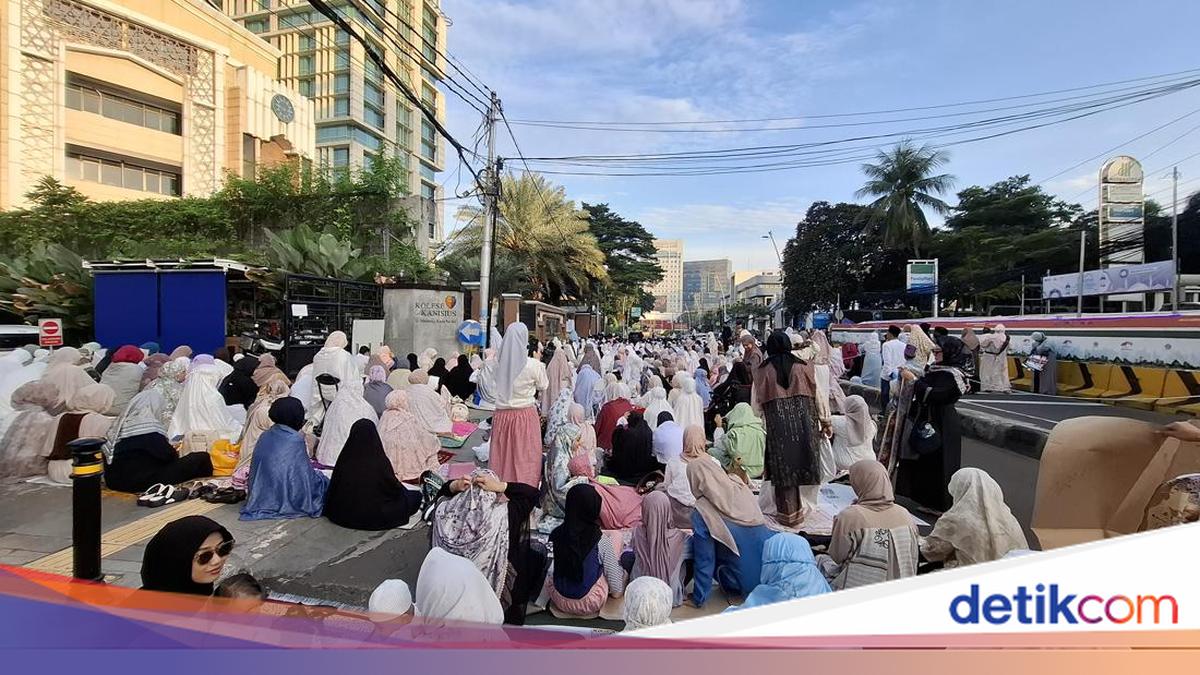
The Eid al-Fitr sermon at the Muhammadiyah Central Office in the Menteng area of Central Jakarta focused on the issue of food resilience amid global crisis threats. Muslims were reminded not to be wasteful in managing food and to increase their concern for sharing with others.
Tajdid PWM DKI Jakarta, Izza Rohman, in her sermon emphasised that Eid al-Fitr is not only a moment of victory after a month of fasting but also a time to strengthen gratitude, including for the blessing of food that is often taken for granted.
“Do not belittle the blessing of food. Failing to give thanks for a blessing is the beginning of its loss,” said Izza in her sermon on Friday (20/3/2026).
She reminded that the world is currently facing threats of a food crisis. Even international institutions have warned of the potential increase in global hunger due to disruptions in the food supply chain caused by conflicts and geopolitical situations.
In her sermon, Izza presented data that more than 30 percent of the world’s food is not consumed by humans. Around one-fifth of food is wasted at the consumption stage, while the rest is wasted at the production and distribution stages.
“Reports state that one billion tonnes of food are wasted every year. Even one billion portions of food are wasted every day,” she said.
On the other hand, she added, hundreds of millions of the world’s population still experience hunger and food insecurity. This condition is an irony that must be addressed through behavioural changes, including among Muslims.
Therefore, she invited the faithful to give thanks for the blessing of food in concrete ways. One of them is by not wasting food and avoiding wasteful behaviour, especially during the Eid al-Fitr momentum which is synonymous with abundant dishes.
“Not only in the context of Eid al-Fitr, but also in the context of promoting nutritious eating in our education system today, as well as in the context of the future of our nation’s food resilience and economy being overshadowed by the current global security crisis,” she explained.
“Giving thanks for the blessing of food means not wasting it for free, not squandering it just like that,” she continued.
In addition, the faithful were also encouraged to use food as a means of goodness, including strengthening worship and helping those in need. She emphasised that one form of gratitude is sharing. The faithful were asked not to be stingy in giving alms of food, especially to less fortunate groups.
“Giving thanks means being willing to share. Not stingy in giving alms to others, especially those who are less prosperous,” she stated.
Not only that, the sermon also reminded the importance of caring for food so that it does not spoil quickly and appreciating all parties in the food chain, from farmers to food servers.
On the same occasion, the Chairman of PP Muhammadiyah for Economic and Business Affairs, Muhadjir Effendy, described Eid al-Fitr as a momentum to ‘recharge’ spiritual and mental conditions.
“This is our opportunity to recharge, improve ourselves, and look to a better future,” said Muhadjir.
He also emphasised the importance of maintaining unity amid differences in holiday determinations. According to him, such differences are normal and do not need to be excessively debated.
“Whether celebrating today or tomorrow, everyone is obedient. This is not about who is most correct,” he said.