
Eid Holiday Traffic Flow: 46 Congestion Hotspots Identified in Central Java and Yogyakarta
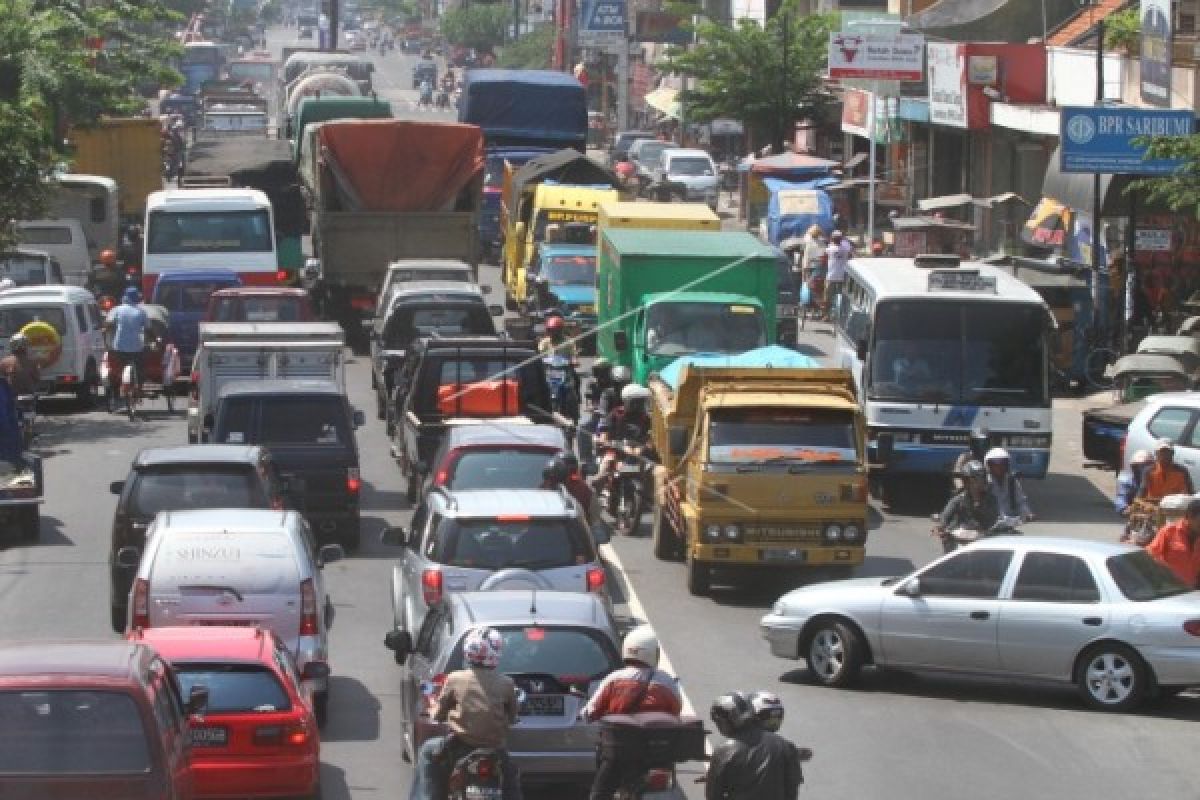
Ahead of the 2026 Eid holiday exodus, the Central Java and Yogyakarta branch of the National Road Implementation Agency (BBPJN), a technical implementation unit under the Directorate General of Road Development at the Ministry of Public Works, has identified dozens of traffic congestion and accident hotspots across the region’s highways.
Fajar Triawan, Head of Preservation I at BBPJN Central Java–Yogyakarta, stated that the agency has mapped numerous points with potential to cause traffic disruptions during the holiday period. “A total of 46 congestion hotspots have been identified,” Fajar said at the holiday relief post in Klonengan, Brebes, Central Java, on Thursday (12 March).
Beyond congestion hotspots, the agency has also identified 23 disaster-risk zones along national highways in Central Java, comprising 14 flood-prone areas and nine landslide-prone areas.
Fajar explained that for the 2026 Eid holiday readiness, the national highway network under BBPJN Central Java–Yogyakarta spans 1,888.69 kilometres (km) across 296 road segments with an average road integrity level of 94.20%. The holiday routes consist of several corridors, including the northern route. To support smooth traffic flow during the exodus, BBPJN has also prepared various supporting equipment including Disaster Relief Units (DRU) positioned at several locations: the Pekalongan Technical Implementation Unit (UPT), Karangjati Yogyakarta UPT, and Buntu UPT.
Regarding ongoing construction work scheduled for 2026–2027, Fajar emphasised that all construction activities have been temporarily halted from 10 days before Eid (Wednesday, 11 March) onwards. “However, for road preservation work, such as pothole repairs, we will continue as needed. Several points do have ongoing work, but we suspended construction activities from the designated date,” he stated.
BBPJN Central Java–Yogyakarta has also established 18 relief posts distributed across all national highway segments: 18 in Central Java and five in Yogyakarta, allocated according to each segment manager’s coverage area.
M Syidik Hidayat, Head of the Central Java National Highway Unit 1, noted that Central Java is served by three units, each covering substantial territories. Unit 1’s coverage spans from Losari to Semarang, Tegal and Slawi southward to Wangon, and Wangon to Majenang and the West Java border. “The total length of highway under Unit 1’s responsibility is 462 kilometres,” he said.
He explained that the unit is currently positioned at the Dermojaya intersection, commonly known locally as Klonengan Flyover—a critical junction serving as the main route for holiday travellers from Jakarta heading south through Central Java. This location links holiday travellers to cities including Cilacap, Purwokerto, Banyumas, Kebumen, Purworejo and Yogyakarta. “Besides this route, travellers heading to Yogyakarta can also use routes through Pemalang, Semarang, or tolled highways,” he added.
He noted that the total length of this road segment is approximately 135.5 kilometres. Four major activities are currently underway or planned. One involves improvements in the Dermojaya area, specifically at the flyover, which has been widened and fitted with irrigation channels. The total treatment length reaches 9 kilometres and is targeted for completion in March 2027.
Work is also being undertaken on the Tegal–Slawi–Dermojayan–Wangon segment on the eastern side, with a target length of 24 kilometres. Additional work is being carried out in the Balapulang–Kemantran area, which, although outside the main route, serves as support for regional roads. Beyond these projects, routine maintenance continues, including road condition monitoring, pothole patching and drainage cleaning.
For traffic management during the Eid holiday exodus and return period, the unit has prepared a traffic engineering scheme given that the route currently has only two lanes. “For traffic engineering, since the current route consists of only two lanes, a one-way system is typically implemented during the exodus period (Jakarta towards south) and the return period (south towards north),” he concluded.