
Eid Holiday: Gus Ipul Ensures Social Welfare Services Continue
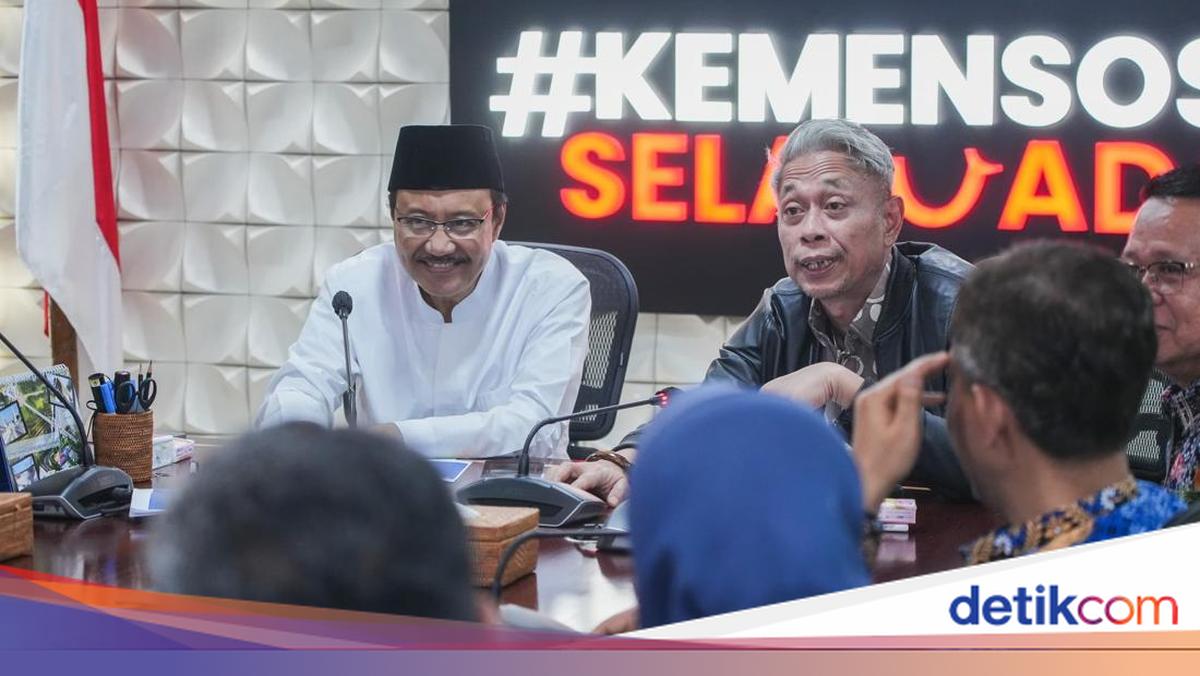
Social Welfare Minister Saifullah Yusuf, known as Gus Ipul, has instructed his ministry staff to continue providing services during Eid 2026. He stressed that the Eid holiday should not mean a cessation of services for those in need.
“The holiday may proceed, but services must not stop. All senior and mid-level officials must ensure their work units remain on standby, communication lines remain active, and decisions can be made quickly if necessary,” Gus Ipul said in a written statement on Tuesday (17 March 2026).
He made these remarks during a Social Welfare Ministry leadership meeting at the ministry’s Jakarta office on Tuesday. The meeting was attended by Deputy Social Welfare Minister Agus Jabo Priyono, Ministry Secretary General Robben Rico, and other senior officials.
Gus Ipul emphasised that amid the joy of the holiday, it remained crucial to reach those who have not fully experienced the happiness of Eid. “Eid reaffirms that when many still have needs, the Social Welfare Ministry will always be there for them. This is a reminder for us all,” he said.
To ensure services continue uninterrupted, Gus Ipul instructed his staff to strengthen preparedness and ensure adequate numbers of on-duty personnel. He ordered officials at centres and service units to review personnel readiness and operational support.
This readiness initiative specifically targets vulnerable groups including single elderly persons, people with disabilities, at-risk children, those in extreme poverty, disaster victims, and homeless individuals to ensure they are not neglected during the Eid holiday.
“Anticipate social emergencies and disasters, potential hazards, accidents, mobility disruptions, and social emergencies from the outset. Review buffer stocks, assistance logistics, staff preparedness, and distribution speed,” Gus Ipul stated.
He called for emergency services for the public, including command centres, call centres, WhatsApp services, and social media channels to remain active 24 hours daily to receive complaints, reports, and social assistance referrals.
Gus Ipul also instructed his staff to ensure the smooth distribution of social assistance and social programmes. “Ensure that the distribution of social assistance and social programme services are not disrupted by the extended holiday. The rights of programme participants must not be delayed due to bureaucratic weakness,” he stressed.
Additionally, Gus Ipul requested that updates to the National Unified Socio-Economic Data (DTSEN) continue during the Eid holiday.
He also reminded his staff to maintain integrity and set an example during the Eid period, including avoiding misuse of authority and official facilities such as the use of official vehicles. “Official red-plated and ZZH-plated vehicles must be parked and not used for homecoming during the Eid holiday, except for official duties with permission,” he clarified.
Regarding the dynamics of Middle Eastern conflicts, Gus Ipul also warned of their potential impact on Indonesia. The current Middle Eastern war could cause social consequences including inflation and reduced purchasing power among Indonesians. Gus Ipul believed this situation could affect vulnerable population groups in DTSEN deciles one through four.
“It is possible that those in decile five could fall to decile four, for example. We cannot yet measure this directly, but the assumption is certain that there will be some process that might cause a person or family to drop in class. However, we must also be confident that some will rise in class, as that is how the cycle works,” he said.
Gus Ipul stated that data is the key to preventing new waves of poverty and controlling social vulnerability. In times of crisis, there is a need to strengthen social assistance, including top-up support options and temporary expansion of beneficiaries such as conditional cash transfers.
“This is where data must continue to be updated. We must not be caught off guard when top-ups or temporary expansion of beneficiaries comes. Therefore, I ask that this be truly anticipated. Strengthen collaboration and strengthen steps to respond to various developments in society,” Gus Ipul said.
Furthermore, Gus Ipul encouraged his staff to economise. One approach involves refocusing operational spending, including cutting non-essential official travel, reducing ceremonial meetings and symbolic activities, and cutting stationery expenses.
“Let us redirect this to data and monitoring systems. The principle is simple: reduce costs, increase impact. Reducing costs does not mean no meetings or no discussions—there will still be meetings, but those with real impact,” he said.
Gus Ipul also requested that his staff prepare work-from-home schemes without reducing coordination activities and reduce printing, distribution, and work cost duplication through digitalisation and paperless bureaucracy concepts. He also called for programme simplification.
“Merge overlapping programmes. Ensure there are no duplicate programmes run by multiple work units. Consider redirecting programmes that do not have impact,” he concluded.