
Eid, Flowers, and the Spirit of Family
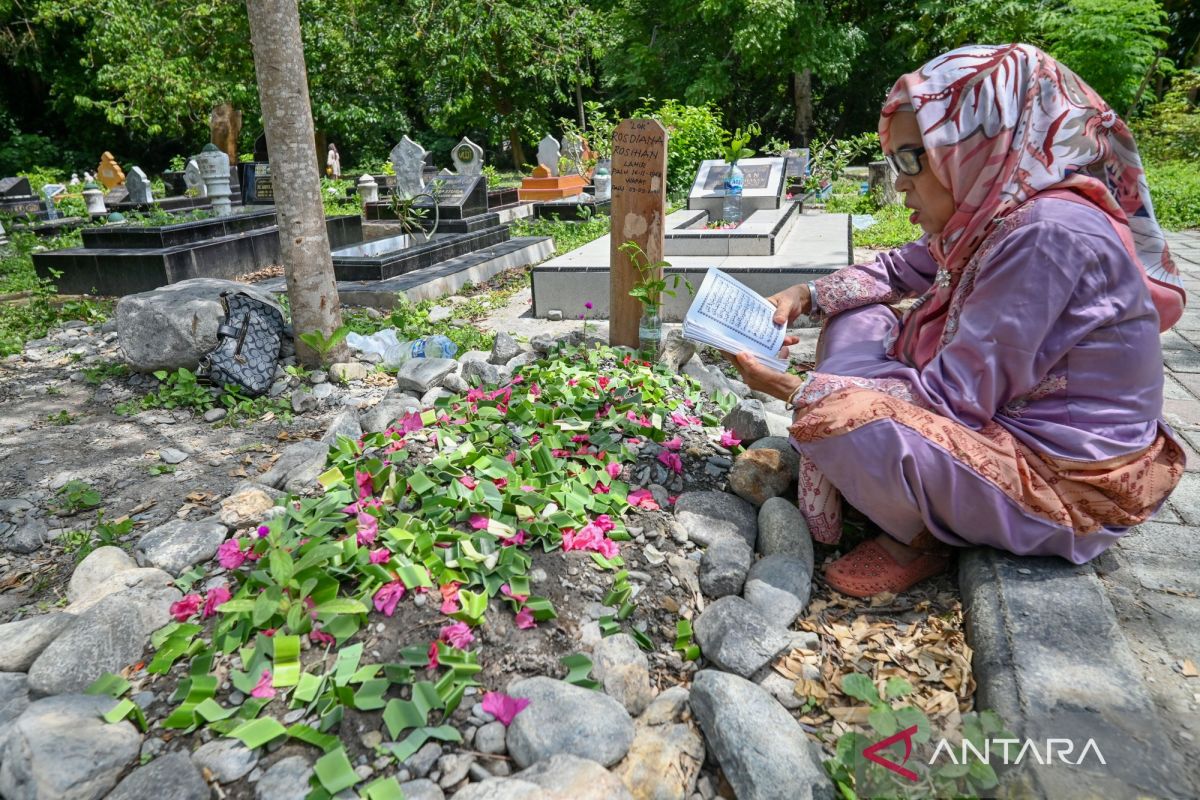
Amid prayers, flowers, and narratives of stories, an invisible bridge is built that connects the past, present, and future. This bridge forms an important foundation for the sustainability of values within families and society.
Jakarta (ANTARA) - Muslims in the country have just celebrated the Eid al-Fitr holiday, 1 Shawwal 1447 H.
In Indonesia, Eid is not only celebrated at home with family, relatives, and living friends, but is also intertwined with a series of grave visits to family members who have passed away earlier.
This tradition is not merely an annual routine, but part of a cultural expression that shows how Indonesian society interprets the relationship between life and death in a holistic and sustainable manner.
Public cemeteries become bustling. Flower sellers line up providing cut flowers, scattering flowers, and rose water.
This activity creates a small seasonal economic ecosystem, while also demonstrating the interconnectedness between tradition, market, and the sustainability of micro-businesses based on agriculture.
The atmosphere at the cemeteries becomes filled with the colours of flowers and the vibrant hues of new clothes. This tradition is uniquely Indonesian, perhaps not found in other countries, even in the lands where Islam originated in the Middle East.
In many other places, pilgrimages tend to be quiet and minimalistic, whereas in Indonesia, they become warm social spaces full of interaction and rich in symbolic meaning.
Flowers, the product of Indonesian farmers’ floriculture, become symbols of affection, longing, and respect from the living to the family members who have departed.
In this context, flowers possess not only aesthetic value, but also strong emotional and spiritual value. Flowers serve as a medium of communication that transcends the boundaries of words, bringing the presence of feelings in a tangible and touchable form.
Flowers also act as a social marker that the grave still has a family caring for it. Flowers are like a ‘guardian fence’ that silently declares that the deceased inside must not be overlaid by bodies from outside the family circle without the permission of their descendants.
From a social perspective, this reflects how the space of death remains bound by the living kinship structure and is symbolically maintained by subsequent generations.
Even flowers contribute by beautifying the face of the cemetery, dispelling impressions of squalor and eeriness. In short, thanks to flowers, public cemeteries resemble heavenly courtyards with beautiful and fragrant flower gardens.