
Eid Effect: Economist Predicts Q1 Economy Could Grow 5.5%
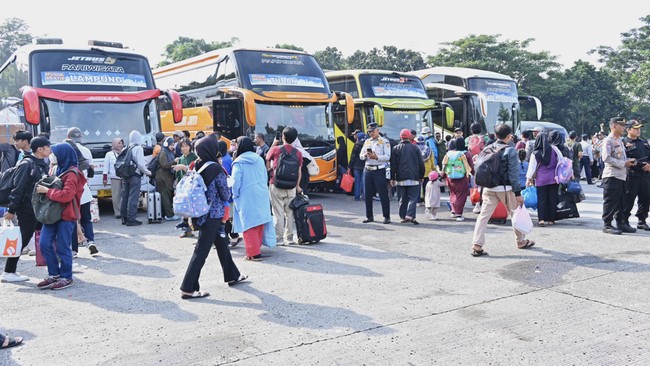
Jakarta, 26 March 2026 - Economist from Paramadina University, Wijayanto Samirin, is optimistic that the momentum of Eid al-Fitr, along with several government initiatives, will drive Indonesia to achieve the first quarter 2026 economic growth target of 5.5 per cent year-on-year (yoy). According to him, Indonesia has several consumption-boosting momenta throughout this quarter, even from the beginning of the period. At the start of the year, for example, consumption activity increased in line with Christmas and New Year celebrations (Nataru). Then, in the middle of the first quarter, economic activities were boosted by the Chinese New Year and Ramadan momenta. Entering March as the end of the first quarter, consumption rose again with Eid al-Fitr celebrations. He explained that, in terms of trends, the Nataru and Eid momenta often contribute around 30-40 per cent of total annual retail spending. Therefore, he believes these consumption activities will be reflected in the first quarter economic growth. “Public spending during Nataru and Eid will have a very high impact on the 2026 first quarter economy, so the 5.5 per cent growth target will be achieved,” Wijayanto said on Thursday (26/3). Furthermore, he assessed that economic growth in the first quarter will be evenly distributed, considering that the public, especially those returning to hometowns, tend to spend their money in their home regions. This is expected to make Indonesia’s first quarter economic growth more inclusive. “Eid always has a major impact on economic vibrancy, including regional economies that receive funds from mudik participants,” he added. He also stated that government economic stimuli play a significant role in boosting first quarter consumption. Even the Hari Raya Bonus (BHR) policy for online motorcycle taxi drivers is said to be able to drive economic growth in this quarter, although its impact is projected to be relatively limited. “The BHR value of Rp400 billion may not yet be significant compared to the size of Indonesia’s economy. Nevertheless, for ojol drivers, this is an extraordinarily beneficial assistance and deserves appreciation,” he concluded. Previously, the Coordinating Ministry for Economic Affairs stated that mudik activities and Eid holidays are expected to drive national economic growth this year. Because, in terms of trends, mudik creates a multiplier effect that provides layered impacts for economic actors, including micro, small, and medium enterprises (MSMEs), traders, and the transportation services sector. “With such great potential, policy synergy and strengthening the role of MSMEs become the key to optimising the Eid mudik momentum to drive inclusive and sustainable economic growth,” said the Coordinating Ministry for Economic Affairs Spokesperson, Haryo Limanseto. Furthermore, he said that this optimism is also supported by various stimulus policies, including fiscal stimulus allocation of more than Rp12.8 trillion, distribution of social assistance worth Rp11.92 trillion to 5.04 million Beneficiary Families (KPM) ahead of Eid al-Fitr, and transport fare discounts worth Rp911.16 billion. With household consumption contributing around 53-54 per cent to Gross Domestic Product (GDP), these various stimuli are projected to have a positive impact on national economic performance.