
Eid al-Fitr: The Spirit of Indonesia Rising
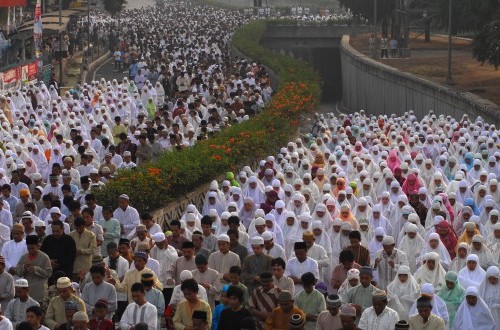
Eid al-Fitr always arrives bearing a message that transcends mere celebration. It is not only a marker of the end of the month of Ramadan but a spiritual moment that invites humanity to return to its innate nature. In Islamic tradition, Eid al-Fitr is interpreted as the day of returning to purity—a day when humanity becomes clean again after undergoing the process of self-purification through the worship of fasting.
The essence of Ramadan fasting is training in self-control. For a full month, humanity is invited to endure hunger and thirst, but more than that, to restrain the ego, regulate emotions, and subdue base desires. In this process, humanity learns about patience, empathy, and humility.
Therefore, Eid al-Fitr is often called the day of victory. However, the victory intended is not victory over others, but victory over oneself. Victory over the ego that often becomes the source of conflict, greed, and injustice in human life.
Imam Al-Ghazali in his monumental work Ihya Ulumuddin emphasises that worship, in essence, is a path to purifying the heart. He writes that the primary goal of self-control is for humanity to return to the nobility of its innate nature as rational, ethical, and spiritually aware beings.
Thus, Eid al-Fitr is truly a moment of rebirth for enlightened humanity—intellectually intelligent, emotionally mature, and spiritually strong.
Spiritual Victory and Self-Purification
Ramadan fasting is not merely a ritual of worship but a profound process of character education. It teaches discipline, honesty, and awareness that humanity must not be enslaved by its own desires.
When a person fasts, they do not only abstain from eating and drinking but also restrain anger, hurtful words, and behaviours that harm others. Fasting teaches that true human strength lies not in the ability to dominate others but in the ability to control oneself.
The Prophet Muhammad (peace be upon him) reminded, “The strong person is not the one who wins in wrestling, but the strong person is the one who can control themselves when angry.” This value is the core of Ramadan’s spiritual education.
In the midst of modern life that is fast-paced and competitive, this message becomes increasingly relevant. Today’s world often places ambition and personal interests as measures of success. As a result, many conflicts arise from uncontrolled egos.
Yet, true victory arises from self-control. Mahatma Gandhi once said, “The victory attained by violence is tantamount to a defeat.” Victory obtained through domination and violence ultimately is merely an illusory victory.
Fasting teaches the opposite: true victory arises from inner peace and moral clarity.
A World That Is Not All Well
The moral message of Eid al-Fitr becomes even more important when we look at the current state of the world. Geopolitical conflicts, wars, and global power rivalries continue in various regions. Tensions between countries, economic competition, and struggles for influence increasingly show how the ego of power often overrides common sense and humanitarian values.
Many observers describe the current world as being in a phase of global uncertainty. Energy crises, inflationary pressures, supply chain disruptions, and geopolitical instability create difficult situations for many countries.
Indonesia is certainly not entirely detached from these dynamics. As part of the global economic system, various external pressures also affect national conditions. Rising energy prices, global economic fluctuations, and changes in international trade dynamics become challenges that must be faced with caution.
Domestically, society also feels significant economic pressures. Rising prices of basic necessities, pressures on purchasing power, and fiscal management challenges become agendas that must be handled with careful policies.
However, Indonesia’s history shows that we are not a nation that easily gives up. In various crises faced, this nation has always been able to find a way to rise.
Bung Karno once reminded that a great nation is one that has the courage to rise from difficulties. The history of Indonesia’s struggle is a history of endurance and steadfastness in facing various challenges of the times.
Resilience: The Energy of National Revival
In a global situation full of uncertainty, the ability to be resilient becomes very important. Resilience does not only mean surviving difficulties but also the ability to adapt and rise stronger.
Psychologist Viktor Frankl in his book Man’s Search for Meaning writes that humans always have the freedom to determine their attitude in facing any situation. Even in the most difficult conditions, humans still have inner strength to find meaning and hope.
This value is the foundation of toughness.
A resilient nation is one that can see opportunities amid challenges. It not only survives but is also able to transform. When facing difficulties, it does not drown in pessimism but instead seeks solutions through creativity and innovation.
It is here that the spirit of Eid al-Fitr finds its meaning for national life. Ramadan fasting teaches discipline, patience, solidarity, and empathy—values that are very important in building social resilience.
The nation’s revival is ultimately determined by the quality of its people. A nation with human resources that are intellectually intelligent, emotionally mature, and spiritually strong will have greater endurance in facing the changes of the times.