
Eid al-Fitr: Strengthening Social Bonds and Economic Resilience
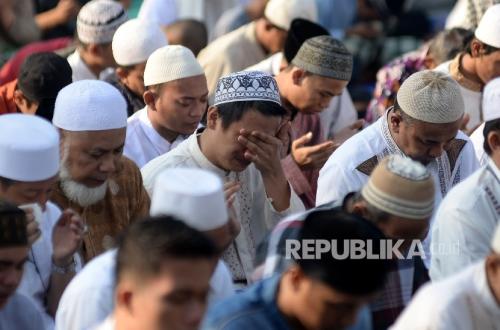
Every year, as the Islamic month of Ramadan draws to a close, the atmosphere across Indonesia gradually transforms. Terminals, train stations, and airports become crowded with homebound travellers. Markets bustle with increased activity. In homes throughout the nation, preparations begin for traditional Eid feasts. All these signs point unmistakably to one thing: Eid al-Fitr is approaching.
For Muslims in Indonesia, Eid al-Fitr is far more than a religious holiday. It has evolved into a distinctive social and cultural phenomenon. Eid al-Fitr represents a moment when families reunite, social relationships are renewed, and various community economic activities accelerate with greater dynamism.
Consequently, Eid al-Fitr does not merely mark the conclusion of Ramadan. Rather, this celebration becomes a momentum that brings together various dimensions of community life—spiritual, social, and economic—into a shared experience.
Eid al-Fitr and Social Renewal
After observing a full month of fasting, Eid al-Fitr is understood as a day of victory. The spiritual victory referred to is the triumph of self-restraint, deepened faith, and improved relationships with others. In Indonesian society’s traditions, this victory is often expressed through the practice of mutual forgiveness. The phrase “I seek forgiveness in body and spirit” becomes a symbol of willingness to turn a new page in social relations. Through this tradition, relationships that may have become strained can be restored, whilst the sense of brotherhood within society is strengthened.
Sociologically, a moment such as Eid al-Fitr serves an important function in tightening social solidarity. French sociologist Émile Durkheim explained that shared religious rituals can reinforce collective consciousness in society. When people gather in the same religious experience, they do not merely celebrate faith—they also renew the social bonds that unite them as a community.
This is clearly evident in the various traditions accompanying Eid al-Fitr in Indonesia, such as mudik (homecoming) and halal bihalal (mutual forgiveness gatherings). The mudik tradition, for instance, illustrates how millions of people willingly undertake long journeys to return to their hometowns. For many, mudik is not merely a physical journey, but an emotional journey back to family, relatives, and their original communities. In these reunions, family ties are strengthened and values of togetherness are renewed.
Eid al-Fitr and Economic Renewal
However, Eid al-Fitr carries significance beyond the social and spiritual realms. This momentum generates profoundly felt impacts on community economic life. As Eid approaches, economic activity typically increases significantly. Demand for various needs—from traditional Eid foods and new clothing to household goods—experiences considerable growth. Traditional markets become busier, shopping centres fill with visitors, and various service sectors benefit from increased activity.
The role of small and medium-sized enterprises (SMEs) becomes particularly prominent during this period. Many business operators capitalise on the Eid moment to increase production and sales. Culinary businesses such as traditional biscuits and Eid specialities, for example, frequently experience significant demand increases. Similarly, Muslim clothing businesses, religious supplies, and various forms of Eid gift hampers see heightened activity.
Within the context of community-based economics, small businesses play an important role in driving community economic activity. Nobel Prize-winning economist Muhammad Yunus, also known as the “Banker to the Poor”, emphasises that small enterprises can serve as the foundation of community economics because they directly serve the daily needs of the broader population. Consequently, moments such as Eid al-Fitr often represent crucial opportunities for small business operators to increase their income.
Furthermore, the mudik tradition generates widespread economic impacts, particularly for areas outside major cities. Migrants who return to their hometowns typically bring earnings obtained from urban centres. These earnings are then spent in their home regions, both for family needs and consumption during the Eid period. As a result, economic circulation flows from cities to regions, making traditional markets, small shops, and various local businesses livelier.
Additionally, various other sectors are stimulated by increased population mobility during the Eid season. The transport sector experiences heightened activity due to the large number of people undertaking homecoming journeys. The tourism sector also develops as many families take advantage of the Eid holidays to travel together. Thus, Eid al-Fitr influences not merely one economic sector, but drives economic dynamism across multiple fields.
Another important aspect of Eid al-Fitr is the practice of sharing with others. Zakat al-Fitr, obligatory alms required of Muslims before the holiday, aims to help disadvantaged members of society so they too may enjoy the happiness of Eid. This practice reflects the value of social solidarity at the heart of Islamic teaching. Islamic economist Umer Chapra explains that instruments such as zakat serve an important function in creating social balance and reducing economic inequality within society.
Beyond zakat, the tradition of providing holiday bonuses (Tunjangan Hari Raya, or THR) to workers also exerts considerable impact on community economic circulation. This supplementary income increases the purchasing power of many families, enabling them to meet various Eid needs, which in turn stimulates economic activity across multiple sectors.