
Eid al-Fitr: Spiritual Independence and Social Solidarity
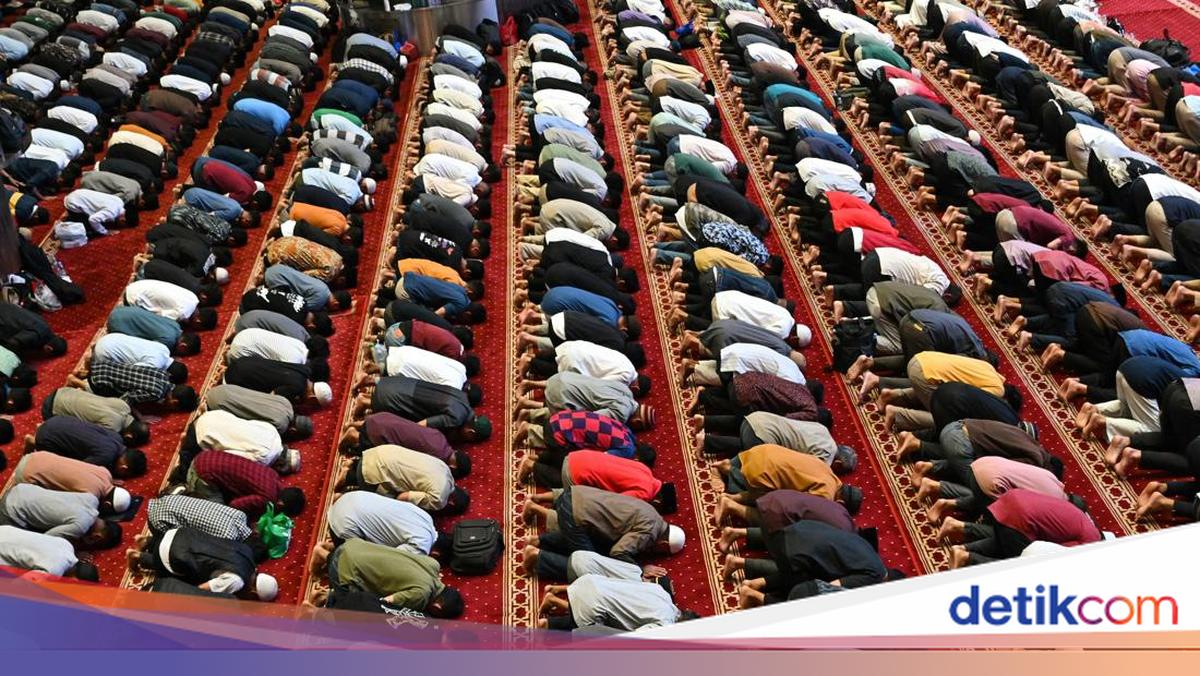
Every year, Muslims celebrate Eid al-Fitr as the marker of the end of Ramadan, a spiritual seminary that forges humanity in silence, patience, and self-control. On that day, Muslims celebrate victory and success in conquering personal desires and ego. It is an achievement when base instincts are tamed, ego is humbled, and spiritual awareness finds its clarity.
Ramadan is truly a process of spiritual riyadhah, an inner training that sharpens humanity’s deepest sensitivity. In hunger and thirst, humanity is invited to realise that life does not always have to submit to desires.
In restraining the tongue and anger, one learns that true freedom does not mean without control, but rather the ability to master oneself. At this point, humanity will attain inner and spiritual independence.
Spiritual independence is a state in which humanity is no longer enslaved by instinctive impulses, by greed, uncontrolled ambition, and suffocating egoism.
Instead, humanity learns to become master of itself. From this perspective, Eid al-Fitr is truly akin to a declaration that the soul has been freed, that humanity has returned to its pure, clear, and open fitrah.
However, in substantial Islamic teachings, spiritual independence does not stop at the personal realm alone. More than that, it necessitates social implications as its manifestation. Piety cannot remain as a purely private inner experience; it must transform into social energy that also brings about justice and social care.
Ramadan is a solitary path to draw closer to God, but more broadly, it is the best medium for honing empathy towards others, especially those living in limitation. In the reality of Indonesia today, where millions of our fellow citizens still struggle with poverty, this message finds its most real relevance.
In 2025, according to data from the Central Statistics Agency (BPS), there are still around 23 million poor people in Indonesia, or about 8 percent of the total population. The poverty statistics in this country become a mirror of our true humanitarian face that still requires the touch of justice.
In this context, Islam presents social institutions such as zakat, infak, and sedekah. Zakat, in particular, is not merely voluntary goodness, but an ethical mechanism for distributing welfare. It contains both spiritual and social dimensions, connecting the purity of the soul with economic justice.
The great potential of zakat in this country indeed still needs to be optimised. It must be able to become an instrument of social transformation that lifts the weak to greater empowerment, opening access to education, health, and more decent livelihoods.
At this point, we see the inseparable connection between spiritual independence and social justice. A person who has become independent inwardly will not bear to live in abundance while those around them are in lack. True spiritual independence precisely gives birth to deep social sensitivity.
Eid al-Fitr, therefore, is a moment of returning to one’s individual fitrah, as well as returning to the fitrah of humanity to care for, support, and share with one another. The tradition of fulfilling zakat before the holiday becomes a strong symbol that happiness must not be the right of only a few, but must be felt together, especially by those standing on the most vulnerable side.
If this spirit is nurtured, Ramadan will not stop as an annual ritual that passes by. It will transform into moral energy that continuously drives social solidarity at all times.
Therefore, Eid al-Fitr should not be interpreted as the end and conclusion of the entire journey. On the contrary, it becomes a starting point, the beginning of long-term efforts to maintain spiritual independence and strengthen social civility.
Because true victory is not when humanity can restrain itself during Ramadan, but when afterwards, we become more caring, more generous, and more beneficial to others.
In the end, authentic spiritual independence will always bear fruit in a society that is more just, full of empathy, and civilised. At that point, Eid al-Fitr not only succeeds in cleansing the heart but also ennobles humanity.