
Eid al-Fitr Moment Can Strengthen Social and National Reconciliation
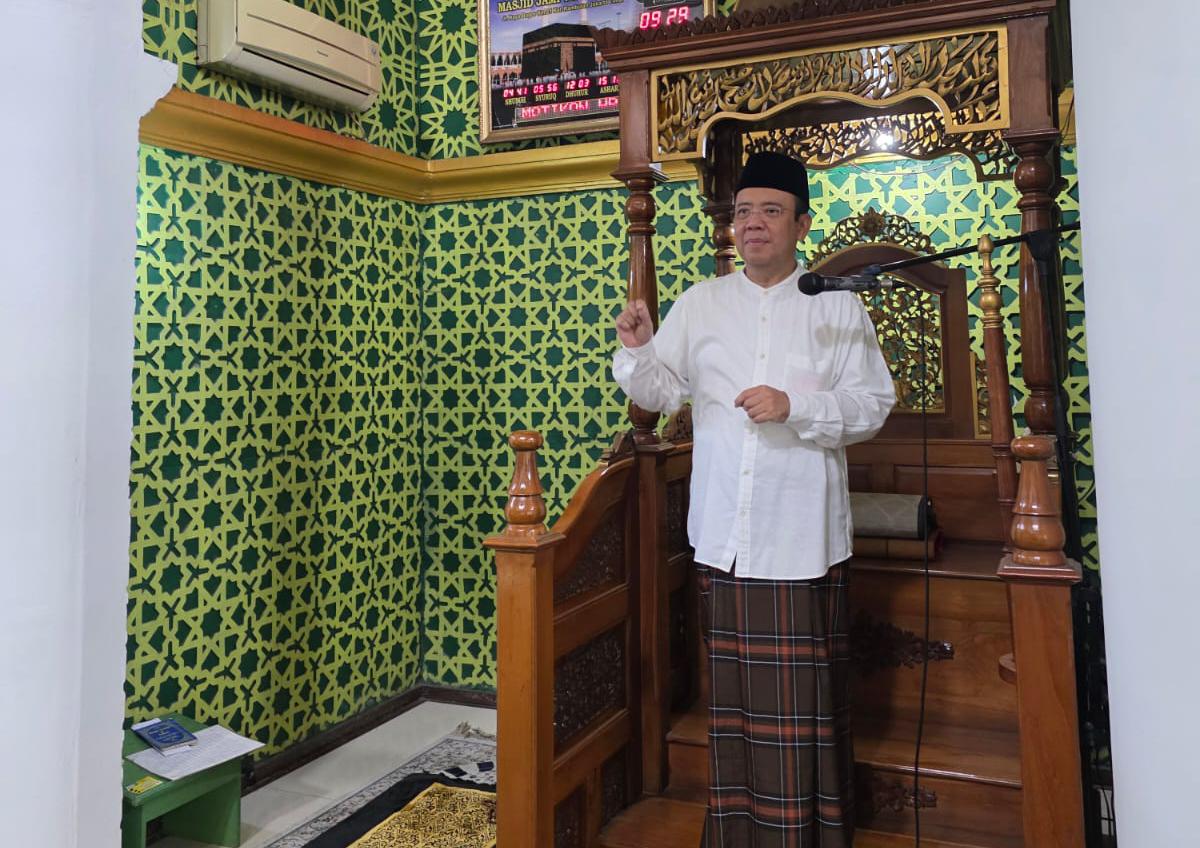
Amid domestic political dynamics and global geopolitical tensions, Eid al-Fitr becomes an important opportunity to strengthen social and national reconciliation. Eid al-Fitr is not merely a celebration of spiritual victory after observing the Ramadan fast. More than that, this moment holds profound meaning as a time to cleanse oneself, strengthen ties of kinship, and reinforce values of togetherness. The tradition of mutual forgiveness inherent in Eid al-Fitr should be understood more deeply, not just as a formality or physical handshake. Professor Achmad Tjahja Nugraha from UIN Syarif Hidayatullah Jakarta yesterday reminded that the true meaning of Eid al-Fitr is to return to the purity of the heart and improve relations between people, including in national life. The tradition of mutual forgiveness that occurs every Eid al-Fitr should not stop at mere symbols or social habits. “Forgiveness in Eid al-Fitr is not just shaking hands or uttering formal words. Its essence is the cleansing of the heart, sincerity in erasing grudges, and opening space for genuine reconciliation,” he stated. According to Achmad, the value of forgiveness itself is an important teaching in Islam. In the Quran, Allah praises those who can restrain their anger and forgive others’ mistakes. As mentioned in the Quran, Surah Ali Imran 3:134: “(namely) those who spend their wealth in times of ease and hardship, those who restrain their anger and forgive others’ mistakes. And Allah loves those who do good.” “This spirit is highly relevant to the national condition often coloured by differing views, conflicts of interest, and polarisation in public spaces,” he explained. In that context, Achmad continued, Eid al-Fitr can become a “national message” reminding all elements of the nation to return to values of brotherhood, tolerance, and unity. “Eid al-Fitr is a moral message for the nation. If society can practise sincere forgiveness, then our social and political life can also be healthier and more peaceful,” he clarified. Achmad added that the Quran also emphasises the importance of maintaining brotherhood and reconciling conflicts in society. This is reflected in the Quran, Surah Al-Hujurat 49:10: “Verily, the believers are brothers. So reconcile between your two brothers and fear Allah so that you may receive mercy,” he said. Achmad assessed that the diverse Indonesian nation needs moral energy like that taught in Eid al-Fitr. The tradition of mutual forgiveness can become the foundation for strengthening social cohesion amid various differences. Therefore, he invited society to make Eid al-Fitr a moment of collective reflection, not only in the family sphere but also in community and national life. “If Eid al-Fitr is understood deeply, it not only becomes a religious celebration but also a moral movement to improve social relations and strengthen national unity,” he concluded.