
Eid al-Fitr Decoration Traditions Mirror Changing Ways Indonesians Celebrate the Holiday
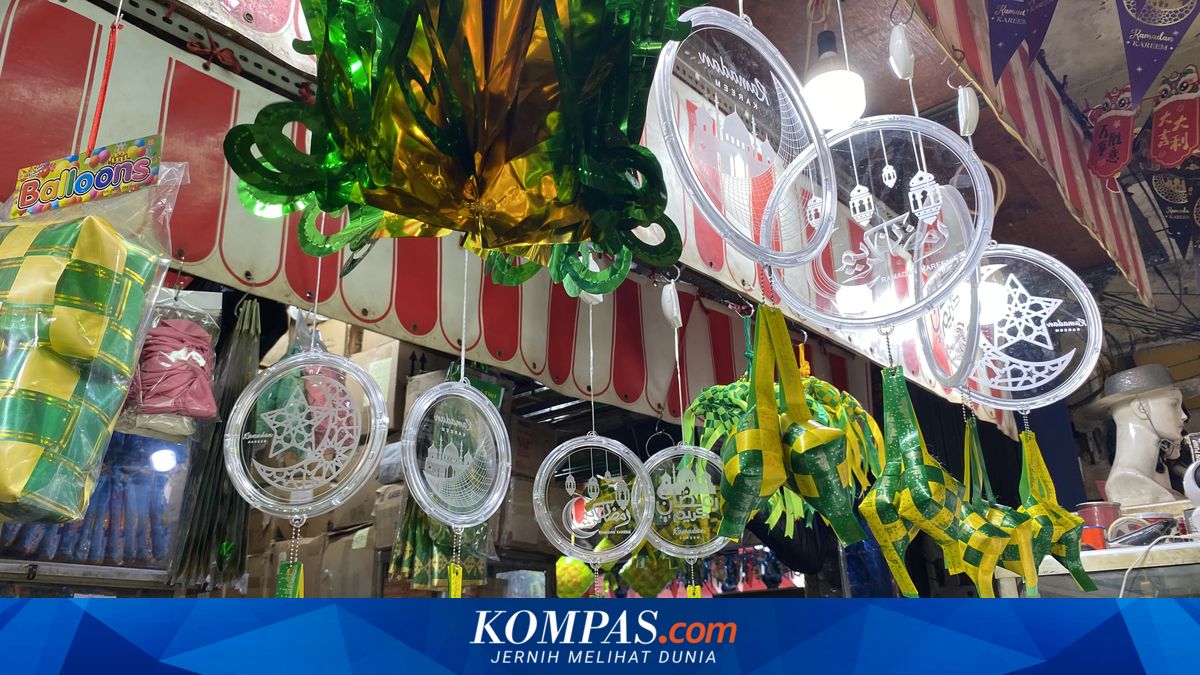
JAKARTA — As Eid al-Fitr approaches, homes across various regions of Indonesia are adorned with distinctive holiday ornaments. Hanging ketupat decorations, crescent moon-shaped lights, and banners reading “Happy Eid al-Fitr” have become commonplace in living rooms and house terraces.
The tradition of decorating homes during the Eid season is far more than a simple beautification effort. From an anthropological perspective, this practice carries symbolic meaning connected to spatial transformation, social identity, and the way communities celebrate religious holidays.
Imam Setyobudi, head of the cultural anthropology department at the Faculty of Culture and Media at the Indonesian Arts and Culture Institute in Bandung, stated that the tradition of decorating homes during Eid al-Fitr represents a form of spatial transformation within community social life. However, over time, the practice has evolved into home decoration activities as preparation for receiving guests during open house celebrations or halal bihalal visits.
“The authentic tradition is house cleaning. But nowadays it has evolved into decorating homes to welcome guests during Eid,” Setyobudi explained when contacted by Kompas.com on Friday (13 March 2026).
He elaborated that homes, which ordinarily function as private spaces, transform into celebration spaces during Eid. The process of cleaning, repainting, and decorating homes becomes a symbol of transformation from profane to sacred space. In anthropological terms, this change can be understood as part of a rite of passage.
Homes that have been cleaned and redecorated become metaphors for spiritual cleansing following a month of fasting. “The visual transformation of homes symbolises a new beginning after completing Ramadhan. Cleaned and decorated homes become symbols of returning to one’s natural state,” he said.
During Eid, homes no longer serve merely as private spaces but as social spaces open to receiving visitors. Through the traditions of silaturahmi (strengthening kinship bonds) and open house celebrations, homes become places for rekindling relationships with family, neighbours, and relatives who may have drifted apart.
“Homes become stages for silaturahmi rituals. Homeowners demonstrate hospitality by preparing their homes as beautifully as possible,” he explained.
From an anthropological perspective, the way people decorate their homes during Eid can also represent social identity and a family’s economic status. Setyobudi noted that home decoration frequently serves as non-verbal communication about one’s social position in society. The arrangement of living rooms, choice of decorations, and types of furniture used can symbolise lifestyle and social class identity.
Nevertheless, he stressed that the primary meaning of this tradition remains connected to welcoming guests and strengthening social bonds during the holiday season.
Setyobudi indicated that the practice of decorating homes during Eid is not a new phenomenon. This tradition represents the acculturation of local Nusantara cultures with Islamic values that subsequently developed. Before Islam’s widespread influence, the communities of Nusantara already possessed customs of cleaning and repairing homes before major events or celebrations.
In several local cultures, such as Javanese, Malay, and Buginese traditions, home cleaning activities carried ritual meaning as a form of preparation to welcome important events. As Islam spread throughout Nusantara, these traditions then blended with religious symbols associated with Eid al-Fitr.
One of the most powerful symbols in Eid decoration is ketupat. According to Setyobudi, ketupat exemplifies cultural acculturation between local traditions and Islamic teachings. The use of palm fronds as ketupat material originates from agrarian traditions of Nusantara communities.
“Ketupat is not merely food or decoration, but a symbol of social reconciliation. The tradition of exchanging ketupat is how communities resolve conflicts through the symbol of ngaku lepat, or admitting wrongdoing,” he clarified.
Besides ketupat, other symbols frequently appearing in Eid decoration are the crescent moon and Arabic calligraphy. The crescent moon serves as a symbol connecting Indonesian Muslim communities with the global Islamic community.