
Eid al-Fitr 2026 Money Circulation Projected to Reach Rp148 Trillion
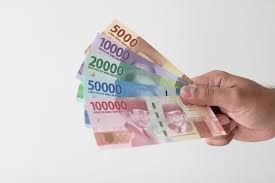
The momentum of the homecoming and Eid al-Fitr 1447 H holiday in 2026 is expected to continue driving significant national economic circulation. Although the number of travellers is projected to decrease by 1.75%, the potential money circulation during the Eid period is estimated to reach Rp148 trillion.
Vice Chairman of the Indonesian Chamber of Commerce and Industry (Kadin) for Regional Autonomy, Sarman Simanjorang, stated that various government economic stimuli are the main factors maintaining high public interest in travelling home.
The government, he said, has prepared several policies, including transportation discounts with a total budget of Rp911.16 billion. These discounts cover train fares, sea transport, ferries, and economy-class air travel. In addition, a 30% toll discount is applied on various toll roads in the Jabodetabek, Trans Java, non-Trans Java, and Trans Sumatra corridors.
On the other hand, stimuli in the form of Holiday Allowances (THR) also boost public purchasing power. The government has allocated around Rp65 trillion for civil servants, TNI-Polri, and pensioners. Meanwhile, private sector THR is estimated to reach Rp124 trillion for approximately 26.5 million workers.
Furthermore, the Holiday Bonus (BHR) policy for online motorcycle taxi partners and couriers adds to the money circulation by around Rp220 billion. The government is also implementing a Work From Anywhere (WFA) policy during the periods before and after Eid to ease the density of homecoming traffic.
Based on a survey by the Ministry of Transportation of the Republic of Indonesia, the potential movement of people during the 2026 Eid homecoming reaches 143.9 million people or about 50.6% of Indonesia’s total population. This figure is slightly lower than the previous year’s 146.4 million people.
“Assuming an average family of four people carrying around Rp4.125 million, the total money circulation is estimated at Rp148.39 trillion, an increase of about 8% from last year. Even this figure could rise to Rp161.88 trillion if the average family expenditure reaches Rp4.5 million,” said Sarman, quoted from a press release received on Thursday (19/3).
This money circulation is expected to be concentrated in Central Java, East Java, and West Java, as well as spreading to other regions such as Sumatra, Kalimantan, Sulawesi, and Bali. Public consumption activities include transportation needs, fuel, souvenirs, clothing, typical Eid foods, as well as zakat and charity.
While in their hometowns, the money circulation will also drive the tourism and SME sectors, from culinary vendors, souvenirs, to local specialty products.
To support public transaction needs, Bank Indonesia has prepared cash amounting to Rp185.6 trillion during the Ramadan and Eid period.
Sarman assesses that the surge in household consumption, projected to increase 10-15% during Eid, will be the engine of national economic growth in the first quarter of 2026, targeted at 5.4-5.5%.
However, he emphasised the importance of maintaining energy supply stability, particularly fuel and gas, to keep public confidence in shopping intact. This also relates to global geopolitical dynamics, including tensions in the Middle East, which could affect energy supplies.
“The most important thing is that the government can maintain public psychology by providing assurances and ensuring that fuel and gas availability is always met during and after Eid 2026,” Sarman concluded.
The Yogyakarta Special Region Office of Bank Indonesia recorded that money circulation during the 2025 RAFI (Ramadan and Idul Fitri) period in DIY reached Rp4.60 trillion.