
Eid al-Fitr 1447 H: From Jakarta Palace to the Remotest Corners of Aceh, Indonesia United in Gratitude
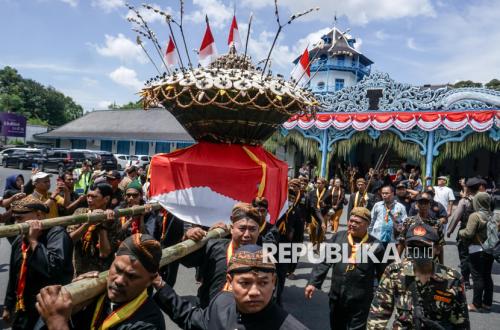
Allahu akbar, Allahu akbar, Allahu akbar. La ilaha illallahu wallahu akbar. Allahu akbar walillahil hamd.
Those words are not merely a sequence of phrases. They are a pulse. They echo from one minaret to the next, from one village to the village across the hill, from the loudspeaker of a small prayer room in a narrow alley to the grand mosque bearing centuries of history. On Saturday, 21 March 2026, the skies of the Archipelago were filled with the same sound, uttered by millions of lips in a single language. Eid al-Fitr, 1 Syawal 1447 Hijriah, had arrived.
After a full month of restraint—holding back hunger and thirst, anger and desires, all worldly things for something higher—the Muslim community of Indonesia finally rejoiced. Drums beat rhythmically. Takbirs resounded in response. And everywhere, in crowded living rooms, in streets suddenly alive with colour, at dining tables laden with ketupat and opor, one shared feeling flowed: gratitude that words could scarcely express.
The Indonesian government officially set 1 Syawal 1447 Hijriah on that Saturday, a decision eagerly awaited by parts of society who chose to wait for the isbat council’s results before proclaiming the takbir. Others had begun celebrating earlier.
Such differences, as always, do not cause wounds. They create space—space to understand that truth can appear in varied forms, and that brotherhood does not require uniformity. Therein lies the uniqueness of this nation. Eid is not owned by one way of celebration. It belongs to all who feel it.
The Palace as the People’s Home
At three in the afternoon, the sun still scorched the grounds of the Jakarta Presidential Palace Complex when President Prabowo Subianto stepped out in a white koko shirt, black trousers, and a simple peci perched on his head. Beside him, his son Didit Hediprasetyo followed.
Before them stretched a long queue of citizens who had waited since morning. Four thousand, perhaps five thousand people, stood under the same blazing heat for a moment that felt like a dream to many: shaking hands directly with the head of state on the day of victory.
There were no rigid protocols creating distance. No lines of guards separating them. Just handshakes, genuine smiles, and greetings exchanged one by one. Tears of emotion broke out in places. Warm embraces were shared. And amid it all, something more than mere ceremony was felt—a signal that leadership, at its core, is about presence.
Vice President Gibran Rakabuming Raka and his wife Selvi Ananda were also present, along with members of the Merah Putih Cabinet and leaders of high state institutions. Before opening to the people, President Prabowo first held halalbihalal with the sixth President Susilo Bambang Yudhoyono and the seventh President Joko Widodo, along with their respective families—a gesture that spoke louder than any speech about the importance of nurturing unity among the nation’s leaders.
At City Hall, DKI Jakarta Governor Pramono Anung opened the doors to citizens in an equally warm open house, while reminding those planning to return to seek their fortunes in the capital after Lebaran to prepare their personal documents.