
Egi's Story with the Pertiwi Lestari Kehati Group in Conserving the Bali Starling
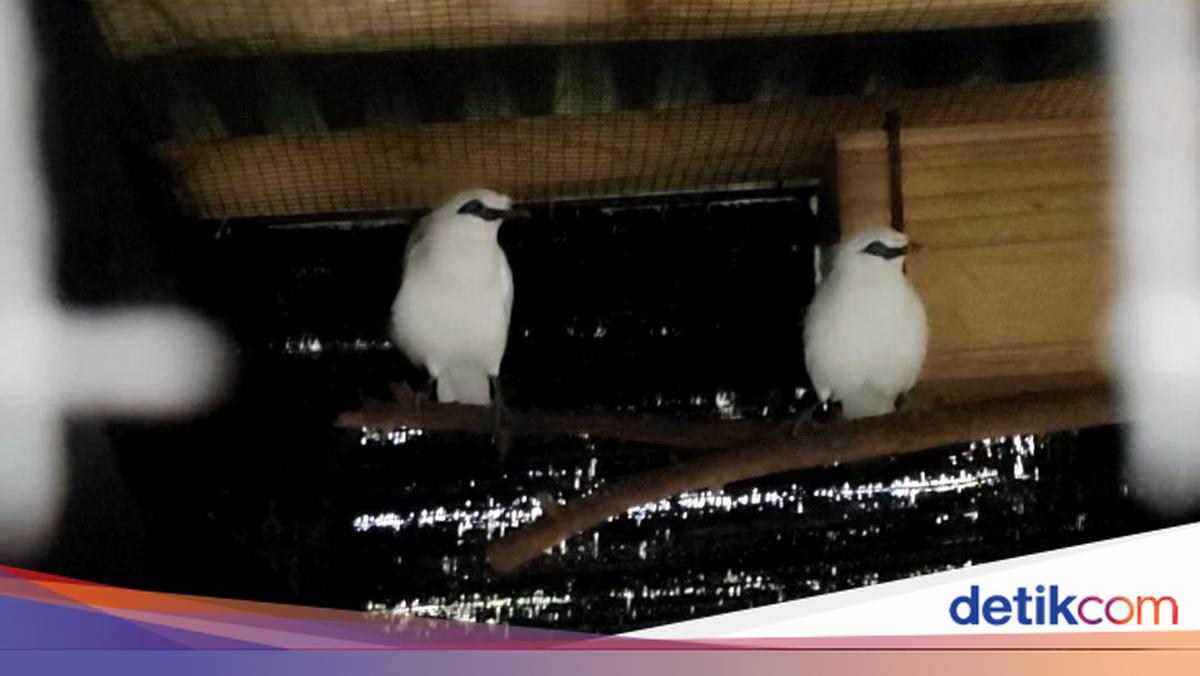
I Made Suarta carefully feeds food to a nine-day-old Bali starling chick at the breeding facility of the Pertiwi Lestari Kehati Group in Bongkasa Pertiwi Village, Abiansemal Subdistrict, Badung. This activity is part of the lengthy breeding process for the bird known as the Bali starling, from the 15-day incubation period to ensuring the birds are ready to fly independently.
“Fertilising until hatching, it’s one month, incubation for 15 days. Once hatched, the nine-day-old ones are taken, and we feed them ourselves,” said the man familiarly known as Egi when met by detikBali on Thursday (9/4/2026).
These Bali starling chicks require intensive care and manual feeding before they can forage independently. The process to independence takes up to three months from hatching. “After one month, they can eat wet food,” Egi explained.
The man, who now manages five pairs of birds, revealed that the bred birds cannot be released directly into their natural habitat due to physical readiness factors. Egi sets a minimum age standard of eight months so that the birds’ wings are strong enough to fly in the wild.
“Minimum age of eight months, then they can be released and can fly. Below that, their wings aren’t ready yet,” explained the former hunter on the release technique.
Egi noted that the population from breeding at his facility is dominated by male birds. This occurs because each nest typically contains two eggs, and the chicks’ survival chances depend on the number of hatchlings.
If more than two eggs hatch in one incubation process, there is usually failure in the chicks’ growth. Egi records that although eggs may hatch, the chicks often fail to survive to independence.
“Ah, mostly males. Maximum is two (hatching). If more, one is sure to die. The two are sure to survive. If more than two, some will fail; they hatch, but fail to reach independent feeding,” he added.
The reproduction cycle of Bali starlings in captivity usually peaks in December, the mating season. To maintain animal health, Egi still relies on natural methods without special poultry vaccines.
Currently, Egi’s group manages a total of 73 birds, all prepared for conservation. Feeding is scheduled, from fruit in the morning to crickets in the evening.
The availability of feed like crickets and fruits was once the main challenge for the breeding group, which now has 10 members. However, this obstacle is being overcome through self-cultivation and community tree-planting initiatives.
“Feed, especially. In the past, it was difficult, but now it’s easy to find because my friend breeds crickets, cultivates crickets,” Egi explained.
To date, Egi and his group members have conducted three release actions with varying numbers. In the first stage, they released 10 pairs; the second stage, five pairs; and the latest, six pairs, some time ago.
Egi’s decision to become a breeder is a form of repentance after previously often hunting starling chicks. Although he used to hunt frequently, he emphasised that his catches were only kept as a hobby, not for sale.
“As for the past hunting, I didn’t do it to sell, no. Just like this, birds like these, bred like this, I hunted the chicks, not the parents,” explained the man who stopped hunting since 2018.
Village Government Support
The Bali Natural Resources Conservation Agency (BKSDA) records the current Bali starling population at around 600 individuals, mostly still in the West Bali National Park (TNBB) area. Releases in Badung are hoped to expand new population pockets outside that area.
The Bongkasa Pertiwi Village Government (Pemdes) is now working to provide guidance so that breeders like Egi can be financially independent. One strategy implemented is through a bird adoption programme for ready-to-breed birds to cover feed operational costs.
“Birds that are ready for breeding will be adopted to help with feed costs because the permit process for sales outside is still ongoing. Once this circulation permit is complete, it is hoped to provide greater economic impact for residents,” said the Head of Bongkasa Pertiwi Village, I Nyoman Buda.
The presence of this breeding facility not only preserves the rare species but also strengthens Bongkasa Pertiwi Village’s image as an official conservation centre. This activity is now developed into a wildlife tourism package that provides additional income for residents through cleaning fees.
To ensure effective animal protection, Pemdes Bongkasa Pertiwi has established strict legal rules through Village Regulation K4L and pararem or customary rules. These rules require all residents to protect protected animals, such as the Bali starling and rare trees in the area.
“Pararem requires residents to protect protected animals like the Bali starling, pangolins, jidat fish, and rare trees. Violators or those caught damaging animals/the environment will be sanctioned with area cleaning,” Buda emphasised.
In addition to physical sanctions, violators are also fined materially in the form of rice from 10 kilograms (kg) to 50 kg. Pemdes Bongkasa Pertiwi also strictly monitors illegal hunting activities with weekly patrols and confiscates evidence such as air rifles.
“The village side strictly prohibits illegal hunting, especially the use of air rifles without permission. As a result, in the last three years since the rules were tightened, illegal hunting activities have drastically decreased,” Buda explained.