
Efforts to Build a Joyful School
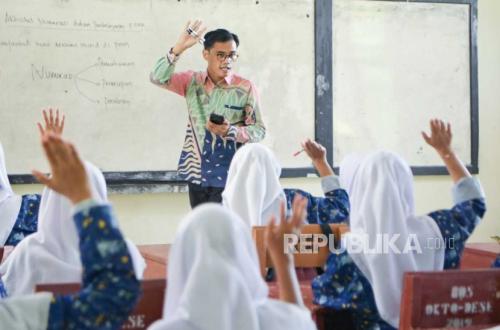
Education has always been a mirror of a nation’s future. Within it lie hopes, anxieties, and grand aspirations for the coming generations. Therefore, every effort to improve education is truly an endeavour to nurture civilisation.
However, the reality of education in Indonesia today still leaves much to be done. Disparities in access between developed and underdeveloped regions have not been fully bridged. Not all children receive equal and quality learning opportunities.
On the other hand, the quality of learning also faces serious challenges. The learning process is often trapped in rigid and meaningless routines. Schools more frequently become places to chase grades rather than spaces to cultivate understanding.
The administrative burden borne by teachers further complicates the situation. Time and energy that should be focused on educating are consumed by technical matters. As a result, the humanistic relationship between teachers and students gradually fades.
Curriculum issues are no less complex. Changes that occur are often not fully understood by implementers in the field. Instead of simplifying, this creates new confusion.
In this context, there is growing awareness that education needs to be reorganised fundamentally. Not just replacing systems, but improving perspectives. Education must return to its essence: humanising humans.
One important idea is to bring joyful learning. Schools must not become spaces that pressure students psychologically. On the contrary, they should be places that are longed for and provide a sense of security.
This approach demands changes in teaching methods. Teachers are no longer merely centres of information, but also inspiring facilitators. Classroom interactions must be more dialogic and participatory.
Emphasis on literacy and numeracy becomes an important foundation in learning. However, both should not be understood merely as technical skills. Literacy and numeracy must serve as tools for critical thinking and problem-solving.
Furthermore, character education needs to be strengthened in tangible ways. Schools do not only produce academically intelligent students, but are also responsible for shaping personalities with integrity and morals.
Good values such as honesty, discipline, and willingness to take responsibility must be instilled through exemplars. Teachers become central figures in this process. What teachers do often has more influence than what they teach.
Therefore, improving the quality and welfare of teachers becomes an undeniable priority. Prosperous teachers will be more focused in carrying out their duties. They can teach with heart, not just fulfilling obligations.
In addition, flexibility in learning management also needs to be expanded. Each region has different characteristics. Policies that are too uniform are often irrelevant to local needs.
Giving space for teachers to innovate is a strategic step. They better understand students’ conditions and learning environments. Thus, learning can become more contextual and meaningful.
An adaptive policy approach also becomes the key to success. Changes do not have to be drastic and rushed. What is needed is continuity between old policies and relevant updates.
In this process, dialogue with various parties becomes very important. Education policies must not be born from isolated spaces. They must be built from the aspirations of teachers, schools, and society.
Collaboration between families, schools, and the social environment becomes a strong foundation. Education does not only take place in the classroom. Life values are often formed outside of school.
In the digital era, education challenges are increasingly complex. Technology brings opportunities as well as risks. Therefore, digital literacy must be balanced with character strengthening.