
Education Ministry Survey Reveals Free Nutritious Meals Programme Improves Student Focus
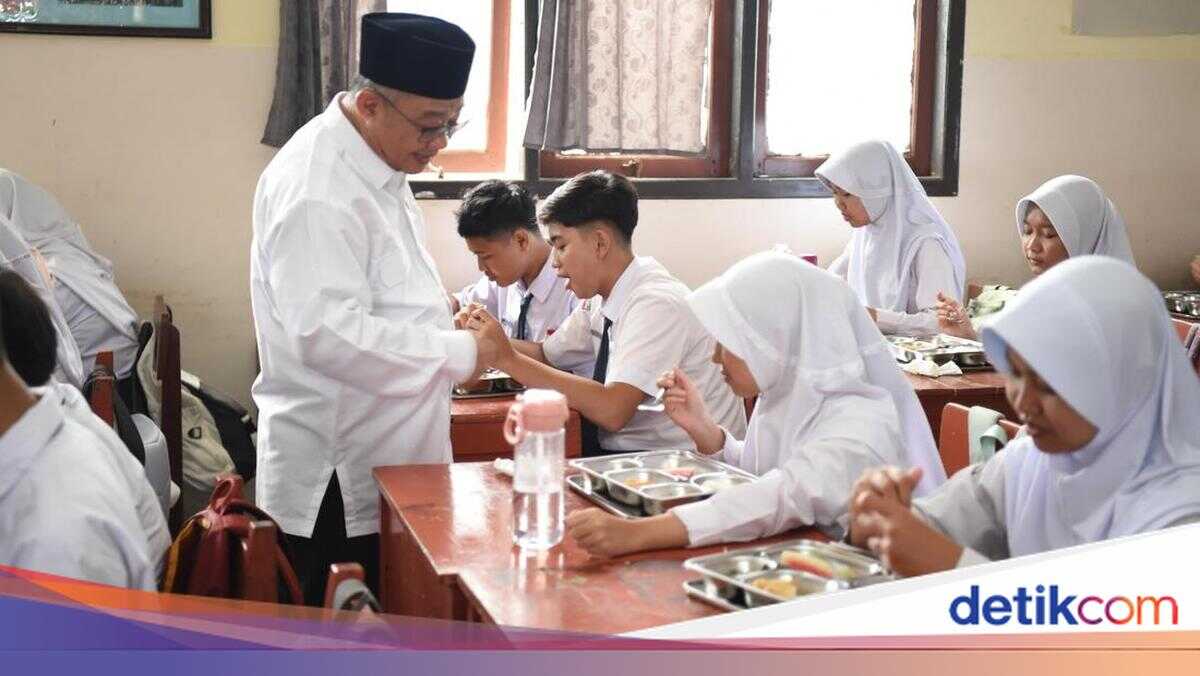
The Ministry of Basic and Secondary Education (Kemendikdasmen), through its Centre for Character Strengthening, has revealed that the Free Nutritious Meals (MBG) programme is showing a positive impact on improving student focus. The programme has proven capable of reducing concentration disruptions caused by hunger, whilst strengthening students’ readiness to engage in learning at school.
The findings are based on evaluation survey results integrated within the framework of the Seven Habits of Great Indonesian Children (7KAIH). One of the habits within the programme is encouraging children to consume healthy and nutritious food.
Based on the 7KAIH implementation evaluation from the baseline period of May–June 2025 through to the endline of November–December 2025, involving 1,203,309 student respondents nationally, schools receiving MBG recorded an average reduction in hunger-related learning disruptions that was 2.37 percentage points higher compared to schools that had not yet received the programme.
In eastern Indonesia, the impact was recorded as more significant. The reduction in hunger-related learning disruptions at MBG recipient schools reached 14.85 percentage points greater than at schools that had not yet implemented the MBG programme.
MBG is considered not only to meet students’ basic needs but also to strengthen their readiness to participate in learning. The data also indicates the MBG programme plays an important role in reducing inequality, particularly for children in eastern Indonesia, enabling them to study with focus and obtain equal opportunities.
In line with these findings, Minister of Basic and Secondary Education Abdul Mu’ti affirmed that MBG forms part of a long-term human development strategy.
“The MBG programme launched by President Prabowo Subianto is a long-term investment in Indonesia’s human development. We are preparing the 2045 generation — those who are currently still in early childhood education, primary school, junior secondary, senior secondary, and even those still in the womb — to grow up healthy, intelligent, and strong both physically and mentally,” said Abdul Mu’ti in a written statement on Thursday (19 February 2026).
Meanwhile, Head of the Centre for Character Strengthening Rusprita Putri Utami explained that respondent selection was conducted using a systematic sampling approach to ensure evaluation results reflected conditions on the ground.
“We selected MBG-implementing schools randomly, ensuring they had adequate baseline and endline data. We then matched them with schools that had not yet implemented MBG, with comparable levels, regions, and student numbers, so that initial data conditions were nearly identical and could be compared,” Rusprita explained.
“This approach strengthens the validity of results whilst ensuring every policy recommendation is truly evidence-based,” she added.
The positive impact of the MBG programme has also been felt directly by educational institutions. The head of SD Negeri 24 Rufei in Sorong City, Sientje Martentji Ajomi, disclosed that the presence of MBG has brought tangible changes for students.
“We have seen a major change in their enthusiasm for learning. The children are more focused in class, more active in asking questions, and more cheerful throughout the day. Our hope is that this programme continues in order to supplement their nutritional intake,” said Sientje.
Beyond supporting nutritional fulfilment, MBG also encourages the adoption of clean and healthy living behaviours through a culture of handwashing with soap (CTPS). This practice has now developed into a collective movement within school environments.
Programme implementation is also complemented by a Character Education Guidebook for the Free Nutritious Meals Programme and a Nutritional Education Module for MBG, serving as school guides for instilling character values, nutritional knowledge, and healthy living habits.
The Ministry considers MBG a manifestation of the nation’s long-term investment in the quality of life of its children. By ensuring every child receives proper nutritional intake at school, the government is not only seeking to address hunger but also building the foundation of a healthier, more intelligent, and more characterful generation.