
Education Minister for Primary and Secondary Education Plans Safe School Culture to Safeguard Students' Mental Health
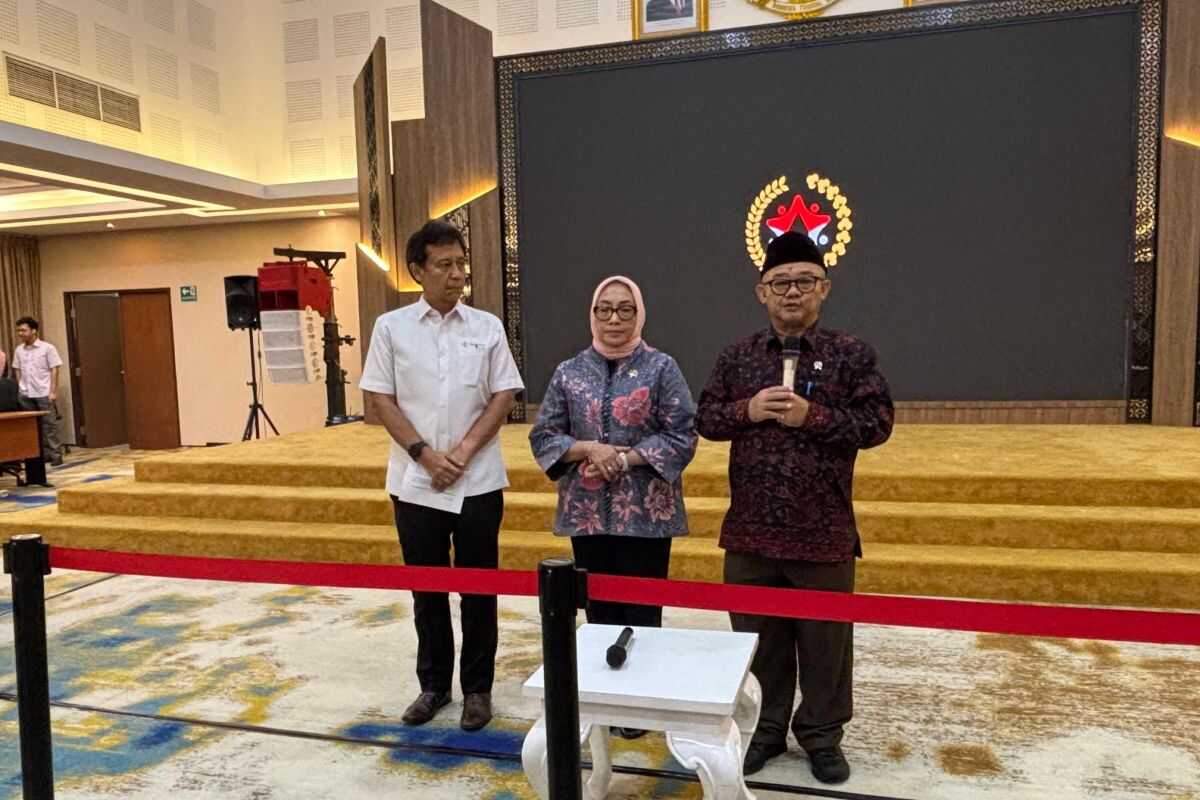
Jakarta – Abdul Mu’ti, the Minister of Education for Primary and Secondary (Mendikdasmen), said that the aim is to establish a culture of safe and comfortable schools and to strengthen the role of teachers in providing mentoring for students as part of efforts to address child mental health issues.
During a press conference following the signing of a Joint Decree (SKB) on Children’s Mental Health in Jakarta on Thursday, Mendikdasmen Abdul Mu’ti explained that the ministry has issued Permendikdasmen Number 6 of 2026 on the Culture of Safe and Comfortable Schools (BSAN) to create a school environment that is safe and comfortable for students, free from all forms of violence.
“We are building better social relations — between teachers and students, between students themselves, between teachers and students and parents, and with all education stakeholders. We are using a preventive-promotive approach in which we strengthen the role of the guidance and counselling teacher (guru BK) and the overall counselling function, so that all teachers—not just those in counselling—should carry out counselling duties,” he explained.
In addition, the Ministry of Education for Primary and Secondary is also pushing activities to develop talents and interests in children, through both extracurricular and intracurricular activities.
“We are aiming to shift the counselling paradigm from a predominantly curative approach, waiting for problems, to a preventive approach that develops talents, interests, and character. Our target by 2029 is to reach more than 2.8 million teachers,” said the Mendikdasmen.
Attention to children’s mental health has become a government priority amid rising global rates of suicidal ideation and attempted suicide. Based on the Global School-Based Student Health Survey (GSHS) data from 2015 and 2023, the proportion of students who reported thinking about ending their lives increased 1.6-fold, from 5.4 percent to 8.5 percent.
The same survey showed the share of students who attempted to end their lives increasing 2.7-fold, from 3.9 percent in 2015 to 10.7 percent in 2023. The same data show that female students are more likely to both think about and attempt to end their lives.
Moreover, data from the Indonesian Child Protection Commission (KPAI) for 2023–2025 indicate that ages 11–17 are the group with the highest number of completed suicides. Specifically, 45 cases among 11–17-year-olds were reported in 2023, 42 cases in 2024, and 20 cases in 2025.
KPAI data and the Ministry of Health’s online mental health report Healing119.id identify the main triggers for suicidal ideation in children as parenting and family conflict (24–46%), bullying (14–18%), psychological problems (8–26%), and academic pressure (7–16%).
Earlier, Health Minister Budi Gunadi Sadikin, Minister for Women’s Empowerment and Child Protection Arifah Fauzi, Minister of Communications and Digital Meutya Hafid, Minister of Social Affairs Saifullah Yusuf, Mendikdasmen Abdul Mu’ti, Home Affairs Minister Tito Karnavian, Religious Affairs Minister Nasaruddin Umar, and Minister for Population and Family Development / Head of the National Population and Family Planning Agency (Mendukbangga)/Head of BKKBN Wihaji signed a Joint Decree (SKB) on Children’s Mental Health in Jakarta today.